Feedback from LensCulture February 2022
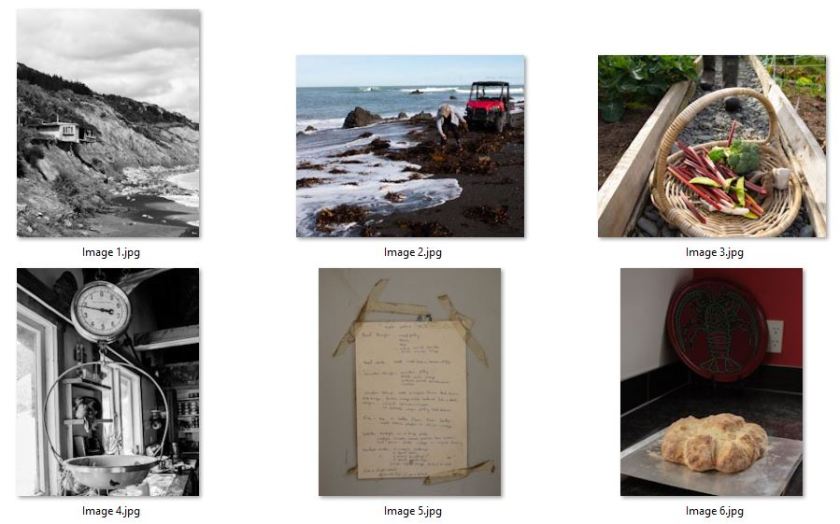
As part of the LensCulture Portrait Awards 2022 (https://www.lensculture.com/photo-competitions/portrait-awards-2022) they offered a written feedback for a series of images (10) for an additional $15USD. I tried to select the ten images that portrayed the project to its best potential. These were submitted along with a project overview/artist statement and a number of questions I wanted to be addressed as part of the review.
Reviewer Portfolio Feedback
Hi Michele-
Needless to say, you are using a beautifully poetic voice to explore this delicate and intriguing story. And I like how you are exploring deeply metaphorical imagery alongside more direct photographs that tap us into the heart of the narrative. It’s a compelling and intriguing project.
In response to your request for feedback, there’s no question for me that there is a voice in this series. As I mentioned above, I feel this is in part founded in the poetic style of your work.
One thing that I would recommend is leaving out the discussion about the inclusion of BW and color. I don’t feel the distinction is necessary for the purposes of introducing your photographs. And personally, I would like to see more BW images to balance out the presence of the color.
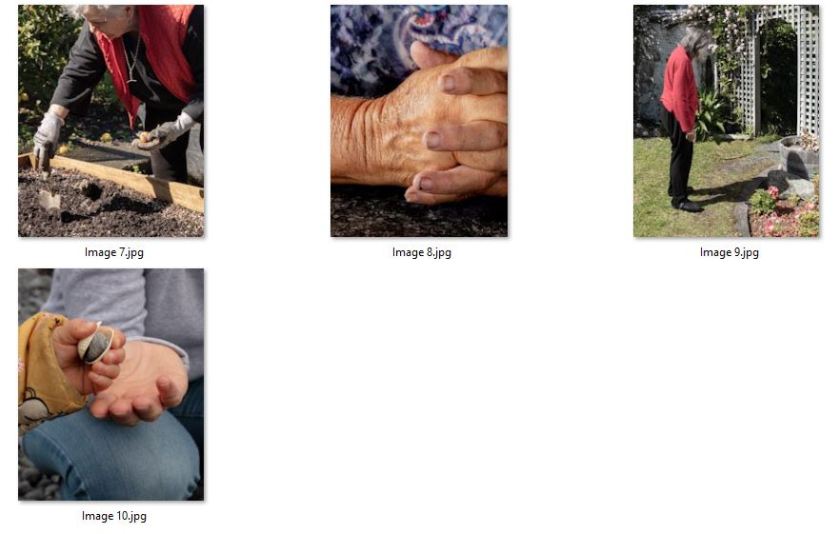
I feel you are making a very important and salient point regarding gender and the roles women play in this community. But I also wonder if there is anything else you can show other than the “typical” female roles. In other words, most of your photographs show cooking, food, gardening and the like. But I am guessing that there are other aspects of the female presence that are invaluable to this community. The comforting support of emotional involvement and awareness. The ability to create and maintain community. And probably a lot of things that I am not immediately coming up with. But my point is that in addition to the wonderful ideas/ways you have discovered so far, there are more ways to go about telling the story.
I also wondered about the sense of anonymity that occurs in this work. In almost every photograph it is barely possible to discern the face of the person. And so much so, that it feels deliberate. For me, it would be very helpful to make the connection to the person through the ability to see their face. In fact, a formal portrait, or perhaps a few, could be an invaluable asset to this project. I find portraits where the viewer are looking directly into the eyes of the subjects serve an important function of creating a valuable connection to the subject… and the story.
Otherwise Michele, I again find this work very moving. And I could see this developing into a beautiful book project and/or exhibition. Of course I am only seeing a small selection of what is a completed project, but my sense is that there is a lot of depth in what you have created.
Thanks for sharing your images and wishing you the best of luck.
Reflection and Research on Feedback
When you can only provide ten images to demonstrate your project that selection is critical and often very difficult to not select just the images you love. The project is based around eight women so I needed to select the best portrait or image that represented each one which left just two images to represent the place/space/location.
Looking at other submitted examples maybe the portrait awards was not the best selection on my part but it was nice to receive some positive comments around my ‘voice’ in the images and my style. It was also good to read that the combination of B&W and Colour was working. I have developed this more in the different book designs I’m working on.
In addition to the feedback they also provided a number of recommendations:
Recommended Books & Photographers
Photo Competitions
Portfolio Reviews & Festivals
Recommendations for Gaining Exposure
Other Resources
New Recommendations
Books (fine art philosophy & criticism)
Photographers (fine art & street)
Photographers (PJ & documentary)
Photographers (portrait & commercial)
Photo Competitions (general & other)
Photo Competitions (PJ & documentary)
Photo Competitions (portrait & commercial)
Photo Festivals & Events (rest of the world)
Workshops (rest of the world)
Outlets for Exposure
It’s funny as a number of the links either didn’t work or the website was being up-dated. Ignoring the LensCulture self-promoting I selected one of the photographers they suggested I look at as this particular body of work was so similar to mine and what I was aiming to achieve.
Rebecca Norris Wood
Rebecca Norris Wood is an American born photographer who was originally a poet. She became interested in photography whilst at university suffering from writer block, she picked up a camera to try and return to the written word but instead found the camera gave her the words she couldn’t find. She combines text with her images and has produced a number of books including ‘Night Calls’ (Radius Books, 2020) and ‘My Dakota’ (2012) which was recommended by my reviewer. The book and images were produced following the unexpected death of her brother. She had returned to photograph her home state of South Dakota which is known to be sparsely populated with more buffalo and prairie dogs than people – similar to Ngawi only that’s more tractors than people. And in a similar way to the coastal area of New Zealand in my project South Dakota suffers from brutal winds and extreme weather.
The book: https://www.webbnorriswebb.co/book/rebecca/my-dakota [accessed 27/02/22] is her way of looking for peace following the death of her brother. The text in the form of her poems reflect this. Both are sad, but beautiful at the same time. The images seem lost in the pages but I think that’s what makes this work. You need to bring the book closer to really see the detail and meaning of the images. For me each image feels like she is an observer in her own home. Several are from her car window, or through a house window or between autumn leaves. It’s as if she doesn’t belong there now that her brother has gone. The following images from: https://time.com/3788652/my-dakota/ [accessed 27/02/22]
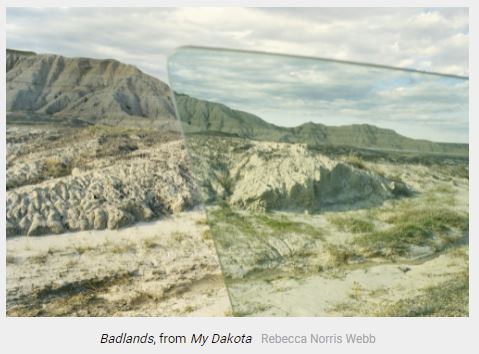
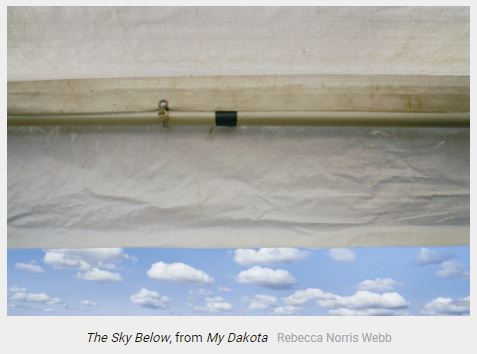
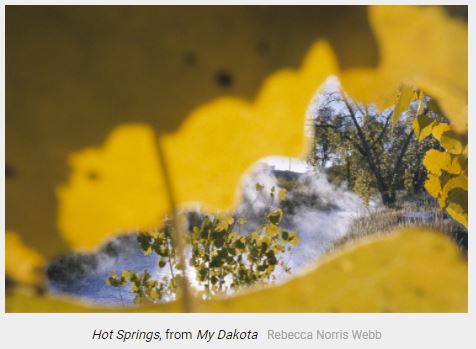
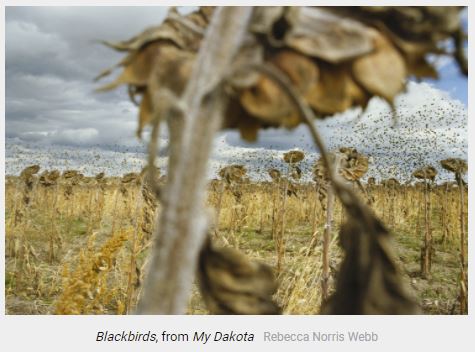
I can understand the links between the two locations of South Dakota and Ngawi and in both aspects we are observers on this world. There are very few people in the series and when they are present you see just an arm or a shadow. This is an area I’m trying to develop more in the book designs. The review of this project has given me a number of further ideas to explore more in my next visit to Ngawi.
 Michele Usher