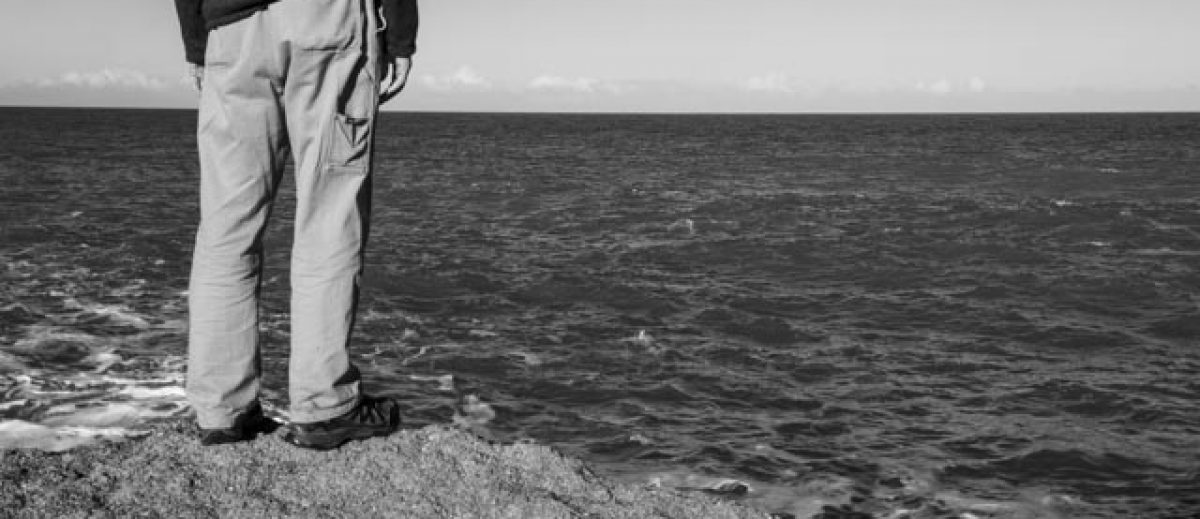
The Project Brief: Part 1
Begin your project by going out on a shoot. Submit it to your tutor with a few images selected as a potential starting point for how you can move the project forward.
Without being too prescriptive you may wish to set a goal of taking say 30 photographs for this assignment, or one roll of film, to limit yourself to one shoot.
For this initial part of the Assignment I began as instructed by undertaking a single shoot at the location. This was very much a scene setting exercise but resulted in a number of possible contacts for future visits.
I have selected around 26 images from this initial session. These have received limited processing as I feel I have concentrated on the standard perception of the location and this is not the aim of my project as detailed in the next part of this submission.
Images can be found here
The Project – New Zealand’s Quiet Crisis Part 2
Concept
Towards the end of my Documentary course I started explore possible avenues of study/interest for my final level Body of Work project, knowing that it needed to be challenging and hold my interest for the next twelve to eighteen months.
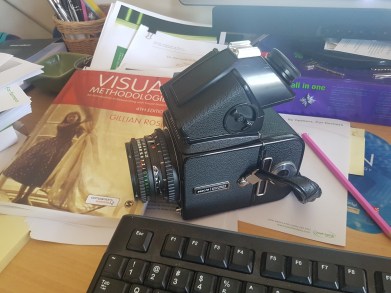
My preliminary idea was based around the work of Gideon Mendel and the project based at the Kingsmead School in Hackney [Kingsmead Eye 2009: website accessed 28/12/19: http://www.kingsmeadeyesspeak.org/]; however, I would compare the work/images of a major city school within Wellington to those of a rural within the Wairarapa. The children would document their lives in a similar way for a period of six months. In a similar way to the Hackney school there are areas of New Zealand that have a negative reputation and the ethnic mix is high, with a growing population from China, India and the Pacific Island. Although this offered potential in the improvement of teaching students how to use a camera and not their phones and my skill at portraits, I didn’t think it would offer much in the way of demonstrating my creativity or skill. I did however like the idea of using an old camera and going back to basics. I don’t have an old Rolleiflex like Mendel but I do have a Hasselblad 500 C/M, which I would like to start using again.
My second thought was to utilise all the research I conducted as part of my final project for the Documentary module – that of the use of photography to help and understand mental health issues. I reviewed my research and tried to find a suitable angle and project based around the work of Photovoice [see section Work in Progress], but once again I couldn’t really find how I could produce a body of work without having experience a mental health issue.
I didn’t want to dismiss all this research and the quote from Sir John Kirwan (2018) [https://wellplace.nz/facts-and-information/mental-wellbeing/mental-health-in-new-zealand/], who has been at the forefront of mental health in New Zealand for the last fifteen years really struck a chord with me:
“You’re not alone if life is really hard for you at the moment. Anxiety and depression are really common in New Zealand. One in five of us are going to experience it this year. But it is different for everyone…”
This crisis has seen the NZ Government allocate $1.9 billion additional funds to mental health and the health services that are trying to address it. But where is this funding being placed? Inner cities where there is greater visibility. At the mere mention of mental illness or suicide in New Zealand, severe discomfort seems to ensues. It’s not seen as a subject that should be addressed or spoken of.
Nearly 47% of New Zealanders experience mental illness at some stage in their lives. New Zealand has the highest rates of anxiety, mood and substance disorders, so much so that mental disorders are the third-leading cause of health loss. It has been found that. Women, young people, Maori and Pasifika people are often over-represented in mental health statistics.
This whole subject was far too large and would have taken several years to try and address all the possible areas and so I tried to breakdown the various elements as I understood and then tried to identify small segments that could possibly produce a series of images.
Research
To help narrow down my thoughts and find a possible area of further research I produced a mind map:
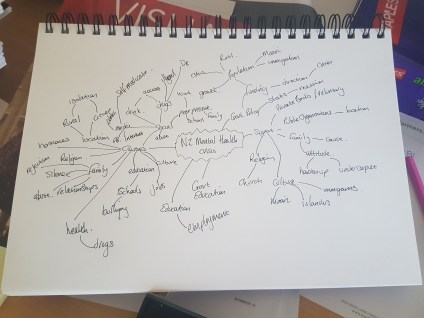
This highlighted a number of areas:
- Governmental policy;
- Support functions and infrastructure;
- Causes; and
- Culture.
On reviewing the mind map my first thought was to follow the money – try and contact some of the large organisations within Wellington and possibly get involved and link my project in with the work being done. The research on Photovoice, physical logistics and other photographers who have used photography as a personal expression of Mental Health (for example Francesca Woodman, Elina Brotherus, Hannah Starkey and Philip Lorca diCorcia) meant it was difficult to find a new angle.
One area that hasn’t really been addressed and especially in New Zealand are the issues of mental Health in the Rural and remote areas – and New Zealand has a lot of those. These seem to be the forgotten areas. The successes in the big cities of Wellington and Auckland make the headlines and the government agencies look good, but the majority of the population still live rurally. Often in isolation for weeks on a time – especially in the winter in the South Island High Country, New Zealand might not be big but it is remote.
A 2018 survey conducted by Bayer NZ and Country TV found that 70 percent of rural New Zealanders have felt increased stress over the last five years. Of those people, over half (54%) attributed financial pressures as the main reason, while the impact of environmental factors (i.e. droughts, flooding, hail) on people’s work and livelihoods came in at a close second (49%). The survey highlighted that the younger generation (aged 18-39) were the most affected by stress and anxiety. 85% in this age bracket indicated they had felt more personal stress in the last five years.
Provisional data from the Ministry of Justice released under the Official Information Act reveals 20 farmers took their own lives in the year ending June 30, 2018. Eighteen of these deaths were men and six were aged 15-24. The Waikato was the highest of any region, this data shows there hasn’t been a decline in the number of people in a rural community, in the last five years.
[additional research can be found in my Work in Progress section]
The Plan
The articles I found during my on-line search detailed the facts around rural Mental Health and what the majority of other researcher think are the problems – lack of support, money, medical professionals, remote locations, lack of infrastructure and the good old Kiwi ‘she’ll be alright’ attitude (i.e. keeping it to yourself and not talking about it).
As this assignment is not marked, I plan to use this to discuss and formulate my ideas as I haven’t had any real time with my tutor as yet to discuss my ideas. As I live 90km outside of Wellington my location is fairly rural and I have managed to find a book written on the local communities of the Wairarapa Coastline [see Work in Progress] and selected one within an hour’s drive – Ngawi, which will make the possibility of repeat visits easier.
The first photo shoot is very much a scene setting exercise and trying to make contact with any residents that might be interested in helping me. This I hope will drive me onto the next direction.
Demonstration of creativity
The images I have taken are very much reference shots. Images of the area, a few residents either working or riding on quadbikes and of course the famous tractors. I wouldn’t say that any of the images are creative or portray a feel of the location, this is an area I need to work on in future visits.
For the whole subject matter of Mental Health I’m undecided as to whether the images should be colour or black and white. If colour I think they should be desaturated to give the right mood or feeling – a more edgy/gritty image. If I use the Hasselblad then the film/slide selection will be important. I found a number of photographers who used colour to document their own personal experience – often the colours were desaturated, muted almost for example the work by Ryan Pfluger, Michael Bach and Nathalie Ghanem-Latour [see Work in Progress]. Colour film would need to be developed by a commercial laboratory whereas if I use black and white, I could develop these myself as I’m really drawn by the work of Michal Macku [see Work in Progress]. Macku has developed a technique called “gellage” where he moves the gelatinous emulsion around on film negatives and alters their appearance in dramatic ways.
Currently I’m considering two avenues and genres: the first focusing on the isolation of the location, deserted, run down buildings and trackers etc. These would be more landscape images, easy to achieve with no human interaction. It would be interesting to gain access to local homes to see how these reflect the feel of the location. The second avenue would be more of a human focus, the residents of the area – there’s currently 29 permanent families living in Ngawi. The project would be based along the lines of the work by other photographers I have started to research but not finished yet, such as Alec Soth (Sleeping by the Mississippi), Chris Killip (In Flagrante), Paul Strand and Tom Hunter to name but a few. I would also like to find other New Zealand based photographers such as Robin Hammond who completed a project funded by the NZ mental Health Organisation following the earthquake in Christchurch 2011.
Quality of outcome
As these are reference images and a starting point, I haven’t tested them on any of my peers within the online forums, however once I have agreed my approach with my tutor, I would like to share my images for feedback and opinions.
One of the key outcomes for me in this project is to be able to represent the subject of Mental Health within the Rural environment of New Zealand in the most compassionate and ethical way possible.
This project will rely heavily on previous course work around ethics and how to approach a sensitive subject such as mental health, but I also want to expanded my research and looked at both theorical research in the form of articles written about Mental Health and artists that have experienced similar issues or have under taken the study of single locations/communities themselves. I was particularly drawn to the work of Edward Honoker who captures his own illness in a series of images that depict the feeling of isolation maybe this is something I could explore in my work. The work by Ryan Pfluger looks at relationships and another area to look at would be the inter relationship within the community. His images are in colour but I think they would be equally strong in black and white. Both Leah Freed and Michael Bach relied on constructed images to portray their depression some of which demonstrated the real dark side of mental health issues. These for me have set a goal and a position to aim for.
Context
Mental health issues within New Zealand really is a quiet crisis and one that is only now being addressed with increased government funding. The courses are often over looked with a ‘she’ll be alright’ attitude. Male mental health is probably the worst, with boys told to toughen up and put up with the conditions/situation. Frustration often leads to violence especially in small rural areas, where drink is plentiful and employment is not.
The research completed so far is the start of a good foundation as to the current situation around mental health within this country and with the subject hitting the headlines within the media.
The book research especially ‘Using Visual Data in Qualitative Research’ by Banks, M. (2018) highlighted the wide range of uses of visual images in qualitative research. Using Visual Data in Qualitative Research incorporates discussions of visual data produced by the researcher, and that produced by those under study. It will provide a comprehensive introduction to the practice of visually-orientated research and some valuable insight into how to start the whole process.
One of Banks’ key points I think will play an important part to my final Body of Work: ‘images, even those created by the researcher, should always be considered in context, in particular the context of production, consumption and exchange’.
Research Sites
Websites and research took place between November 2019 and January 2020
Mental Health within New Zealand
https://www.nzherald.co.nz/lifestyle/news/article.cfm?c_id=6&objectid=12189042
https://teara.govt.nz/en/mental-health-services
https://mentalhealth.inquiry.govt.nz/
OCA Library Catalogue Searches:
Creighton, G., Oliffe, J.L., Ferlatte, O., Bottorff, J., Broom, A. & Jenkins, E.K. 2018, “Photovoice Ethics: Critical Reflections From Men’s Mental Health Research”, Qualitative Health Research, vol. 28, no. 3, pp. 446-455. Connect to Article
Abilock, D. 2008, “Visual information literacy: reading a documentary photograph”, Knowledge Quest, vol. 36, no. 3, pp. 7. Connect to Article
Friday, J. 2000, “Demonic curiosity and the aesthetics of documentary photography”, The British Journal of Aesthetics, vol. 40, no. 3, pp. 356-375. Connect to Article
Simoneau, K.E. 2012, “Getting the Click”: Producing and Practicing Documentary Photography, ProQuest Dissertations Publishing. Connect to Thesis
Tagg, J. 2009, The Disciplinary Frame: Photographic Truths and the Capture of Meaning, N – New edn, University of Minnesota Press, Minneapolis. Connect to eBook
Balmer, C., Griffiths, F. & Dunn, J. 2015, “A review of the issues and challenges involved in using participant‐produced photographs in nursing research”, Journal of Advanced Nursing, vol. 71, no. 7, pp. 1726-1737. Connect to Article
Cabassa, L.J., Nicasio, A. & Whitley, R. 2013, “Picturing Recovery: A Photovoice Exploration of Recovery Dimensions Among People With Serious Mental Illness”, Psychiatric Services, vol. 64, no. 9, pp. 837-842. Connect to Article
DeCoster, V.A. & Dickerson, J. 2014, “The Therapeutic Use of Photography in Clinical Social Work: Evidence-Based Best Practices”, Social Work in Mental Health, vol. 12, no. 1, pp. 1-19. Connect to Article
Glaw, X., Inder, K., Kable, A. & Hazelton, M. 2017, “Visual Methodologies in Qualitative Research: Autophotography and Photo Elicitation Applied to Mental Health Research”, International Journal of Qualitative Methods, vol. 16, no. 1, pp. 160940691774821. Connect to Article
Han, C.S. & Oliffe, J.L. 2016, “Photovoice in mental illness research: A review and recommendations”, Health, vol. 20, no. 2, pp. 110-126. Connect to Article
Sitvast, J.E., Abma, T.A. & Widdershoven, G.G.A.M. 2011, “Living with severe mental illness: perception of sickness”, Journal of Advanced Nursing, vol. 67, no. 10, pp. 2170-2179. Connect to Article
Sitvast, J.E., Abma, T.A. & Widdershoven, G.A.M. 2010, “Facades of Suffering: Clients’ Photo Stories About Mental Illness”, Archives of Psychiatric Nursing, vol. 24, no. 5, pp. 349-361. Connect to Article
Tang, J.P., Tse, S. & Davidson, L. 2016, “The big picture unfolds: Using photovoice to study user participation in mental health services”, International Journal of Social Psychiatry, vol. 62, no. 8, pp. 696-707. Connect to Article
Books
Banks, M. (2018) Using Visual Data in Qualitative Research. SAGE.
Banks, M. and Zeitlyn, D. (2015) Visual Methods in Social Research. SAGE.
Collier, J. and Collier, M. (1986) Visual Anthropology: Photography as a Research Method. UNM Press.
Pink, S. (2013) Doing Visual Ethnography. SAGE.
Rose, G. (2016) Visual Methodologies: An Introduction to Researching with Visual Materials. SAGE.
 Michele Usher