2nd April 2020
Since the last post and this the world has turned upside down with the pandemic of a virus that is affecting every aspect of everyone’s lives. New Zealand went into total lock down on the 23rd March 2020, no one expected this to have such a devastating effect on lives and the global economy as it has. What started as a virus in China has spread throughout the world with such speed. There will be far better blog posts than mine that will detail the impact, but here in this small rural aspect of New Zealand I have seen such a sense of community and friendship and I’m so glad I’m here in my isolated bubble.
I have been getting up at my usual time and spending my usual commuting time working on both my research for the literature review for Contextual Studies and the course work for Body of Work, both of which can be found on this blog. I also received formal feed back from my tutor on Assignment 1 and 2 which I will address shortly.
A number of my fellow students are reconsidering their subjects in light of the current situation as they are closer to their deadlines than I am. I still have till 2023 to complete my level 3 and I know it feels like this isolation and lack of travel will go on forever I’m not at this stage considering changing my subject. The letters are written and ready to go the minute the lockdown is lifted; however, I have been researching other photographers and how they deal with isolation, mental health and I may start to consider a more surreal approach if we find ourselves still in this isolation in September.
I have continued to find other avenues for contacts with locals and a friend has a 91-year-old grandmother who has only just recently left Ngawi to be closer to her family due to her age and once this lockdown is over is willing to meet with me and discuss her life there. While we wait for things to improve and so there is no chance of infecting her, I have asked if she could try and locate any old photographs of her time at Ngawi so I can consider incorporating those into my final submission.
I have continued to research the location and discovered a film called ‘Fog’ written by Nick Mayow and directed by Peter Salmon which was filmed at Ngawi and was awarded Best Performance in a short film at the 2007 NZ Screen Awards. Although the film isn’t about Ngawi per say it shows the isolation, boredom and the difficult relationships between parents and teenagers that must be happening in such remote locations around the world.
Bibliography
https://www.nzonscreen.com/title/fog-2007 [accessed 02/04/20]
8th April 2020
My tutor recommended that I look back again at the work by Chris Killip and the images and work he undertook at Skinninggrove a North Yorkshire coastal town between 1982 and 1984. The town was heavily reliant on a single industry – iron smelting. In a similar way Ngawi is reliant on the sea and the export of crayfish to China. At the time of his images the North Yorkshire area was facing mass unemployment and they were attempting to make a living from the sea. Ngawi is currently facing a major issue with the COVID-19 pandemic and the fact that it can’t export its main source of income – live crayfish – to China. Killip is known for his series of images from the North of England and focuses on the changing landscape and increasing poverty. He is known for immersing himself in the community and building relationships in order to show a sensitive side to the locals which is probably hard to do if you don’t come from the area. In a similar way Ngawi is a close-knit community, they look out for each other and have learnt to make do and mend. Its not a simple five-minute drive to the local hardware store, it’s a 4 hour round trip.
Killip states that Skinningrove cannot be seen from the road, the village is very insular and they are very protective of the village and not particularly friendly to outsiders. Ngawi is probably similar in size but unlike Skinningrove they are used to strangers as the population grows at peak holiday times with campers and local bach owners.
The local houses were built for the iron ore miners and in a similar way the properties of Ngawi were built originally for the lighthouse owner and then farm hands and finally those finding a living from the sea. In Skinningrove the men worked in both the mine and at sea for lobsters, in Ngawi its cray. In both locations they use tractors to take the boats into and out of the sea. According to Killip he only published a small number of images (4) (In Flagrante) from the project but in the film I found [https://www.youtube.com/watch?v=ENzA-vIwAgQ] he shows other images that had not been published before. He talks about the relationships he made, the loss of two young fishermen and the wonderful sense of place he had. They are a documentary of the time, from the rubbish left on the streets to stop the local council developing the site to the punk rock. Killip talks about the loss and the young lives he interacted with. The inhabitants don’t even notice him as they hang about fixing boats, taking in the sun or on the beach looking for shell fish.
I looked Skinningrove up on Google earth and the location of a single road in and out is very similar to that of Ngawi:
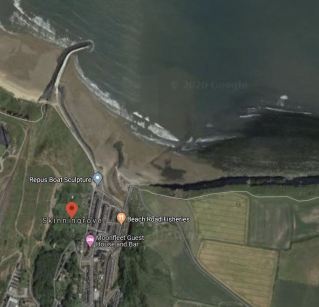 Skinningrove (Google Earth 2020)
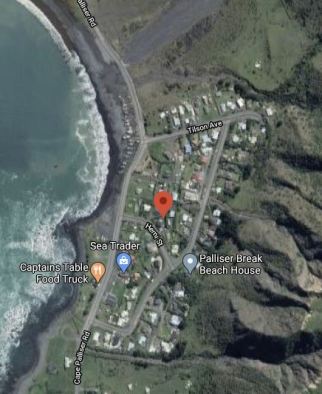 Ngawi (Google Earth 2020)
My project in a similar way to Killip will be based around the core residents of the community and I may even just focus on the first couple I photographed for Assignment 2 and return to them, maybe even follow them for a few days, but at this early stage I hope that my letter drop results in some connections.


Bibliography
Websites accessed 08/04/2020
https://monovisions.com/chris-killip-skinningrove-1982-84/
https://www.tate.org.uk/art/artworks/killip-cleaning-nets-skinningrove-p81046
15th April 2020
Another recommendation from my tutor was to consider the work by John Berger and Jean Mohr, to review and try and reflect their work and ideas to the location I was working on in New Zealand. Just prior to the lock down I managed to order A Fortunate Man and A Seventh Man. The final book Another way of Telling I was able to order in time so this might have to wait until after the lock down and I’m able to get to the library or order online.
John Berger (1926 – 2017) was a British writer born in Stoke Newington. He produced novels, books and essays about art, politics and photography. Berger was also involved in a TV series called ‘Ways of Seeing’ which he wrote and helped in the production.
 John Berger (1926 – 2017)
The book A fortunate Man was a collaboration between Berger and Jean Mohr, a photojournalist. The main subject is a general practitioner called Dr John Sassall, who lived and worked in a small rural town. The book was first published in 1067 and has been described as both a medical documentary and a biography. It is in fact an exploration of both Sassall’s practice with his patients, emergencies, but also his own struggles with depression and mental health. It is reported that Sassall committed suicide some fifteen years after the book was published because he ‘was frightened in case a patient comes into the surgery with a problem he can’t solve’. The practice was his life, he seemed to live for it and in a way, it totally consumed him and his every waking moment.
Both Berger and Mohr lived with Sassall for a period of six weeks. They followed his every move, capturing and documenting every aspect. When they came to produce the book they first worked independently and then came together to combine text and images.
The essay as Berger describes it starts by setting the background of the scene, how the remote location is only served by one doctor and provides in great detail the situation of an emerging emergency within the forest. The initial pages provide a photographers view of the location and seem to set the mood for the whole book – some of the images are out of focus, a number have text or short paragraphs/sentences to give an explanation, but all are dark.
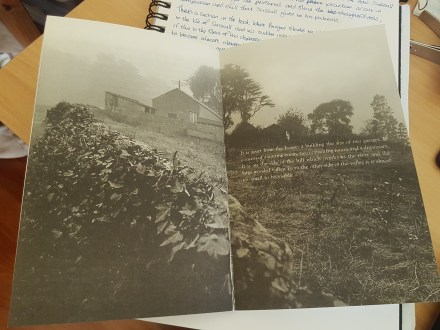
The reader is provided in both text and images the detail on how Sassall performs he daily duties, either within his practice or out in the field. The text provides detail on the living conditions, and the personal circumstances of his patients. The images are also personal and show the thoughtfulness, compassion and skill that Sassall gives to his patients.
There’s a section in the book where Berger starts to write about the changes in the life of Sassall and his sudden interest in Freud and his work. I wonder if this is the start of his depression or if he always suffered. He started to become almost obsessed with Freud’s ideas of self-analysis and looking back on his own past which he struggled with.
The images used throughout the book are shot in black and white and consist of landscapes which cross the pages and portraits. A number show Sassall as he interacts with patients, putting them at their ease (p 72-73) or undertaking treatments (67, 69, 87-89). There is always a feeling of concern or a sense of compassion on his face. Mohr followed Sassall for a number of weeks and this method is becoming more of a possibility for me with my project in Ngawi. I already have a possible subject in the contact point I made for Assignment two and maybe if this situation continues, I should move away from the idea of have more volunteers to just a single source. The rural isolated location of Ngawi is very similar to that of the practice detailed in the book. Ngawi doesn’t have a GP with the nearest emergency treatment being over two hours away by car or thirty minutes by helicopter to the capital. In a similar manner to the rural practice Ngawi is very independent and protective of its community but seem to tolerate the in flow of outsiders at peak holiday times. I think it would be interesting to follow Rob around for the day as he manages to fix things and locate just the right part or gadget from within his endless shed.


Bibliography
Research material
Berger, J. & Mohr, J. (1967). A Fortunate Man: The story of a Country Doctor. The Penguin Press, London
Websites accessed 10/04/2020
https://bjgp.org/content/66/650/476
16th April 2020
On the morning of the 16th April I logged into the British Journal of Photography 1854 Access presentation with Laura Pannack. I have provided more detail in my Exhibitions section to this blog. However, although the presentation was a little disappointing and focused mainly on how she was coping with the lockdown one interesting question was raised by a lecturer from Spain who asked what she should advise her students who are trying to complete their final projects. Laura say she would tell them to ‘do a one eighty’ if they were trying to photograph a particular group of people, for example think about what would be the effect of this on them and try and photograph that. This really made me think about my current Body of Work project. If I can’t get out how can I apply that process to the people of Ngawi?
The residents of Ngawi as previously highlighted in the blog rely heavily on the export of live crayfish to China. The value to the New Zealand economy prior to lockdown was $320 million per year and directly and indirectly employs 2500 people.
On the 5th February the New Zealand Government ordered the current catch which was estimated to be around 180 tonnes to be returned to the sea as the Chinese authorities had ordered restrictions on the transportation and import of live crayfish:
https://www.nzherald.co.nz/business/news/article.cfm?c_id=3&objectid=12306199
When I was completing the images for Assignment two there was much discussion around the impact this would have on the village as they waited for the Government to provide direction. Thinking of this and the question and answer session with Laura I remembered the work by the British photographer Paul Hill that was covered in Level 2: Landscape. Hill works extensively within the north of England and as part of his project ‘White Peak Dark Peak’ which is based in the Peak District national Park he produced a series of images of a dead badger as it decayed. The meaning behind his image is around the cyclic processes of nature, mine will be about loss of a resource to the village. I will run this in parallel to my planned project of photographing the residents and a single series with my main subject of Assignment two.
http://www.hillonphotography.co.uk/projects/landscapes.php
There will be a number of challenges with this – the smell being one, so I think setting the subject i.e. cray, outside in one of my fields would be best. Ensure that the local wild life don’t take it between images is another. I might have to tie it down and make sure I have a second in the freezer as a back up just in case I have to start again.
An alternative would be to set one up in the field and a second as a still life in the garage, fingers crossed this doesn’t encourage rats. I started to investigate how to create a set of studio lights via a number of YouTube videos – seems easy enough – just need to find all the parts.
18th April 2020
Berger, J. & Mohr, J (2010 (1975)). A Seventh Man. Verso, London
This is another collaboration between Berger and Mohr that my tutor advised I should review. A Seventh Man was first written and produced in 1975, reprinted in 1982 and then again 2010, which demonstrates its relevance to photography even to day in this modern world of digital, instant social media. I think this work falls strongly in the genre of social documentary as it analyses the functional significance of migrant works to countries throughout Europe but which can also apply to that of New Zealand who each year allows thousands of workers into the country to help pick fruit. The book offers arguments for and against these workers for both the country and the workers themselves.
The book consists of:
- Poetry;
- narrative around the workers but never giving them a name;
- statistics which cover items such a labour numbers, population, accidents, countries involved both from and to;
- Marxist theory including the development of capitalist countries and underdevelopment of Eastern Europe; and finally
I say finally as they included but never referred to within the text, but somehow, they are placed just within the right location to add to the context within which they are placed. The images within the book as Berger states ‘are irredeemably specific. The image is always of someone or something specific, not an abstract entity or a conceptual creation. You cannot photograph capitalism or the Protestant Ethic, only people and things who, it might be argued, exemplify or symbolize or embody these ideas’ (Becker 2002).
The viewer is very much left to formulate their own opinion of both text and images. Berger and Mohr offer a very different experience to the standard photojournalism. The images by not referencing or giving the portraits names depersonalise the whole experience. I like this kind of approach, leave the image to speak for itself. The image should be strong enough to stand alone and this is something I need to work on for my next assignment.
Bibliography
Reference:
Becker, H.S (2002) Visual evidence: A Seventh Man, the specified generalization, and the work of the reader. Visual Studies, Vol 17, No 1. Routledge, Taylor &Francis Group.
https://aperture.org/blog/remembering-john-berger/
https://www.nybooks.com/daily/2017/01/12/song-of-john-berger/
22nd April 2020
The return of my second assessment report saw the recommendation to review the work of a number of other photographers. The first was Eugene Richards an American photographer born in Boston and graduated from the Northeastern University, Massachusetts Institute of Technology. According to the lecture he gave (link below) he was the first in his family to complete college. His aim was to become a writer however a short internship at the local newspaper the Boston Globe seemed to change his mind.
“So I heard about these photo classes and decided it’s what I wanted to do,” (interview with Stephen Wolgast, 2017). “He was quite a figure in the Boston community at the time,” Richards says, not only for his photography but also for his meditative lifestyle, one that White impressed upon his students. “He kept telling me to calm down,” he says. “He wanted everyone to slow down.” This has been the advice given to myself by both of my tutors, stop trying to rush, often difficult when you have deadlines but I can see what they mean. At the time I wanted to try and submit for next summer for assessment but with the advice to show more reflection and the current lockdown situation I’m rethinking this plan. I’m starting to review and expand my research a lot more, trying to find my voice.
His photography career really started at the height of the Vietnam War when he decided to make a stand against the injustice he saw. He cut up his drafting card and returned it to the government, but instead of him being jailed he was invited to join the Vista (Volunteers In Service to America). This program saw him being sent to economically starved parts of the country in order to help people improve their lives.
He was based in eastern Arkansas to work as a health care advocate. Although he was prepared for the poverty he wasn’t for the racism and violence. This was mainly directed towards the blacks but he was also on the receiving side resulting in him having to attend a psychiatric hospital following an incident of amnesia and seizures thought to be from an attack. He was dismissed from the Vista but remained and formed a small newspaper called Many Voices.
He returned to Boston in 1973 and found the same racism
“I left the South very disappointed. I didn’t know where I was going as a photographer. I had no money. I was wandering around the streets, taking pictures. You always had some idea back then that if you took photographs you could make a living at it.” (Wolgast, 2017).
His first book was based on his experiences of the south and then later a very personal journey with his wife as she went through cancer. Since these initial books Richards has photographed and reported on and captured the raw emotions in the lives of hospital workers, gangs, drug dealers and once again war. I can understand why magazines and newspapers rejected his images, they are emotional and confrontational, they show the world as it is and most people are not prepared to see it that way. His passion of film making influences and guides his still images. He stated in the interview I watched how everyone sees differently and how his images are not always accepted, but he isn’t disappointed in that but he often disappointed in his images – personally I can’t see why. He discussed how with each of his projects he takes his time, gets to know his subjects, doesn’t pick his camera up until he knows they are relaxed and this shows in his images, something I need to practice at.


Bibliography
YouTube
Lecture: Eugene Richards (2010 Sem Presser) https://www.youtube.com/watch?v=08YpoaYp3vw
Global Journalist: Eugene Richards and the art of photography https://www.youtube.com/watch?v=vAwV09XgFzo
Website accessed 22/04/20
NPPA The voice of the journalist (2017)
https://nppa.org/page/innovator-eugene-richards
https://www.nationalgeographic.com/contributors/r/photographer-eugene-richards/
https://www.icp.org/browse/archive/constituents/eugene-richards?all/all/all/all/0
24th April 2020
The second photographer I was recommended to review was W. Eugene Smith (1918 – 1978). I have previously come across Smith in my Level 2 Documentary course.
![220px-Consuelo_Kanaga_(American,_1894-1978)._W._Eugene_Smith_and_Aileen,_1974[1]](https://michele512879level3.photo.blog/wp-content/uploads/2020/04/220px-consuelo_kanaga_american_1894-1978._w._eugene_smith_and_aileen_19741.jpg?w=840)
In the 1940’s and 50’s, Smith became famous as the model of the committed photojournalist, renowned for the extended picture essays he made for Life magazine on such subjects as a country doctor in Colorado and the life of a Spanish village. Smith immersed himself in his stories, sometimes spending months working on one; his essays, combining equal measures of reportage and sentiment, were hailed as classics of the medium. At the initial research back in 2018/19 I hadn’t read the boy by Berger and Smith’s approach was very similar, blending in and being able to photograph without seeming to be there, something I need consider if I focus on one person.
Since Smith’s death in 1978, at the age of 59, his reputation as a photographer has been somewhat eclipsed by stories of his troubled personal life, which was punctuated by battles with editors and struggles with alcohol and amphetamines.
The photograph of a rural doctor leaning wearily against a kitchen counter sipping a cup of coffee, for example, has become an icon of photojournalism, as with the 1950 shot of three Welsh miners, their faces blackened with coal dust. Other well-known pictures from Smith’s Life days include his 1944 shot of a helmeted marine cradling a dying baby during the invasion of Saipan in World War II and the 1950 image of grieving women clustered around the hollow-cheeked body of an old man, from his essay on the village of Deleitosa, Spain.

![AD06009_0[1]](https://i0.wp.com/michele512879level3.photo.blog/wp-content/uploads/2020/04/ad06009_01.jpg?w=286&h=193&ssl=1 "AD06009_0[1]")
![ccp_82102104[1]](https://i0.wp.com/michele512879level3.photo.blog/wp-content/uploads/2020/04/ccp_821021041.jpg?w=162&h=193&ssl=1 "ccp_82102104[1]")
![weugenesmith_425[1]](https://i0.wp.com/michele512879level3.photo.blog/wp-content/uploads/2020/04/weugenesmith_4251.jpg?w=237&h=193&ssl=1 "weugenesmith_425[1]")
For me the appeal of Smith’s images are based on his ability to capture dramatic moments in pictures that were remarkable for their powerful compositions and skilled use of lighting, Smith’s pictures often recall the works of Renaissance masters.
Smith was essentially a storyteller; the vast majority of his most memorable images appeared in picture essays in Life or other magazines, selected by editors and laid out with captions and other texts. Removed from their original contexts, the pictures lose some of their emotional impact; like movie stills, the photographs evoke the narrative settings in which they appeared, but cannot recreate them fully.
In his final years, Smith himself became a hero to many photographers, albeit a tragic one. The Minimata pictures brought him great acclaim, but a severe beating — reportedly by hired thugs — he suffered during the project, coupled with his continuing abuse of alcohol and drugs, caused his health to deteriorate seriously before his death.
Magazine photojournalism of the sort Smith practiced for much of his career has fallen on hard times, with many of its functions taken over by television and social media, however Smith continues to provide a model for younger photojournalists, both for the emotional richness of his pictures and the passion with which he pursued his stories
Bibliography
Website accessed 24/04/20
https://en.wikipedia.org/wiki/W._Eugene_Smith
https://www.magnumphotos.com/photographer/w-eugene-smith/
https://www.icp.org/browse/archive/constituents/w-eugene-smith?all/all/all/all/0
25th April 2020
Chris Steele-Perkins (b. 1947) was also a recommendation from my tutor. Steele-Perkins is a British Photographer and has completed a number of major projects on British society which explores its subculture, youth, poverty and the extreme right political situation. In some ways his images remind me of the work by Martin Parr. ‘Some Kind of Truth’ is the compilation of 40 years of photography showing changes and never seen images. There’s a rawness and honesty in the images and something I need to practise more at. Some of the images from Assignment Two had it but I think I need to repeat and practise a lot more, trying to blend in, something I find hard to do.
Bibliography
Websites (accessed 25/04/2020)
https://www.magnumphotos.com/photographer/chris-steele-perkins/
http://www.chrissteeleperkins.com/
https://www.artsy.net/artist/chris-steele-perkins
27th April 2020
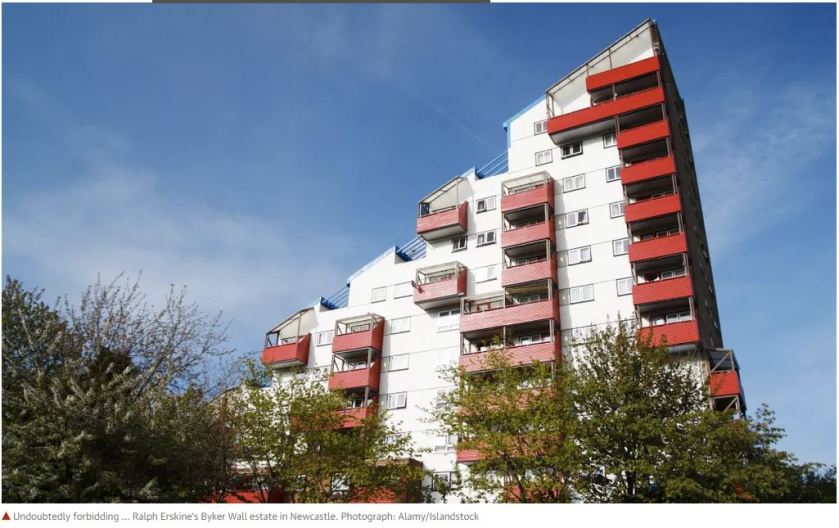
Sirkka-Liisa Konttinen (b.1948)- Byker Project book/film –
According to Wikipedia Konttinen was born in Finland but has worked in Britain since the 1960s. She started as an apprentice to a fashion photographer and moved to Newcastle in 1969 where she photographed and interviewed the local residents of ‘Byker’, the name of the area and her first book.
The book first published in 1985 represents over 12 years of work. The project documents the lives and conditions of the people who lived on these Northern housing estates until local councils demolished for new housing developments. This book documents the loss of a community, unlike the people of Skinningrove who managed to resist the local council the people of Byker were not but this was not for the lack of trying on the council’s side. The council encouraged participation by setting the Architect responsible for the new development in an empty shop to try and engage with the locals, having open hours for the residents to come in and discuss the project. Following redevelopment only 20% of the original residents returned to the area.
When you look at the images you can feel this community, its hard and rough but people pull together, help each other out, through thick and thin, through employment and the downtimes. True the conditions were not good but these were people’s homes, with memories and hopes and in a similar way the village of Ngawi has that same feeling. The residents are close, everyone knows everyone’s business, they look out for themselves and I believe that if the Greater Wellington Council tried to intervene then they would resist just like the people of Skinningrove.
“In a huge city, it is a fairly common observation that the dwellers in a slum are almost a separate race of people with different values, aspirations and ways of being. One result of slum clearance is that a considerable movement of people takes place over long distances, with devastating effect on the social groupings built up over years. But one might argue that this is a good thing when we are dealing with people who have no initiative or civic pride. The task is surely to break up such groupings, even though the people seem to be satisfied with their miserable environment and seem to enjoy an extrovert social life in their locality.” (Wilfrid Burns, 1963)
In 2003, Konttinen returned to the area and re-photographed the area and produced a film. There is an immediate contrast to her earlier work, gone are the narrow streets and back-to-back houses of the Victorian times, they are replaced with security doors and intercom systems, three is a clear feeling of loneliness and isolation. There’re no children playing in the streets, no music, no local pub, its soulless.


Bibliography
Websites (accessed 27/04/2020)
https://www.tate.org.uk/art/artists/sirkka-liisa-konttinen-9246
https://en.wikipedia.org/wiki/Sirkka-Liisa_Konttinen
https://www.amber-online.com/collection/byker/
https://www.artimage.org.uk/artists/k/sirkka-liisa-konttinen/
https://www.youtube.com/watch?v=frxnpD6-uv0
Mark Neville (b. 1966)
Neville seems to be classified as a social documentary photographer, based in London and works in both photography and film. He captures the very essence of British working life. His best know work and the one that has drawn me to he is work, style and ethos is Port Glasgow. In this project he managed to capture a town going through a depression of the local industry. The book was published and not sold for his own benefit but every resident in the town, some eight thousand were given a copy to do with what they wanted. Not every one was happy with this and some residents burnt their copies. This giving back to the community is a very important part of his work and in a similar way I would like to do the same for the people of Ngawi.
In a comparable way to my Body of Work on Ngawi, Neville’s project ‘Parade’ is a portrait of a community which has farming as a way of life. In the case of Ngawi it’s cray fishing. In this project Neville drew parallels between the region of France he was in and the UK. The French region of Brittany uses the Breton language which is made up of six Celtic languages. Along with the historic links between the two countries there were also political as this was the time Brexit was announced. In an interview with the British Journal of Photography (26/02/2020) (accessed 27/04/2020):
“It was a mirroring British identity in a strange way,” says Neville. “It is a small regional area, but it’s got this huge sense of identity.” “There is a real sense in which agriculture, and even more than that people’s relationships to animals, is absolutely fundamental to how they live,” says Neville. “It was wonderful for me to see this, all these relationships going on between people and animals.”
His work in Helmand, Afghanistan resulted in him experiencing PTSD. “It still makes me cry when I talk about it,” says Neville, “I came back, as anyone would, traumatised”. “This idea that somehow you can have a seamless transition from being in a war zone to walking down Old Street — not possible,” says Neville. “You can put a cat in a field and let bombs off around it all day, the cat might survive, but it won’t be the same animal anymore, it will be changed for life.” (BJP 2020)
Bibliography
https://thephotographersgallery.org.uk/whats-on/talks-and-events/artist-talk-mark-neville
https://www.bjp-online.com/2020/02/mark-neville-deutsche-borse-parade/
 Michele Usher