9th August 2020
Decided to contact all the ladies I have previously photographed to try and gain contact information and set up some more photo sessions as I think I need more than the four and as Alison mentioned a number of other ladies in the area I think I would like to gain more of a forum and breath to my Body of Work – fingers crossed.
12th August 2020
As per my 10th August blog on the Thoughts and Reflections section I mentioned the Rest of Work meet up with other OCA students, one of which sent me the link to the ‘Mapspast’ website (http://mapspast.org.nz/ accessed 12/08/2020), this site hosts the ‘latest maps’ from 1899. The site is currently working on data available from 1939. All the data has been scanned by the University of Auckland and is based on the information licensed through Land Information New Zealand (LINZ) for re-use under a ‘Creative Commons Attribution 3.0 New Zealand licence’. I took a look at Ngawi over the decades and it seems that the spelling of the name changed:
The earliest map is from 1929:
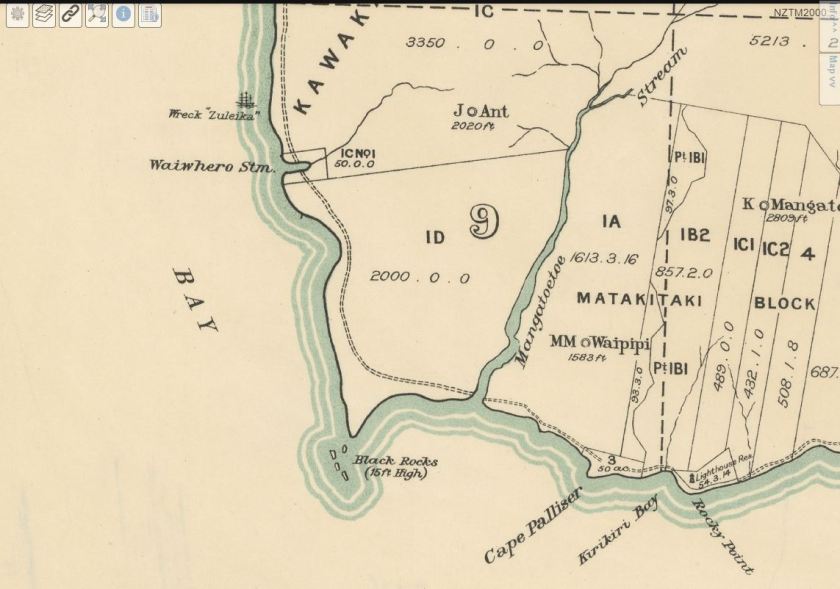
Map of 1929
Shows very little detail but it does include the Lighthouse just to the right of Cape Palliser.
There was no change in the map of 1939, however the map of 1949 contains a lot more detail:
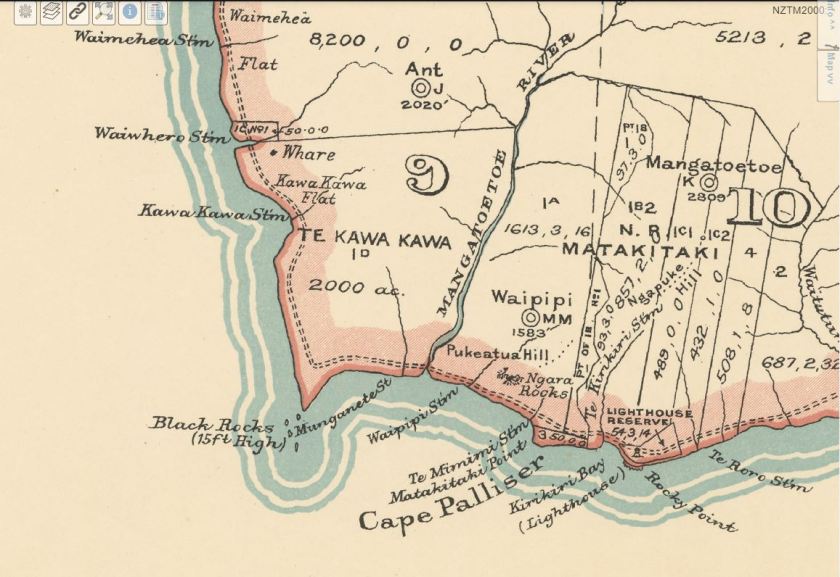
Map 1949
In 1959 additional detail was added around water and the unsealed road out to the Lighthouse. Details around forestry was also included for the first time:
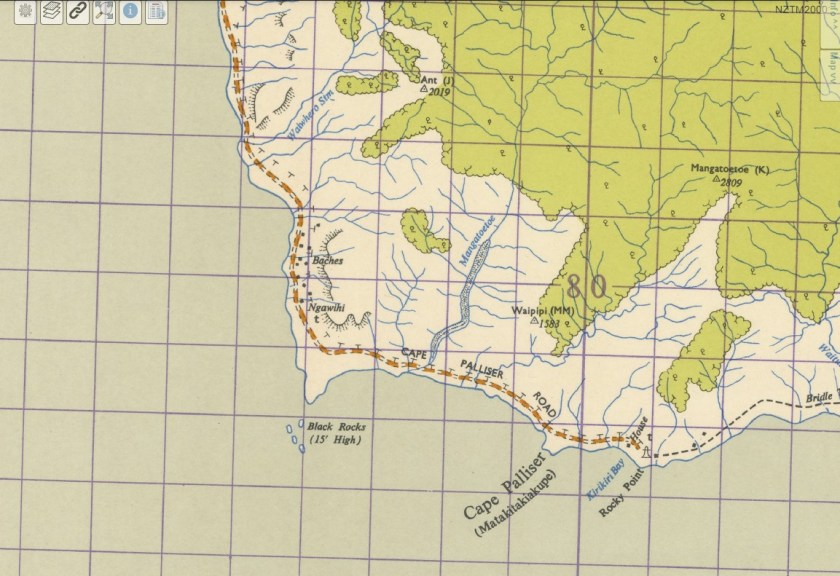
Map 1959
The map of 1969 saw evidence of houses for the first and the spelling of Ngawi as Ngawihi. You can also see the side road (known as Sea View Road) on the map as housing is built and the land subdivided.
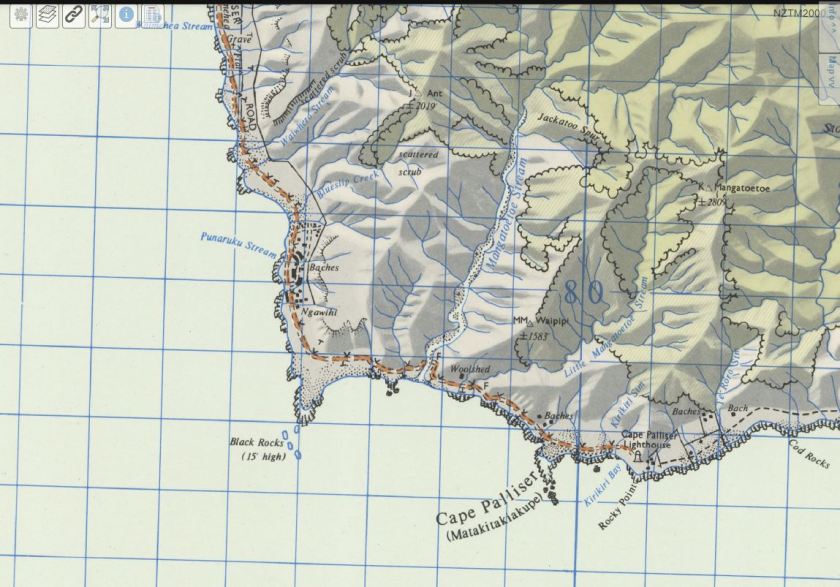
Map 1969
The data from 1979 showed very little difference, the name remaining as Ngawihi and the number of houses still the same, which is interesting as I believe that the level of cray processing increased around this period.
In 1999 the format of the maps changed again. The spelling of the location changed to that of Ngawi and the house detail was lost but land gradient was added along with additional roads.
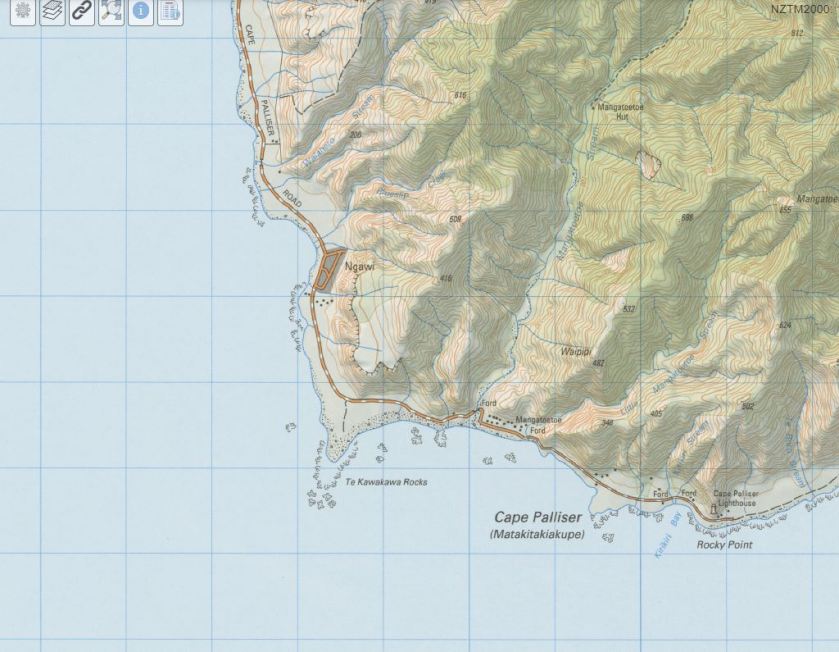
Map 1999
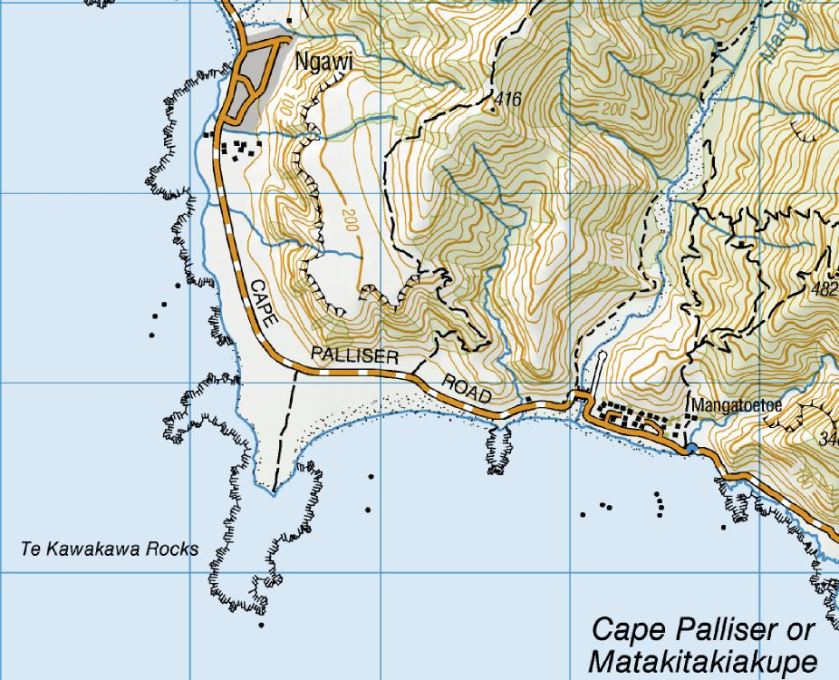
The Map of 2009 shows increased detail concerning the shore line, highlighting the difficulties these cray boats have to gain access to the water. There are more houses towards the lighthouse and the road has become sealed.
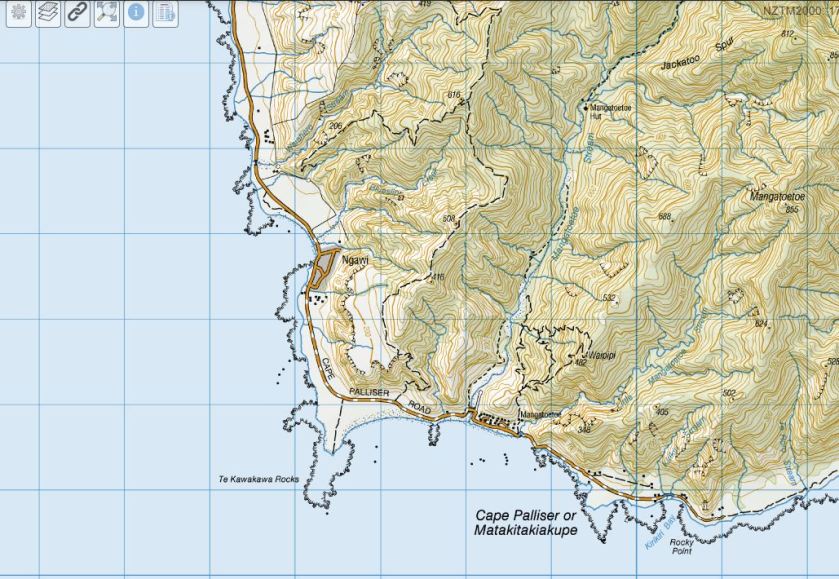
Map 2009
As detailed in my Exhibition section of the blog on the 11th August I listened in to a panel discussion around ‘photography, trauma and healing’. I was particularly interested in the work by Erika Diettes, who interviewed and documented the accounts of victims from Columbian Gangs over a period of 7 years. The project in discussion is entitled ‘Reliquaries’ and consists of a series of sculptures in the form of cubes (30x30x12cm) made of rubber tripolymer, which is a glue like substance that is transparent (accessed 12/08/2020: https://garlandmag.com/article/erika-diettes-relics-in-amber/ ). ‘Embedded in them are garments and objects that, belonged to the disappeared, treasured by their mothers and other family members like relics. But in this case the objects have been delivered permanently to the artist in order to give them “a dignified resting place,” in the words of one family member delivering objects’. According to Diettes’ website the relatives bequeathed the items so that the world would know of their lost and trauma.
The following image shows an example of one of cubes taken from the website:


The use of resin/water sculptures to highlight issues is not new. In the talk by Matt Palmer on the 22nd July 2020 (see Exhibition section) he discussed the work by three art students Hong Yi-chen, Guo Yi-hui, and Zheng Yu-ti—who hoped to draw public attention to water contamination and inspire people to generate less waste. They gathered water samples along with any objects found in the water from a hundred different sites around Taiwan and then froze them into ice blocks and photographed the results – the aim to bring awareness of plastic in the environment and the conditions of local water systems. The original article was published in the National Geographic magazine in June 2018:
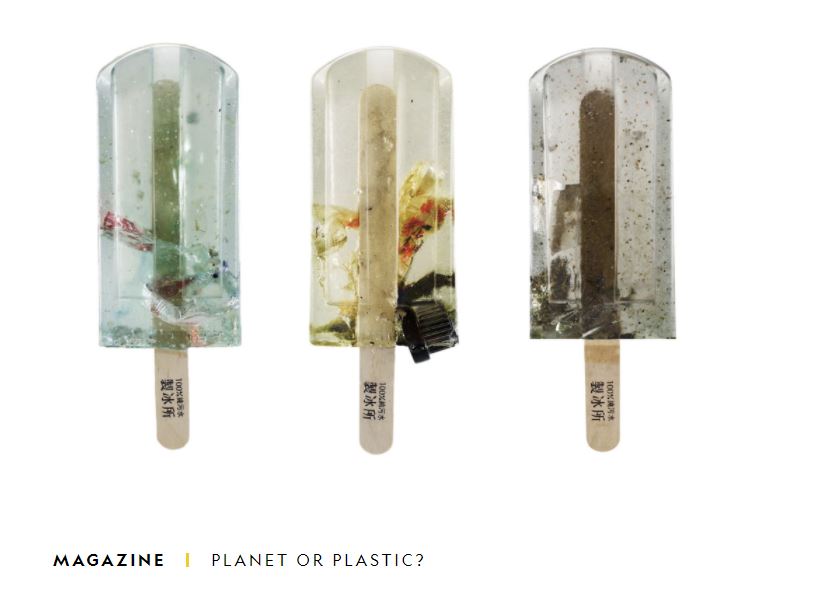
National Geographic magazine June 2018
Bibliography
Accessed 12/08/2020
https://www.youtube.com/watch?v=4qGzZQ9Vh60
The reason I mention these is I would like to try something like this for my Body of Work. The final result of the cray project and may be get a fresh one, items left on the beach that Sue picks up when she is out collecting sea weed etc. or maybe including items that remind me of each of the portraits I have taken.
15th August 2020
Heard back from Alison, who has been in the South Island dealing with the sad loss of her mother, but she did provide five possible names; ‘Eli Mcarthur, Pam Parker, Donna Fenwick Trish Mines, Sue Humphries, Bea Harris, Mel and me and then you have Jess Demench (Kane’s Partner) by the woolshed and Julie Weber by the old fish factory’. I will wait for her to provide the contact details for those I haven’t already photographed.
20th August 2020
Seems like months since I have managed to contribute anything to my Body of Work, but I have been working hard on other aspects of my study – mainly attending on-line presentations to try and gain inspiration and not panic and reading more articles than I know what to do with for my Contextual Studies.
At the Level 3 Support Group meeting today, I provided an up-date on my progress – or lack of for my Body of Work but had managed to re-do my Literature review only to find my tutor away for the whole of August, never mind keep on reading.
Whilst Sarah was imparting some invaluable advice, I made a number of notes around my own Body of Work, just in case I need to add to the images if I don’t get any more volunteers:
Notes to self:
- Email Stefan another student that is covering photovoice as a subject
- Email tutor for my Body of Work and discuss progress as I haven’t touched base in months!
- Look at the Learning Objectives and start planning on how to best cross reference all the material;
- Make some rough prints for editing or use on-line tool;
- Re-do the panorama images, print and make up mock book – speak to Nevil as to when he will get his new printer
- Set a time to photograph the lighthouse at night
- Think about creating a still life image that represents each of the ladies I have already photographed, draft a table of ideas;
- Collect items for the resin blocks as detailed in my post of the 12th August;
- Look at the software ‘padlet’ as both Helen and Sue said it would be useful to edit images.
Monthly Cray Image:


Slight change to the image due to rat problem in the garage!
23rd August 2020
Email from Alison complete with contact details. I have also got the phone number for Kelly’s grandmother so on Monday I will give her a call. Emailed the others and within an hour I now have three more names to call and arrange times for sessions. Overall a productive day as I had a major write up session for all the talks I have attended, my thoughts and reflections and this page. I have also signed up for an eight-lecture session with the Royal Photographic Society on ‘Looking to the present, looking at the past’ which starts on the 9th September UK time.
24th August 2020
Managed to contact and set up two portrait session for Saturday 29th August. Donna at 10am and Julie at 2pm. Will need to call beforehand as both are involved with the local fishing community and they may be out fishing, so be prepared for last minute changes.
As part of this theme I’m thinking of also doing a series of still life images. Collecting things that represent each of the ladies I have interviewed and photographed. Still life is probably more in my comfort zone. Will start with a series of mind maps for each and see what I can pull together.
Also looked at the software package Mark suggested from the ‘Rest of the World’ Student forum ‘Kunstmatrix’ [https://www.kunstmatrix.com/en]. This would give me the ability to show my prints in a virtual exhibition. $12/month which as Mark suggested could be just available for the Submission, so not that expensive. Will add to my to do list for next year in preparation for the final submission – seems a long way away but not that long!
28th August 2020
Received a text from Donna to rearrange her session to the following Saturday and so brought the session with Julie forward to 10am.
29th August 2020
Spent the morning getting to know Julie Weber. Julie grew up just outside of Ngawi but spent all her summer holidays at Ngawi with her grandparents. One of the activities she remembers is collecting agar seaweed, drying it on old metal bed bases and then packing it in large sheep fleece bags ready to sell. She has worked on the land all her life but regrets not going to university as she really wanted to be a Vet, but as she says in those days there wasn’t the money to do that.
She has a daughter from her first marriage and two step-sons from her second to Malcolm and seven grandchildren, so Christmas holidays are full on. They had planned to travel around the country in their new motorhome once they retired however due to Malcolm’s health that was cut short and so they just go off for short periods of time but as she says the sea is in her blood and so is Ngawi.
They originally rented a small property with land and then gained the opportunity to purchase. The property has been renovated and over looks the sea. Julie spends her time gardening; she says the only thing she can’t grow are potatoes otherwise they are completely self-sufficient. She cooks and sews, selling her goods to the local store. There doesn’t seem to be much she can’t turn her hand to and as she says it’s not a five-minute trip to get supplies and so they make do. They have cows, sheep and chickens. Her life is full and, on the go, even though she claims to be retired.
I will download and make an initial selection to process and then post them on my blog and add a link.
 Michele Usher