1st December 2019
Decided to take a week away from all the research online and just talk to people about their understanding and experiences of mental health within the local community. It was a shock to hear and grasp that the people I had consider to be friends over the years of travelling with them into the City each workday had gone through so much. To respect their privacy, I didn’t take notes and will not record their situation, but the statistics cited by the government agencies seem far too conservative. This may be due to how the data is collected and people are more willing to open up to someone they know and as most wont go and see a doctor their records will not be affected.
To consolidate my findings and thoughts I attempted a mind map:
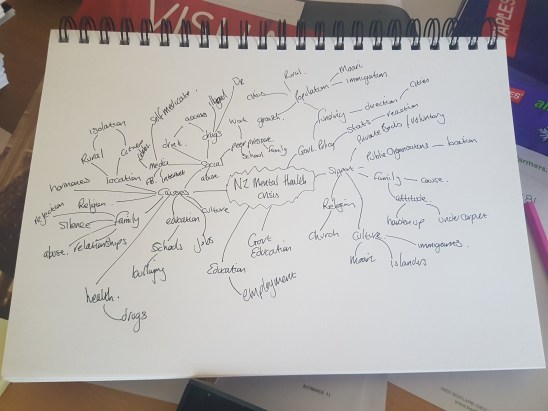
Looking at the map there seems to be four possible streams:
- Cultural issues;
- Root causes;
- Aspects of support; and
- Government policy.
Probably the easiest avenue is to follow the money, possibly working with one of the government organisations or local support groups. Difficult as I work full time. Looking at the articles on line its clear that the money isn’t going where it should – rural areas
Bibliography
NZ Population distribution [website accessed 01/12/19: http://worldpopulationreview.com/countries/new-zealand-population/]
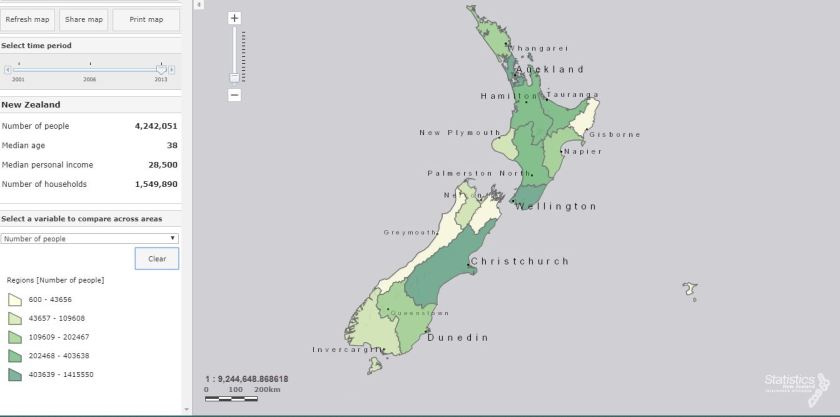
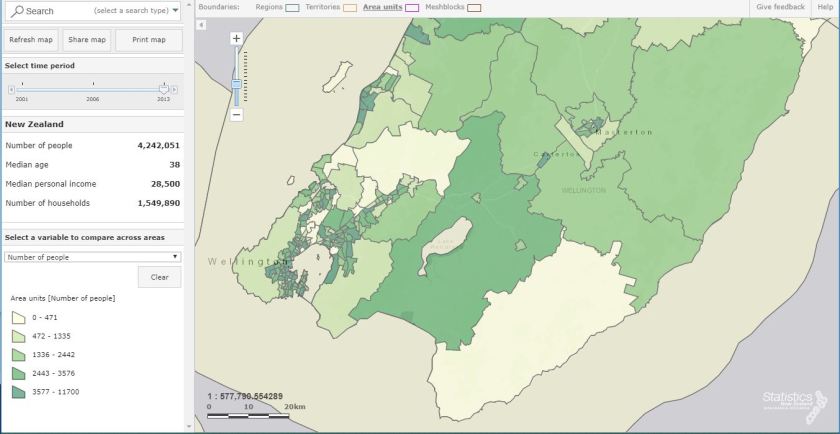
I decided to have a look at the population distribution of NZ as a whole and that of my local area. The following maps taken from Stats NZ [accessed 01/12/19: https://www.stats.govt.nz/regional-data-and-maps/] really highlight how the population is concentrated around the major cities but there are vast swathes of land that have working families that are forgotten, even though these people support some of the major industries of NZ:
Rural Mental Health Online Research [accessed 02/12/19]
The results of a survey completed by Bayer NZ and Country TV that found 70% of rural NZ have felt increased stress over the last 5yrs. Factors affecting them were financial, environmental, and government policies. Bayer New Zealand managing director, Derek Bartlett said the survey results highlighted issues around mental health that need to be addressed.
The survey highlighted that people living rurally were significantly less likely than those living in cities to consider talking to a health professional.
“More than half of respondents found it difficult to talk about mental health issues,” Bartlett said.
He went on to said, ‘56 percent claimed they’d rather deal with things themselves, while just under half responded that the stigma associated with mental health was the reason for their discomfort in talking about it’. Mr Bartlett is concerned at the results.
“Although we’ve made progress in trying to move away from that stigma, it’s still widely misunderstood as a weakness, especially for those living rurally. The Kiwi attitude of ‘she’ll be right’ won’t get us very far if people are neglecting the signs that they need help,” he said.
Bibliography
https://metronews.co.nz/article/rural-mental-health-in-new-zealand
https://www.nzherald.co.nz/nz/news/article.cfm?c_id=1&objectid=12139060
This article covers the issues based in rural Northland and being male and Maori. A Northland GP, Dr Lance O’Sullivan believes that there is ”an epidemic of mental illness”. The figures from the Northern Advocate shows 13 of 41 suicides in Northland were Maori.
New Zealand figures were considered as average among OECD nations however, young Kiwi males (under 25 years) had the highest suicide rate, and within that group Māori were over-represented.
”Rural communities are often geographically isolated which invariably means limited access to mental health resources. It’s no secret New Zealand is in the middle of a mental health epidemic and this a reminder that the effects are widespread,” O’Sullivan said.
Auckland University of Technology (AUT) expert in mental health Professor Max Abbott said more needed to be done to reverse escalating youth suicide rates. The New Zealand Mental Health Survey found almost 30 per cent of under-25-year-olds experienced a mental disorder in the past year. More than half of mental disorders began by the mid-teens and went undetected and untreated, often becoming long-lasting, Abbott said.
https://www.rnz.co.nz/news/country/333083/rural-mental-health-people-are-suffering-in-silence
This article covers the work undertaken by Mobile Health. This is a national mobile surgery bus which has helped create the ‘Rural Health Hub’ run at the National Fieldays event at Hamilton.
The bus has been running for 15 years and carried out more than 21,000 operations in 24 towns. Mark Eager, chief executive of Mobile Health says “Mental health is really at a tipping point in New Zealand, there’s a lot of people with a lot of issues that don’t know what to do, so people are suffering in silence a lot of the time. “Often the first thing we hear about is a suicide or attempted suicide. Here at Fieldays what we’re trying to do is to raise the awareness – it’s not such a bad thing, you can access help.”
“It is very hard to reach people, you’ll often have a public meeting where you are talking about health and the room will be full – but what you need to look for is who is not in the room… often it’s those people who don’t ask for help.” He said access to health care remained the biggest problem in rural communities. “It’s really hard for people in rural areas to get the information they need, when they need it.”
https://www.scoop.co.nz/stories/GE1905/S00123/rural-communities-need-mental-health-focus.htm
DairyNZ chief executive Tim Mackle has welcomed an increase in funding for mental health in yesterday’s Budget, saying he hopes the increased frontline services for mental health will include sufficient support for rural communities.
“Dairy farming has always come with some challenges that can impact wellbeing, but the number and scope of these challenges is increasing,” said Dr Mackle. “The agricultural sector, like other sectors, is facing changes to the way it operates, as well as increased regulations. People deal with changes in different ways and there is a growing awareness of the importance of mental health and resilience for those in the rural sector. We need to ensure our rural communities have better access to mental health professionals when additional help is needed. We know that on the whole our farmers are doing OK, but we have seen a rise in farmers reporting feeling stressed, anxious, fatigued and even depressed from time to time.”
Bibliography
https://www.likeminds.org.nz/communities/story/22/rural-stress
https://www.odt.co.nz/rural-life/rural-life-other/mental-health-services-often-difficult-access
Accessing mental health services remains a major barrier for many rural communities, Federated Farmers chief executive Terry Copeland believes. It was ”getting harder and harder” for many rural people, some having to travel long distances or simply missing out. The challenge was not helped by a nationwide shortage of GPs, he said. The Chief Coroner’s provisional suicide statistics released last month showed the number of suicides to the year ended June 30 were the highest on record at 685, and at a rate of 13.93 deaths per 100,000 people. Young males aged between 15 and 29 years were the most at risk, followed by middle-aged men aged 45 to 54 years.
Bibliography
https://www.thebigq.org/2018/08/09/how-severe-is-new-zealands-mental-health-crisis/
Medical Articles
https://www.mentalhealth.inquiry.govt.nz/assets/Summary-reports/Otago-mental-health.pdf
Government Policy
https://www.beehive.govt.nz/feature/rural-health-policy-meeting-needs-rural-communities
I think my next step is to find a local rural community that would be willing to take part in a project of work.
12th December 2019
Community Location: Ngawi
I decided to research my local area of the Wairarapa and cam across a great article by Mark Scott which was printed in the New Zealand national Geographic Magazine based on his experiences whilst staying at Ngawi. This is about an hours drive from my home.
According to Wikipedia – Ngawi (pronounced “naa-wee”) is a small fishing / holiday town within five kilometres of Cape Palliser, the southernmost point of New Zealand’s North Island. The town comprises mainly small wooden houses, called baches.
The New Zealand Ministry for Culture and Heritage gives a translation of “the native tussock grass” for Ngāwī. Ngawi has more bulldozers per capita than anywhere else. The bulldozers are used to haul fishing boats into and out of the water as there is no wharf or other access to the ocean other than the beach. The location has a large population of fur seals and is popular not just with commercial but recreational fishermen. The best fish to catch are Paua (a type of abalone which is prized for its iridescent shell as well as the flesh), crayfish (also known as rock lobster), and cod. The place is popular with many types of fishermen, including spearfishers. Ngawi is known for its exposed climate, its intense and prolonged wind and the fact that there are almost no trees nearby. The weather can be extremely hot in summer. Several ships have been wrecked on the rough coastline.


Maps copied from Google Earth
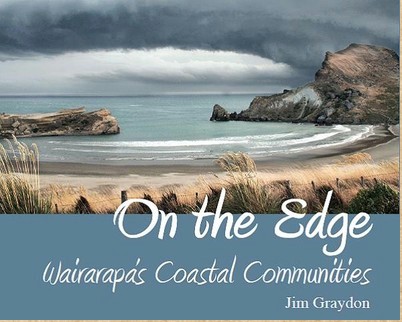
I managed to contact the local District Archivist who sent me details of a book that had been written about the rural coastal communities of the Wairarapa. The book was no longer in print but they kindly scanned the chapter on Ngawi:
Bibliography
https://www.mcleodsbooks.co.nz/p/nz-non-fiction-on-the-edge-wairarapa-s-coastal-communities [accessed 15/12/19]
‘Until recent times, the history of Wairarapa’s coastal communities is the tale of hardy, self-sufficient individuals prepared to tolerate isolation, absence of services, and unreliable communications, to enjoy the ambience and opportunities of their unique coastal environment. On The Edge chronicles the history of these coastal settlements and captures the atmosphere enjoyed by those who have lived or holidayed in the communities.’ Jim Graydon
Review of and facts from ‘On The Edge’ by Jim Graydon
The earliest settles arrived in 1840 to Palliser Bay. These were families that would man the lighthouse. The only other residents were sheep from the neighbouring farm land which ran down to the coast. There were no roads at the time and the only route south was a horse track which ran across the beach – so access was very much dependent on the tides, streams and rivers. The location became more accessible in the Depression of the 1930s when roads were introduced to the area, although this was not an easy task. It wasn’t until the 1950s that a rough road ran through to the Lighthouse but there were still no bridges and, in the winter, rivers were often impassable.
Even post WWII the community was not a permanent site. Photographs taken in 1947 show a settlement consisting of two baches. Isolation was a very real issue. Travel was difficult and groceries including medical supplies were purchased and transported in bulk. Nevertheless, people still came and lived here and in 1962 the general meeting of the Ngawi Emergency Club reported 50 members and 38 bach owners. There were no formal plans of the area but there was a formed gravel road to the Lighthouse and some well-worn tracks through the grass to the various baches. A bach was either a one or two roomed, flat roofed construction made from anything that was left over or found. ‘Long-drops’ took care of the sewage situation. Power was via diesel generators and the telephone was a party line, so everyone knew your business.
The community was one of sharing, especially anything that was perishable as refrigeration was not available. Anyone travelling for supplies would bring back mail and necessities for others. The introduction of better roads and refrigeration seemed to destroy this community feeling.
Residents claim that Ngawi is the only settlement anywhere which boasts more bulldozers than people. Due to the coastline they are the only way to launch boats into the water as there is no pier for mooring. By the late 1960s the main catch were crayfish and there have been a number of families that have remained in the area and the industry and the intension has always been to make it a permanent source for cray. In the 1980s the Ngawi Packers pioneered the export of live crayfish which ensured the development of the area and the industry. Until the 1970s, 90% of the catch was exporting the tails to the US. However, this all stopped when the government introduced the quota system which limited the volume of the catch. The factory which pioneered both the live export and the marketing into Asia closed in 2004.
Ngawi is renowned for its rough seas and hills and bush land behind it. It is said that it’s a great place for ‘good keen men’. There was a sense of being part of a community due to the conditions. ‘A place to start with a little and build a sizable asset’. There was however a strong drinking culture – work hard and play hard. Most of the women of the time were there for their husbands. Raising children in a community isolated from schools, lacking the basic amenities was never going to be easy and often relationships suffered with high rates of depression. It has been said that it was hard for outsiders to be accepted, the locals worried about loss of crayfish quoters, but once they knew that they were staying they were soon accepted into the fold.
Throughout the 70s and 80s the community grow to a record 60 permanent residents in 1983 and double that during the holiday season. As the number of properties grew it soon became clear that some form of organisation and so a subdivision plan was drawn up. The Featherston Council finally approved the plan in 1972. The Ngawi development finally consisted of 91 settlements for residential use with the land between the road and the foreshore became a reserve.
Power has always been a problem with often cuts to the supply due to weather, this was a real problem for refrigeration. Telephone service was via the use of a single party line at the Ngawi Station until 1990. Education was also a problem, with many young families having to get the school bus to Pirinoa for primary school and Greytown for secondary both of which are over an hours’ drive away and if the weather is back the bus wouldn’t come. However, there is nothing like the feeling of shared isolation to built that sense of community. Ngawi residents seem to have understood that from the start and have learnt to help themselves as most of the time local and national organisations find it ‘too difficult’ to get there.
By the 1980s roads and communication was improving along with power, with easier access and labour-saving devices people became more independent and that sense of community was being lost. ‘Everything changed when the power went through. Before, if someone got some fish we all got some. The Tilsons would send milk over and Margaret Tilson always said ‘If you want some meat just tell Graham (Tilson).’ When people got fridges and deep freezers there wasn’t any need to share. It made a real difference. The power was lovely. It was lovely to have it, but you don’t realise how it is going to change things’ (Pat Carter 2010).
Despite all the changes the Ngawi fishing community was and still is very close. Social gatherings are very important. Social gatherings for the ‘permanents’, those who live and worked together during the week would take place at the local Social Club. Some of the bach families with a lengthy pedigree might be included but the increasing weekend holiday home owners were and are still viewed as peripheral to the ‘real’ community.
The biggest impact to the community however was the introduction of the ‘Individual Transferable Quotas’ for the rock lobster fishery in the 1990s. The number of commercial boats dropped from 11 in 2005 to 2 in 2012. The small fishing community has changed over the years and the demand for coastal property has caused the prices of property to rise, which means locals who have children that have grown up in the area and would like to stay now can’t afford to purchase property. Today the population is recorded as a permanent number of 30. There is no school bus, however those that remain in this small, isolated community have learnt to live with these outside influences and they resolve problems their own way. When there’s trouble the community resolves it in their own way, showing a strong sense of community, independence and resourcefulness.
Chris Killip (b. 1946)
A Manx (name given to a person from the Isle of Man) photographer who is known for his ‘gritty’ black and white images of people and places. In 1988 Killip produced a body of work based in the Northeast of England called ‘In Flagrante’. The work were all black and white images, made on 4×5 film. They have been considered as among the most important visual records of living in 1980s Britain. Gerry Badger (an English writer and curator of photography and photographer) describes the photographs as “taken from a point of view that opposed everything [Thatcher] stood for”, and the book as “about community”, “a dark, pessimistic journey”. The book was reproduced in February 2009. In a review of this reproduction, Robert Ayers describes the original as “one of the greatest photography books ever published”.
Reading the article by Laura Hubber (2017) in conversation with Killip I want to try and capture and gain a similar feel and relationship with the residents of Ngawi. The use of the large format camera helped this as Killip says ‘When you make a portrait of someone with a plate camera, it takes time, and it gives the person a chance to address the camera. For a want of a better word, it’s more serious. It’s not a casual thing, and it’s the paraphernalia of using the plate camera that emphasizes that, too. I think it works to your advantage.’ Although I don’t have a large format I would like to start to reuse my Hasselblad. I aim to spend a number of weekends there even though I’m only an hours drive away – there are a number of Airbnbs available.
“You’re going to get a picture by being there. It’s never easy. Sometimes you’re good and they’re good…I’d never seen them before and I never saw them again.” —Chris Killip


Bibliography
Research
Websites accessed 23/12/19
https://en.wikipedia.org/wiki/Chris_Killip
https://blogs.getty.edu/iris/caught-in-the-act-a-conversation-with-photographer-chris-killip/
https://www.getty.edu/art/exhibitions/chris_killip/
https://www.all-about-photo.com/photographers/photographer/264/chris-killip
Paul Strand (1980 – 1976)
An American photographer who’s work spanned six decades, covers several genres and subjects which were undertaken in the Americas, Europe and Africa. Strand sought through his work to express the feeling of the land and its inhabitants directly, honestly, and with respect. His prints are masterly in detail and tonality. Strand advocated “straight photography,” and photographed street portraits to city scenes, machine forms, and plants with a distinctive clarity, precision, and geometric form.
The work ‘Tir a’Mhurain’ has been described as a romantic and political reference to the landscape. History is an important part of the Strand’s narrative—his work evokes the natural and cultural forces that shaped the island communities of the Outer Hebrides. The project accounts for the Gaelic culture and a defence of a way of life that Strand valued and respected. Along with studies of fishermen, families, schoolchildren and farmers, you can see images of houses and possessions which reveals a beauty in the everyday. The elements that characterise the islands, both past and present, are subtly combined in many of the portraits.
Strand photographed communities in France and Italy before hearing a BBC radio broadcast about the Outer Hebrides that discussed the threats to the islanders’ traditions, featuring Gaelic songs recorded by the American folklorist Alan Lomax. It is said that Strand spent several months on South Uist and its neighbouring island Benbecula, recording the people and landscape.
Strand was said to carefully compose his subjects, instructing them on pose and costume, possibly to recreate moments he had glimpsed during long periods of study. Strand was keen to understand his subjects, their environments and the forces that shaped their lives in a similar way to Killip. I think a major part of my project will be trying to form the bonds and relationships with the people of Ngawi. They need to be comfortable with me and hopefully that will come across in my images as I think from the work by both Killip and Stand that human factor is important. Images of baron landscapes may give the mood of depression, isolation etc and be a lot easier to achieve but I think the human factor will show the struggles they have. That said a number of the seascapes remind me of the coastline of NZ


Bibliography
Research
Websites accessed 23/12/19
https://www.theartstory.org/artist/strand-paul/artworks/
https://www.newyorker.com/culture/photo-booth/paul-strands-sense-of-things
http://www.artnet.com/artists/paul-strand/
https://www.bbc.com/news/in-pictures-35823949
https://www.theguardian.com/uk/scotland-blog/2012/sep/20/scotland-photography-paul-strand
https://www.vam.ac.uk/articles/paul-strand-in-the-hebrides
https://www.youtube.com/watch?v=i07MeZ5yyPY
Tom Hunter (b. 1965)
I reviewed Tom Hunter as part of my Documentary course work but have revisited my notes and comments in light of my Body of Work.
In a similar mode to Strand and Killip Hunter prefers to work slowly using a Wista 4 x 5 camera and also a large format pinhole camera something I’ve only ever played with at a night clss. After leaving school with only one qualification he seemed to work his way through a number of jobs before undertaking a night class in photography.
“People have got a bit too excited about digital technology, thinking you’ve got to have the latest digital this, that and the other,” he tells me. “But it’s not about the equipment, it’s about capturing the light – you can take pictures on anything. You don’t need to spend £1500 on the latest digital multitasking thing. Going to a church hall and taking maybe three pictures in an hour is going back to basics. It’s like slow cooking. I like that methodical way of working, not walking around taking lots and lots of shots.”1
He graduated in 1994 from London College of Printing with a first-class honours degree and began by photographing his friends and neighbours living in squats, but rather than depicting the squat dwellers as misfits and victims he wanted them to be perceived in a more dignified way. For me his images are taken with consideration of both the light and composition and this is how I want to work with the residents of Ngawi.
“I had got very sick of seeing people I knew, travellers and squatters, presented in the media in black-and-white images with captions saying, ‘These people are scum’. I was saying, ‘We’re not scum, we’re just people like anyone else and we need to be shown’. Even though I lived in a squat, I never thought I was outside of society. I always felt I was part of this country and that my voice should be heard. I thought by using colour and by using certain ways of depicting people I could create more empathy.” 1
I think this is also true for the people in the rural communities of NZ. Having a voice to highlight the growing issues of mental health. They are the forgotten part of New Zealand, but they are the backbone of the country’s prosperity. Hunter also comments “colour and light became key to the way I looked at my neighbourhood”2 He has continued to use friends and the inhabitants of his Hackney community to convey local issues which include elements of realism believing that “images are real yet created by the person manipulating the camera” 2 Which will be the aim of my Body of Work.
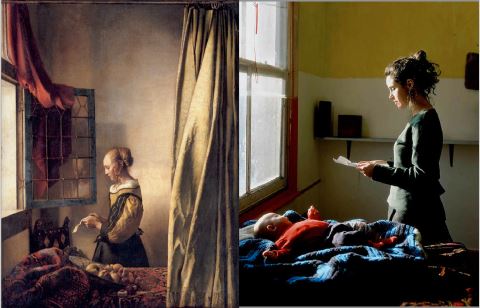
Hunter states that his inspiration is drawn from the artist Johannes Vermeer. The images are produced to highlight the seriousness of the situations he and his neighbours found themselves in – most will not understand and only see the beauty in the image.
“Newspaper headlines come and go. I want to show that they are very serious and that what goes on around you is very important,” he says. “I wanted to make them monumental, and put them in The National Gallery. There is an argument that aesthetics creates a barrier; I’m arguing it takes the barrier down and helps you engage more“.1
Hunter researched and discovered that there was limited information about Vermeer, but he is believed by some to have used a camera obscura and it is this relationship with photography in Vermeer’s paintings that fascinated Hunter. Vermeer’s paintings of his small local community are intimate with minutiae details , Hunter calls him a “painter of the people” 2, and describes Vermeer’s work as “magical and amazing” 2 For me reviewing Hunter’s work that same approach can be seen in the projects he has undertaken in his local community highlighting the beauty that exists in the most unlikely of places. This is something I think I need to try and achieve in Ngawi. By staying and getting to know people I hope to gain access and understand more about their lives and not just the health issues.
Hunter acknowledges that there is a downside in his creations and limiting the audience to small exclusive galleries, when he really wants to reach out to the world:
“But there are downsides to everything, and the downside of the art world can be that suddenly you’re producing a commodity, and your work is being bought by rich people and shown quite exclusively to them. For me, it’s been really important to go beyond just a small West End gallery where I will only communicate with a few people. I didn’t want to become ghettoised in the art world – if I was just trying to create beautiful objects that would be fine, but I’m trying to put across a message as well.” 1 I want my images to highlight the issues of the rural communities in a similar way its so easy for the government to get those quick wins by pouring money into inner city projects when they should be supporting the rural communities.
Bibliography
I also found the following YouTube interesting (accessed 23/12/19):
![Ophelia[1]](https://i0.wp.com/michele512879level3.photo.blog/wp-content/uploads/2020/01/ophelia1.jpg?w=442&h=312&ssl=1 "Ophelia[1]")
![tom-hunter-the-way-home-(from-life-and-death-in-hackney)[1]](https://i0.wp.com/michele512879level3.photo.blog/wp-content/uploads/2020/01/tom-hunter-the-way-home-from-life-and-death-in-hackney1.jpg?w=390&h=312&ssl=1 "tom-hunter-the-way-home-(from-life-and-death-in-hackney)[1]")
Research
Access 23/12/19
1 http://www.tomhunter.org/think-global-act-local/
2 http://www.bbc.co.uk/programmes/b00zt7ky
Alec Soth (b. 1969)
With Alec Soth I looked mainly at his work of ‘Sleeping by the Mississippi (2004). “In the book’s forty-six ruthlessly edited pictures, Soth alludes to illness, procreation, race, crime, learning, art, music, death, religion, redemption, politics, and cheap sex.” Anne Wilkes Tucker
Yet to me there seems to be a lot more to his images. These large format photographs, are desaturated with amazing detail that reveal the lives of the inhabitants (both current and departed). Those lives and hopes (no matter how seemingly insignificant or sad) are what I think Soth has captured so well and I hope to reflect the same – well try to.
Soth stated, “I believe that photography is essentially non-narrative. That, while it aches to tell stories, it doesn’t really tell stories that have a beginning, middle and end. This has constantly frustrated me about the medium, and I’ve been constantly battling it. What I’ve come up with, is that when I’m looking at a photographer’s work, I’m looking as much at that person’s experience as a photographer in the world, almost as if they are a first-person narrator, as I’m looking at the subjects of the photographs.”
![2002_03zL0046_F-copy[1]](https://i0.wp.com/michele512879level3.photo.blog/wp-content/uploads/2020/01/2002_03zl0046_f-copy1.jpg?w=416&h=333&ssl=1 "2002_03zL0046_F-copy[1]")
![Helena[1]](https://i0.wp.com/michele512879level3.photo.blog/wp-content/uploads/2020/01/helena1.jpg?w=416&h=333&ssl=1 "Helena[1]")
Sleeping by the Mississippi is more about the spirit of wandering and peoples’ dreams than the river itself. Throughout the project, Soth asked his subjects to write down their dreams. The first image (see above) is of Peter’s houseboat in Winona, Minnesota, it shows the northern reaches of the river. It’s winter and the banks are covered in snow but, Peter writes “I dream of running water”. I think I would like to photograph the people of Ngawi not just on the tractor that populate the beach but in their happy place.
Soth uses all forms of equipment from disposable to the large format “I normally don’t have a camera with me when I approach somebody, so immediately it’s less threatening,” he explains. “Then people ask me about the project and only then do they see the camera. It’s big and old-fashioned and my head is covered by a dark cloth, which also changes things. They can’t see my face, so the situation becomes more relaxed. Because it takes so long, you have a conversation with them and the result shows.
“Sometimes I asked if I could go into people’s homes and take their pictures there,” he continues. “Some of the interiors in the book started as pictures of people, but then I found their homes were more interesting. Obviously you can’t just ask people to go into peoples’ homes and take their pictures.” I think its going to take me sometime and a number of visits to be able to take interior shots but I’m hoping to get some. My biggest concern is the initial approach and getting enough people interested. A slow honest approach with an explanation of the project I hope will work.
Bibliography
Research
Access 23/12/19
https://alecsoth.com/photography/projects
https://www.magnumphotos.com/arts-culture/alec-soth-sleeping-by-the-mississippi/
https://www.lensculture.com/articles/alec-soth-sleeping-by-the-mississippi
https://www.mmam.org/blog/2019/5/9/soth
Susan Lipper (b. 1953)
An American photographer who’s work includes a project and book called ‘Grapevine’ (1994), which is why I’m researching her. For about 20 years she has been traveling to a small community in the Appalachian Mountains of West Virginia called Grapevine Hollow. The images were produced between 1988 and 1994. The critic Gerry Badger has written that “Community, family, and gender relationships seem to be at the core of her investigation.” Lipper’s collaborative approach distinguishes Grapevine from social documentary photography; she describes it as “subjective documentary”.
Grapevine Hollow consists of few trailers and mobile homes of about 50 residents in the middle of a part of the United States badly hit by the decline of the coal industry, where alternative industries include distilling moonshine, and the newer initiative of cultivating marijuana. Lipper found the community while on a cross-country trip.
Her personal commitment to the community not just as subjects, but as people and as friends, yet Lipper uses the words of Richard Avedon: “My photographs are works of fiction. Any truth you see is my truth.” I don’t believe that her images are in any way artificial, dishonest, or unauthentic. “This series of pictures is my journal,” she says of the Grapevine project.
“I began photographing in Grapevine because it was as far removed from the life I knew in New York City as it was possible to be,” Lipper says. Grapevine Hollow is said to be a typical small rural settlement, an isolated cluster of single or multigenerational family units, most of them interrelated. In a similar way to the work of Soth human relationships, lie at the core of Susan Lipper’s work. She has said that she was drawn to Grapevine because of its people and family.
As Gerry Badger (The Pleasures of Good Photographs, New York: Aperture, 2010) states that there is —‘a basic theme of Grapevine’, I would suggest, ‘is claustrophobia, the effect of barriers and fences, both material and psychological, which press in upon us, shaping our lives and circumscribing our ambitions. Enclosures, and the desperate measures taken to break free of them, is surely a primary leitmotif, from the wooded walls of the valley itself, to the four walls of domesticity that enclose women saddled with kids at an early age, to the ring fence of boredom around the men, most of them without regular work, to the tight, enclosed society created by geographical isolation. And yet, as Lipper points out, the isolation and claustrophobia cut both ways. What some might rather melodramatically see as a grave, could also be seen as a womb. In their isolation, and enforced indolence, the inhabitants of Grapevine might feel safe and protected, free from real responsibilities, except within their own world.’
It was interesting to learn that she uses a Hasselblad so another push for me to use mine. She works in series and seems to work towards the final product. She works hard to gain collaboration with both the subject and the viewer. The images are staged that highlight the division between male and female. The works and series her images in a cinematic style. The females she states are depicted as either the mother or a whore.


Bibliography
Research
Access 23/12/19
https://www.susanlipper.com/text_gv_badger_1.html
https://www.theguardian.com/artanddesign/2010/oct/13/susan-lipper-grapevine-series-south
https://susanlipper.com/text_gv_edwards.html
https://www.itsnicethat.com/articles/susan-lipper-grapevine-higher-pictures-201216
Anna Jacoba (Ans) Westra (b. 1936)
Born in Leiden, the Netherlands, Westra immigrated to New Zealand in 1957. She began her career in 1962 as a fulltime freelance photographer, working mainly for the Department of Education and Te Ao Hou, a magazine published by the Department of Maori Affairs.
In 1962 Westra provided the text and images for the ‘Washday at the Pa’, a school journal made for eight-year olds. The book followed a day in the life of a rural Maori family awaiting relocation to a state house in the city but was controversially withdrawn from circulation by the Department following protests by the Maori Women’s Welfare League
I think the images are open and honest, they show the situation as it was warts and all and this is an angle I would like to explore with my Body of Work.


Bibliography
Research
Access 28/12/19
https://mro.massey.ac.nz/bitstream/handle/10179/4728/02_whole.pdf?sequence=1&isAllowed=y
https://en.wikipedia.org/wiki/Ans_Westra
https://collections.tepapa.govt.nz/topic/953
https://www.thearts.co.nz/artists/ans-westra
https://www.art-newzealand.com/Issue100/ans.htm
https://www.stuff.co.nz/entertainment/arts/99216243/the-bohemian-life-of-ans-westra-in-print
Robin Hammond (b. 1975)
A New Zealand born photographer who is the founder of Witness Change, a non-profit organisation which is dedicated to the advancement of human rights through his images and documentary.
In 2015, Robin was named by Foreign Policy as one of the “100 Leading Global Thinkers”. Robin has published three books:
- ‘Your Wounds Will Be Named Silence.’
- ‘Condemned,’ and
- ‘My Lagos’.
Hammond has covered a wide range of subject matter with the likes of mental illness crisis in developing nations, LGBTI communities living under oppressive regimes, and the experience of refugees building new lives in Europe. With these kinds of projects, he has been subject to a lot of criticism but he has learnt to ignore: ‘On one hand, it made me sad to hear that stuff. On the other, I think for many of us who move and work in circles that try very hard to be accepting of diversity, it’s really good to be reminded there are a big chunk of people who aren’t part of that world. We see this with things like Brexit and Trump. ‘A lot of us, including myself, are very rarely exposed to the other side. I think it’s a really good reminder to those of us in my bubble of the work that needs to be done.’
The following has been taken for an interview in 2014 and covers Hammonds position on Mental Health [https://www.wn.catholic.org.nz/adw_welcom/robin-hammond-human-rights-photographer/ accessed 28/12/19]
Sometimes it can be really hard and I feel completely powerless in my work. I see real human suffering and it’s very difficult to have to walk away. There are times I wish I could put down my camera and do more for the people I see. Sometimes we have to be fundamentally human before we are journalists. For example, mental health is up against institutions and powerful people. It’s really difficult to see mentally ill people in chains, shackled, locked away in prisons. And the vast majority I’ve photographed are still there.
I will continue to work on mental health issues and the next stage for me is to focus on those who are helping. They are very brave, courageous people with no resources and a tide of stigma. I want to go back and help them. It really upsets me that mental health is neglected. It affects one in four people in the world and there is so little done. I want to show here’s a problem and here are the people trying to help and I hope to do that early next year.
Life is not always fair but my hope is to see change and I have to try.


Bibliography
https://www.robinhammond.co.uk/category/features/
https://www.worldpressphoto.org/person/2337/Robin%20Hammond
Initial Photo shoot 30th December 2019
As per the instructions for the first Assignment I spent the day at my location, just wondering around and getting a feel for the place. I took the opportunity to try and get to know some of the local residents that may have been out and about. This did result in two contacts and I hope to go back and shoot them for my next session.
I took a series of images mainly landscape/environmental images. Ideas really for the next sessions. I processed in a 5×4 format and in colour however I don’t really think they give the feel of the place and I have been thinking that the square format is the way I’m going to go with the final set. Maybe due to the bright sunny day the images feel flat. My thinking at the moment is black and white. I also feel as if I haven’t been very experimental, suck to the standard reference shot. Further work needs to be completed here.


 Michele Usher