5th July 2020
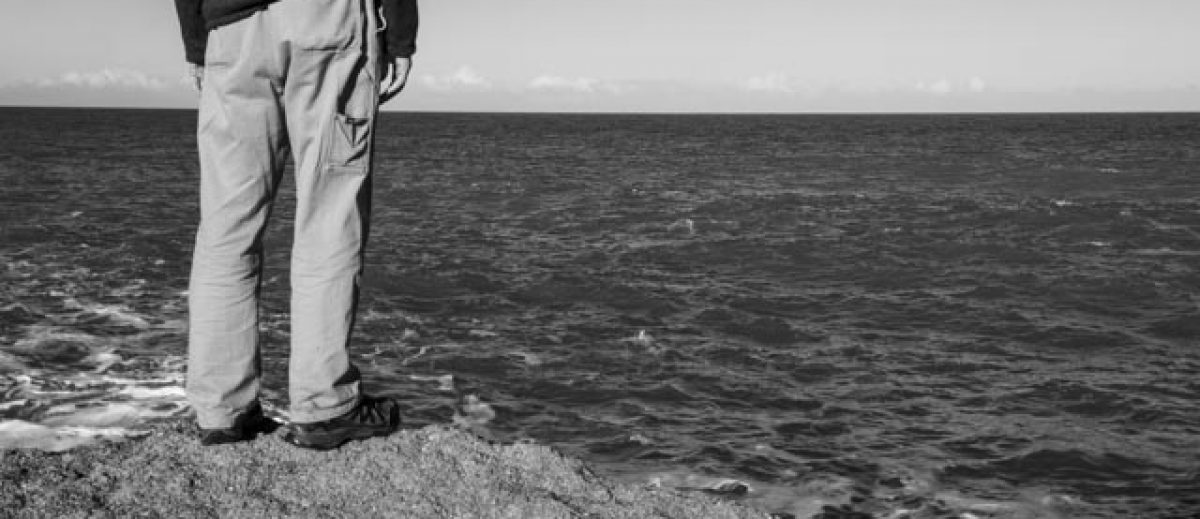
Weekly Cray Image


I have spent part of the day processing images from the photo shoot of Melanie and Alison of the 27th June. Because I’m still not sure which way this final project will look, I have processed in both colour and black and white. A full set of images can be found here:
Alison: Colour and B&W
Melanie: Colour and B&W
I have selected a few that I think work here:
Alison:


Melanie:


I have also added the images to the rest of World forum shared Drive for feedback in the up-coming meeting of the 13th July, hopefully a few of my peers will give me some feedback and pointers.
I have come to the conclusion that I’m not a portrait photographer and I’m worried that none of these will be used in the final submission or have a submission at all. As a thank you I have sent links to a dropbox file so both Melanie and Alison can download any images they are happy with and either use on their website or Facebook page for friends to see.
I continue to photograph the cray (see above) and worry that this is just not progressing as I had hoped or I will end up with the same image in a year’s time, but then what should I expect when there is just the shell left and it’s not exposed to the elements, I think a more dramatic result would have occurred if I had placed it outside, but I wanted to be able to photograph it a few times before something took it.
11th July 2020
The day started with thick fog but by the time I got Ngawi the sun was out and the day was wall to wall sunshine. Not that warm with a southerly wind – surfers liked it. I was back to do a photo shoot with Sue, a contact I had made though Alison.
When I arrived Sue was just making coffee for some workmen who were fixing the damage caused by the same flood that Melanie had been victim to, only by the time it reached Sue the water was clear and not full of silt and rock so it travelled through her kitchen door, spare bedroom and then out the front of the house. The direction of the water needed to be changed to ensure that the flow didn’t go through the house again or for her water tank to overflow.
We started the session with coffee and introductions, getting to know how she arrived at Ngawi from the owner of a small village pub in Dorset, UK, through two marriages, health scare in the form of cancer to moving to be near here son here in New Zealand. Although retired she has a full life with her art, which is all around the property to her collecting seaweed from the beach. This collecting gives her a small income to subsidise her pension but its not just any sort of seaweed, as I found out when I tried to collect what I thought was the right sort.
In order to collect Sue needs a licence which is granted by MPI and this allows her to gather, dry and sell certain types that are used in the cosmetic, medical and agricultural fields. The main market is once again China. She has to be very careful to ensure that the seaweed is washed and dried and no other varieties are included by mistake as that means the whole bag is rejected. When weighting the final product, they even deducted the weight of the plastic sack! She said it wouldn’t make her rich but it kept her busy and the dogs love the run on the beach.
We spent about an hour on the shore front at various locations looking for the seaweed but also took the opportunity to pick up some items – mainly plastic, that shouldn’t have been left or had washed up.
On our return to her property Sue explained the cleaning, drying and bagging process. Its then left in a dry location until collection/drop off which usually means a two and half hour drive to Wellington, so she waits until the Ute is full to do that or if one of her neighbours is travelling over they will take it for her and just costs a beer on a Saturday night.
12th July 2020
Down loaded the images from yesterday’s shoot and selected a number for processing which look promising, won’t have time this week but will try to develop next weekend. I received notice that both Alison and Melanie have accessed their images.
Weekly Cray image:


13th July 2020
Joined the usual four at the ‘Rest of World’ OCA forum. I had up-loaded a large number of images to the shared drive for feedback from my peers and after listening to another student (Roger from Chilli) who is undertaking a painting degree, it was my turn to give an up-date.
Mark, also from New Zealand but based in the South Island highlighted the fact that I seemed to have all these images but ‘what was my story? Where are you going with this Michele?’ He had just voiced my very concerns. Its something I had been thinking about in the back of my mind for weeks, but had still not come to any conclusions. I kept thinking that an idea would come, I keep watching various talks and presentations on books and projects that hopefully a penny would drop and I would think – that’s it, that’s the way I’m going with this. The COVID situation didn’t really help and getting people to respond has been difficult but through referrals I’ve managed to get a few residents to allow me to shoot them.
I said I had a number of themes on the go, such as the cray, the pano and the folding book and then trying to get as many of the residents of Ngawi as possible, but wasn’t really sure. I half-heartedly mentioned that I have managed to either set up or complete five of the six women of Ngawi, a situation that Alison had stated when I was shooting her. He said well there’s a possible story, find the last one. He mentioned a situation on the West Coast – Denniston that I should look into and then Lynda (just started Level 3) mentioned Maja Daniels as another possible area to research.
15th July 2020
Denniston New Zealand
Denniston is a small settlement situated 15km east of Westport on the west coast of the South Island of New Zealand. It is an exposed rocky plateau approximately 600m above sea level within the Papahaua Ranges:
Map taken from Google Earth


It existed solely to extract coal from the plateau with harsh living conditions; workers lived on the rocky, windswept plateau which was often immersed in cloud for days on end, receiving one of the highest annual rainfall levels in the country, and very low temperatures even during the summer months.
Following the development of good road access and the demand for coal declined as New Zealand moved to wind generation and hydro power stations, the township shrank – and disappeared altogether when the mines closed.
There were three main townships on the Denniston Plateau – Denniston, Burnett’s Face, and Coalbrookdale. There were no roads connecting the townships, with workers and residents walking alongside the rope roads. The population of the plateau as a whole peaked in 1911, at just over 1400 inhabitants.
The first settlement, ‘The Camp’, was located above the Waimangaroa River. It was built between two escarpments for protection from the winds. The workers developed the ‘Banbury Mine’, but many did not stay long owing to the inhospitable conditions. However, by 1883 there were about a hundred residents.
Settlements soon began to spread and by 1887 there were three hotels, a postal and telegraph office, four general stores, three butchers and three bakers. Living conditions were squalid and unsanitary. The cottages were small wooden buildings with roofs and chimneys of corrugated iron. There was no running water, no baths or toilets within the house but were tin sheds. Large families were often confined to two-room huts for long periods during bad weather. It is said that even after 20 years, these poor living conditions still prevailed.
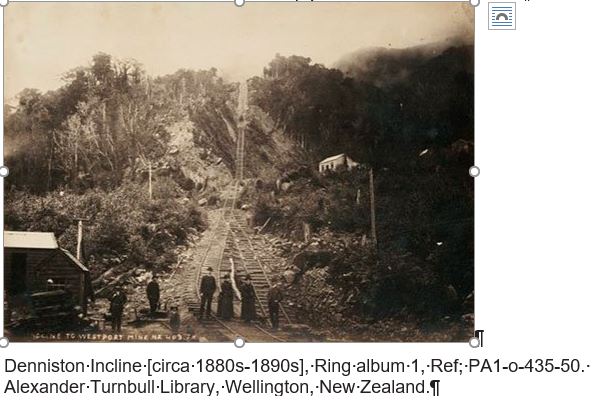
In a Government document found during my research it details the life of the women who lived there under these pretty poor conditions with many reporting that jobs were limited, either working for the mines or the local hotels when they there, young girls took babysitting jobs, with high numbers of siblings in a family. There was a high level of education with many receiving scholarships.
‘The way my mother and all the women worked to keep their house clean. We never had much but Mum and the other women slaved their guts out keeping them clean. Scrubbing floors, the kitchen table, black leading the stove, polishing…even the door step. Sand soap, and lots of it, was used almost every day. I don’t know why they did it. Just pride I suppose … to bring some shine into their lives over the things they did control … and everyone did it. And they didn’t have detergents, vacuum cleaners, or the things we have today.” Betty Prentice Skeats
“All us three sisters slept in a double bed. Had the same places every night. I always went to sleep on the front edge as I had to get up about 5am to help Mum with the lunches and fill the tea bottles for the menfolk. I also got breakfast for my brothers, Dad and the boarder we had staying with us. Also the younger ones had to be got ready for school and also myself.” Abbie Robertson Curragh
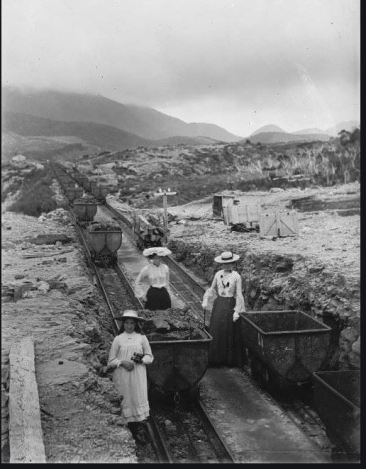
Image: https://westcoast.recollect.co.nz/nodes/view/1087
Although the conditions were bad at Ngawi I don’t believe they were as basic as that of Denniston, but due to the location they do and remain having to cope with the extreme weather conditions which often cause the road to be lost due to erosion through southerly wind and high tides. The women are the backbone in both of these communities. They continue to support their families and provide that community feel. The working conditions of the mines were worse than those in the fishing industry with the loss of life due to mine collapse and rail cart injury. Any victim would have to be transport miles for treatment – that’s if they survived the trip down the hill.
Bibliography
Access 15/07/2020
https://www.nzonscreen.com/title/pictorial-parade-195-after-ninety-years-1967
https://www.nzonscreen.com/title/coal-from-westland-1943
Maja Daniels
Daniels is a Swedish independent photographer who has a keen interest in cultural differences and uses her photography as a way to communicate these. Her projects use a mixture of environmental images and portraiture in a social documentary format. She believes in the importance of research prior to and during her projects.
In her project ‘Elf Dalia’ Daniels spent three years (2012 – 2017) living in a small isolated cabin in Alvdalen a rural part of Sweden. Her grandparents once owned the cabin and she would spend time there during the summer. However, this town had a dark past.
In 1168 a 12-year-old girl was accused along with nineteen others of witchcraft. They were trialled and executed. This started a string of other cases across Europe and even in the US. But this isn’t the only reason Alvdalen is special. Its native language is ‘Elfdalian’, which is a north Germanic dialect derived from the Viking’s Old Norse. The use of this language has dwindled due to the government enforcing Swedish as the nation’s official language. Today, less than half of the town’s population – 7,000 – can speak the native tongue. How Elfdalian ever existed, and how it was preserved and isolated to a small trading town, remains a mystery and this is the basis of Daniel’s project and research.
Whilst living in the town she discovered the work of Tenn Persson, a local photographer and collector who lived from 1878 – 1938. She was so taken with his work that she has used it throughout her book to offer an alternative view. Daniel’s has used a combination of digital and analogue which has helped her produce a feeling of mystery about the location and its people. The following has been taken from an interview with Lens Culture Magazine (no date supplied)
DH: How did you encounter the work of Tenn Lars Persson, and why did you decide to include some of his work in this project?
MD: As I began working in the region, I came across the archive of photographs made by “Tenn Lars” Göran Lars Albert Persson, and was amazed by it. The Local Heritage Foundation in Älvdalen takes care of what he left behind, which is almost 5000 glass plates, along with photographs he made in the early 1900s.
Tenn Lars’ work gives us a glimpse into Älvdalian life in the early 1900s, but more importantly, it gives us remarkable insight into his own rumination and interests. His images depict his relationship to mystery and the unknown—both in terms of superstition and myth, but also in relation to the moon and to science. Persson’s work evokes a strong sense of wonder and mystery, which are the very same notions that compelled me to start making work in the region. I felt a deep connection to his images, and an urge to initiate a dialogue with them in order to reinforce the unique and mysterious eccentricity that pushed me to start making work in Älvdalen, and to create a distinct non-linear, timeless space within the work’. (interview Lens Culture)
The interview covered a number of different angles and I have included a link below to the article; however, one question really links to my Body of Work when she was asked about tradition and the effects of modern life. This is seen strongly in the case of Ngawi, the pull of the city with what is seen as the easy life, good wages mean the younger generation are leaving Ngawi (see my notes from my photoshoot with Melanie). The restrictions on the catch quoter (necessary to keep the cray numbers up) and the licence allocation means its difficult for the young to gain access into the business unless their family already have a licence or someone is prepared to lease them a licence. The cost of housing and business set up is also too high for most. The licence and quoter needs to be large enough to make it worth while them taking the boat out. All these factors result in a reduction of local population.
DH: You have spoken about being inspired by the contemporary struggle between modern living and tradition. How does this struggle manifest itself in Älvdalen?
MD: One of the key functions of including the archive within this body of work is to highlight connection—not just to a past, but also to a future. This is something the younger generations in Älvdalen are forced to confront, since they are directly responsible for the survival of their language today.
Tenn Lars was one of the founders of the Local Heritage Foundation that had the ambition to collect local knowledge, as well as protect the language, and this is work that is ongoing. Globalization and urbanization affect the Älvdalen youth who, despite a love for their hometown, struggle with the scant opportunities on offer, and who are often forced to leave the community in order to pursue their studies or to find jobs.
Similarly, when thinking about tradition or language, preservation is problematic, and is not such a straightforward concept, because as soon as something is preserved, it is also restricted from evolving. A language is a living, evolving thing that needs to evolve to be kept alive, and the same goes for tradition—it changes all the time. This creates a sort of complex tension that I find interesting and inspiring.
Bibliography
Access 15/07/2020
https://www.bjp-online.com/2019/05/elf-dalia-by-maja-daniels/
https://www.lensculture.com/articles/maja-daniels-elf-dalia
https://artpil.com/maja-daniels/
https://americansuburbx.com/2019/07/maja-daniels-the-elf-dalia-interview.html
18th July 2020
Today I spent the time selecting and processing the images from my time spent with Sue. It was a fun and relaxing time and I think that came across in the images. The beach was cold and her partner let me borrow his jacket but Sue insisted that she take hers off for the images, saying that I didn’t want to photos of a dirty old jacket. She wasn’t expecting to get much sea weed as the tide was in but as we had a few days of a strong southerly wind she thought there might be some.
Whilst collecting the weed she also does a review and collection of anything that has been left by the surfers, fishermen, freedom campers or washed up on the tides. This is put in the back of the quad bike for disposal back at home. We traveled to several bays along the coast. Sue carefully selecting the weed she needed and knew the buyer wanted and her licence allowed. She also collected other types that would be needed later when the market improved. Once dry the weed is easy to store and if kept in a dry location will be ok until the market requirement changes – planning ahead for a rainy day as she calls it.
Once again, I have tried to capture my subject at work, their normal routine and general life. I wanted a natural look and for me not to impose myself on her life. The wind kept her hair over her face most of the time but I like the beach location and they show the method of selecting and initial prep before returning home to wash and dry. The only posed images was when she entered the quad.
I have decided to stop worrying about the final selection at the moment and have once again processed in both B&W and colour. I have selected a few that I think at the moment may make the final cut but the full selection of images can be found here.


19th July 2020
Weekly cray Image


Still very little evidence of decay so I will continue to photography daily as I would still like to possibly produce a short film and the more images I have the better, but I will only show monthly images from now on.
22nd July 2020
Email Sue and sent her a link to the drop box folder for her images. At the same time I emailed all the ladies I have photographed to date and asked if they knew any more in the village that I could approach for my project as I think this would be quite a strong theme for my final Body of Work. I still have Kelly’s grandmother to photograph and I will try and set up a time for that.
Also had a long email exchange with an expert in Photoshop around processing my panorama images – think this may be a better option then Lightroom. He also pointed out the difficulties of printing on both sides and the length so I may have to do a little more research into the best way to create the book and maybe just have one side of the street.
23rd July 2020
Received an email response from Alison concerning other ladies in the village – there seems to be more than I thought so I will follow-up and try and get contact details of the others to see if I can get some interest and set up some dates for further sessions. I wasn’t that pleased with the ones of Alison so I would like to go back a repeat those and probably also do a repeat of the panorama of the street.
28th July 2020
Ordered a reading card to gain access to the New Zealand Archives in Wellington. Hoping that this will have some old images of Ngawi. It would be interesting to see the old fish processing factory and any of the original buildings, plans of the area and general conditions. The card takes a few days to come through and they are only open from Wednesday to Friday so I will have to go Thursday afternoon as this is the only day I’m in Wellington now due to the new working conditions caused by the COVID situation.
29th July 2020
Decided to look further into the possibilities of either a continuous print or making an Accordion book. The continuous single print would need to be done by a professional printer which could be expensive, the image would be extremely large and would need to be perfectly stitched, but looking at the Accordion approach this may be simpler and more forgiven if the image is not perfectly stitch together. Either option would allow me to have an image running along the top and bottom of the page but not on both sides which is a little disappointing. The following shows the following of the Accordion book, which would allow me to make the book as long as I wanted by just folding and adding more pages: https://www.readbrightly.com/diy-accordion-book/ (accessed 29/07/2020)


However, I did find the following YouTube tutorial which might be useful as I could add single images from the panorama on each side which might be more interesting, each image looking like a single frame or window of the village:
https://www.youtube.com/watch?v=QRb6WyZJeNw (accessed 29/07/2020)
 Michele Usher