1st June 2020
Completed another road trip to Ngawi on the 28th May but haven’t processed all the images yet, will work on those over the next few days. At the ‘rest of the World’ forum Judith Crispin was mentioned as someone I should look at as she uses dead animals in her work. Her projects are based around displacement and she says reflect on her lost Aboriginal ancestry. She is currently exhibiting at the Auckland Festival of Photography ‘Unseen – The Dingo’s Noctuary’. Her subjects include roadkill and other dead animals in a camera-less technique she calls – ‘Lumachrome glass printing’.
Bibliography
Website (accessed 01/06/2020) https://judithcrispin.com/


6th June 2020
Early morning trip to Ngawi to join a cray fishing boat at 6:45am. The commercial team of three kindly offered to take me out and see how it worked following my letter. The owner Andrew Sim has been living and working in the area all his life (apart from a brief spell in Masterton when he was younger). He started in Lake Ferry not far from Ngawi and worked in the cray and fish processing plant (see Research Log post), moved onto the boats as crew and then bought into the boat and finally became the owner.
The commercial enterprise forms part of the 350 tonne quota that the area is allowed to collect each year. It was amazing to see the process from start to finish.
Andrew has over one hundred pots which are hauled onto the boat, the old bait emptied and replaced with new and the catch placed into a holding box, whilst the pot is returned to the seabed. Each cray is checked, females with eggs are automatically returned, under sided are returned and those with any damage are also returned. At the end of the day from 124 pots 360 cray were collected. I didn’t count them all but as an estimate I would say over 60% are returned to the sea. One of the issues also are predators such as octopus’ that enter the pots and kill the cray, these creatures can destroy all the cray in the pot and most of the time just because it can.
The session resulted in nearly 1600 images so a considerable amount of sorting is required.
7th June 2020
Weekly image of my decaying cray:


14th June 2020
A full day of processing. Started with the panorama and seeing if Lightroom could cope with the 60 images of one side of the street first. The processing wasn’t a problem but the resulting image just didn’t work. This may have been due to not having enough overlap or keeping a consistent line along the street:
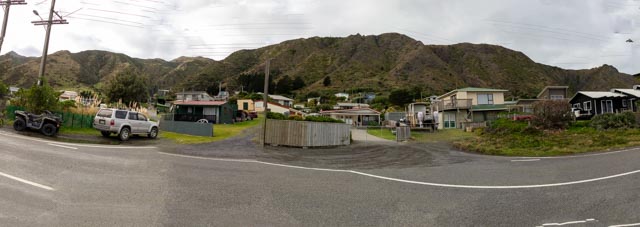
I then stitched 3 images together at a time. These could then be stitched manually in Photoshop or be printed with a white boarder. I processed the images in colour and black and white and have just included a few examples from each side of the street. The full range of images can be found here


The weekly Cray image:


The images from the trip on the boat from the 9th June took some time to review and select. There were a lot of rejects due to motion blur from trying to stay up right on the boat, not slip over and stay out of the way and cope with the constant changing light conditions. A good lesson to learn was to trust my camera were the light balance and ISO was concerned as I usually shoot manual it took valuable time to change as the boat manoeuvred to come in line with the buoy that was attached to the cray pot, so for each retrieval the conditions changed. For that few runs I changed to Auto ISO and just let the camera do the work whilst trying to get the images. I finally processed 107 which can be seen here and just posted a few that I like here and that might make the final selection but as I still have time to complete a number of return visits before I submit, I may change the final selection:


I will also convert to black and white to see if they work.
Following the trip, I also repeated the beach session, trying to get some more detailed images. The final selection is going to be difficult as some work better in black and white whilst others need colour. The full selection can be seen here with just a few here for examples:


21st June 2020
Weekly Cray Image


23rd June 2020
I have managed to tee up two portrait photo shoots on Saturday the 27th June. The first from a young French lady who migrated to New Zealand and has a young daughter – bit nervous about that as I think she wants staged images and that’s not what I want for this project. I might offer to do those after. The second is with Alison who is the wife of Andrew the Cray fisher man. Alison owns and runs the small café in the village so I hope to show her the images I took out on the boat and take some of her working.
26th June 2020
Spent some time looking at other examples of photographers who have combined colour with black and white material:
Robert Knoth’s latest work who uses colour with black and white illustrations which I found interesting and challenging as a concept:
Bibliography
https://hartmann-books.com/en/produkt/robert-knoth-antoinette-de-jong-tree-and-soil-en/ [accessed 26th June 2020]
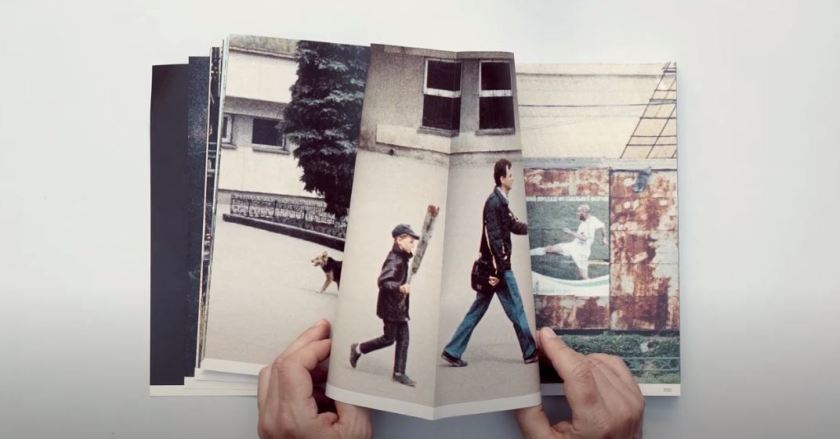
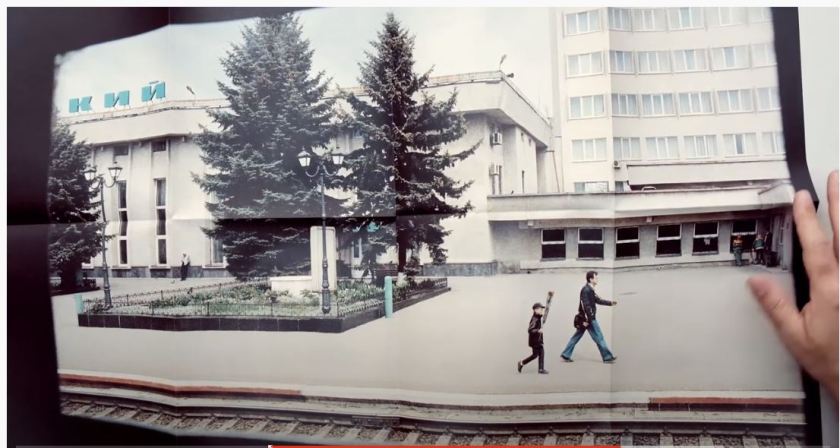
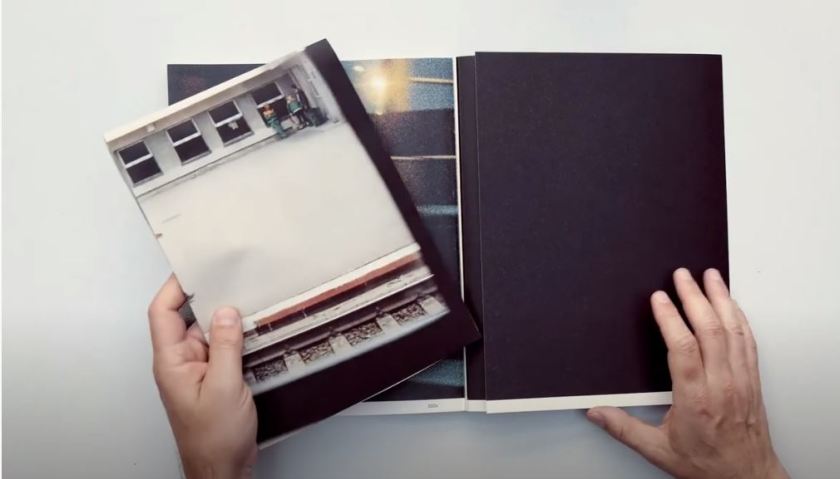
I also looked at the winner of the MACK First Book Award for 2020 – Damian Heinisch ‘45’ who has used a Japanese paper folding technique to show his images. The book and images are based 3 train journeys with images taken all from train and through the window. This technique allows large images to travel over the page and link to the next to give a flow to the finished product, this is something I should consider when I come to present my final submission:
Bibliography
https://www.youtube.com/watch?v=qOXdv9Ae614&feature=emb_logo
27th June 2020
A day spent completing two photo shoots, both who responded to my letter drop. Melanie is a young mother, the only one left in the area. I later discovered that there are only six women in the area, which confirms the rumour that the area is not easy to live. Melanie originally from the south of France came to New Zealand on a work visa to pick fruit in Hawke’s Bay. It was here that she met her future mother-in-law who offered her a job to house sit her home down in Ngawi, provided she met her son (a little bit of match making), Melanie didn’t mind as it meant a free home for little work, little did she know that the son would be her husband. A few years later they were married and now live in Ngawi. Her husband has his own boat and fishes both cray and line fishes. Her husband only has a small one tonne quota which isn’t much and the majority of time it is not worth going out as the price that the Chinese are prepared to pay for cray is often not enough to fund the boat and the additional labour.
Life in Ngawi is not easy for a young family and especially as the only one with children. Melanie travels four days a week to Carterton to work with the council as a climate expert. She enjoys this very much but since the epidemic she is more office based which is frustrating. The travel is long and the child care is expensive. She is feeling more and more isolated and missing out on any form of social life with other mothers or with her partner which is stressful. She says that she isn’t a good mother, but that wasn’t the impression I got.
She is the main breadwinner for the family even if its part-time. To add to this the weather of the last week has done nothing but rain and caused a landslip resulting in water and mud through the house and the small sleepout they have. This seems to have been the final straw which means that they will be moving away from the town. They have purchased a small plot of land in Carterton and will build. Her husband will then travel to fish when the price of cray is good. They plan to keep the house, her husband who grew up in the area thinks they will return at weekends and holidays but that wasn’t the impression I got from Melanie, once she has moved that will be it. Another loss to the area.
The second shoot was with Alison, the wife of the cray boat owner who I went out with for a photo shoot a few weeks earlier. Alison has lived in Ngawi for over twenty years and understands the difficulties of the area and life. She says her husband warned her about the isolation and the reputation of the area were women were concerned. She says you need to like your own company as all the men are either involved with the cray or travel to work so you have to find something to get involved with and accept the conditions, the weather, the fact that your husband will be away from early morning. This is a very Kiwi approach – toughen up and get on with it, which to most would be difficult. Alison has raised four children from the blended family. She has two sons, one living and working in Wellington for one of the government organisations and the second who works with her husband on the boat and you can see in the images I have already posted.
Alison owns and runs the ‘Captain’s Table’ a small portacabin which offers a range of food for passing tourists and locals on a Saturday night who attend the fire station social club. She tried to purchase the business several times over the years from a Pacific woman who she claimed wasn’t open very much and didn’t offer the range that she and the locals wanted. The facility is now open seven days a week during the Summer and she employees one of the other women in the area to cover the days when she needs to go for supplies.
She seems to have a strong network from her suppliers and other locals within the area which I think helps cope living in the isolation. They have moved three times over the twenty years all within the local area. She is involved with the local council and fights hard for support and action for improvements in the infrastructure (roads) to the area.
Over all I was happy with the day as Alison pointed me in the direction of a possible volunteer, which I will try and return to set up as I think the person touch seems to work better. Will now spend some time processing the files.
28th June 2020
Weekly Cray Image
30th June 2020
After a bit of a false start I used the time to down load and review the images from the photo shoot at the weekend. I have selected about 80 images of Melanie and her daughter and about 40 of Alison. I will further down select and process to the final few to be included here and in my next Assignment.
I have also decided to extend my location, along the coast line to the Lighthouse and contacted Maritime NZ for any photographs or documents of the area. They responded very quickly telling me that all their data had been moved to Archives in the 1990s but he did send me some old photographs:


I have sent the email request to Archives NZ to see if they have anything they are will to share. I will also return to Ngawi to follow up on the lead from Alison and to drive further round the coast to take images of the lighthouse.
 Michele Usher