10th May 2020
Over the last ten days I have been progressing the alternative projects for my Body of Work, just in case this lockdown situation continues and I can’t get any more volunteers to photograph. For the possible panorama of Ngawi I emailed the Wellington Photographer – Andy Spain, who attended the 10-10-10 talk given by NZIPP which I covered in the Exhibition section of my blog. Spain photographed the whole of Cuba Street (both sides) and formed one large pano. I wanted to understand the technique he used as the street is not flat (similar to the loop road of Ngawi) and not very wide – this will not be an issue for me. Spain kindly responded on the 6th May:
My main issue when doing the panorama was how to stitch them together, at first I wanted to do a seamless stitch all the way along like you can see here: https://zolimacitymag.com/events/hong-kongs-disappearing-tong-lau-a-panoramic-perspective-by-photographer-stefan-irvine/
I only found a limited number of examples of a linear stitch on the internet that were any good, some German photographer who did streets in Germany and a guy that did a market in Africa. Doing a linear stitch you need to use a lens close to the type of view that your eye will get, about 50mm as this will prevent distortions when trying to manually stitch things together (it would take a long time and require a high degree of photoshop skill). I could not use a lens that was so close as it would not have worked on Cuba Street (too tight) so I shot it on my 24mm TSE lens. When I tried to stitch it together manually it took forever and wasn’t as perfect as I hoped so I looked elsewhere for an answer.
It would have been easy if it was a straightforward 360 where you can get an attachment for your tripod to do sections going around the nodal point of the tripod and then do another row above and below but I think you wanted something linear like the Cuba Street example from what you said (but you can produce a 360 as a linear output though).
My solution was to just shoot a load of overlapping images and place them together on a big canvas on photoshop. I moved them up and down so the roof line was maintained. I’ll put some sections below for you. If I did it again I would make slices of the street as I like the idea of making it a bit more creative. For your Ngawi project I would either go for the hyper detail of a linear stitch or make slices of the spaces as a panorama – it is a well known and photographed space so ideally you want to bring something new to it. You will have a problem with vantage point as it would be nice to be in the sea looking back at it. If you use a drone there are ways of making large stitches on a drone to create a panorama??
Images by Mark Spain of Cuba Street Wellington:
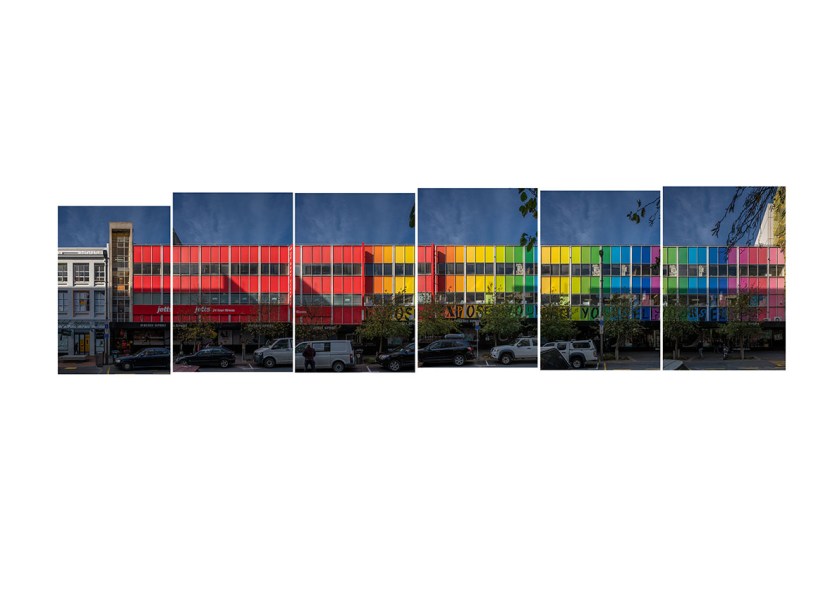
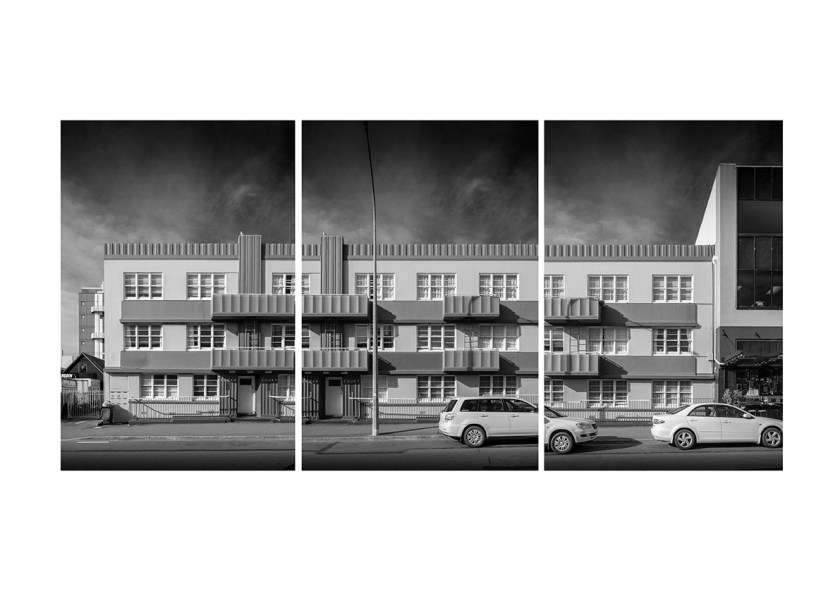
I’m currently thinking of just doing the main road through Ngawi which will cover the sea front, but until I can get out there, I will explore other options – even look on Street view.
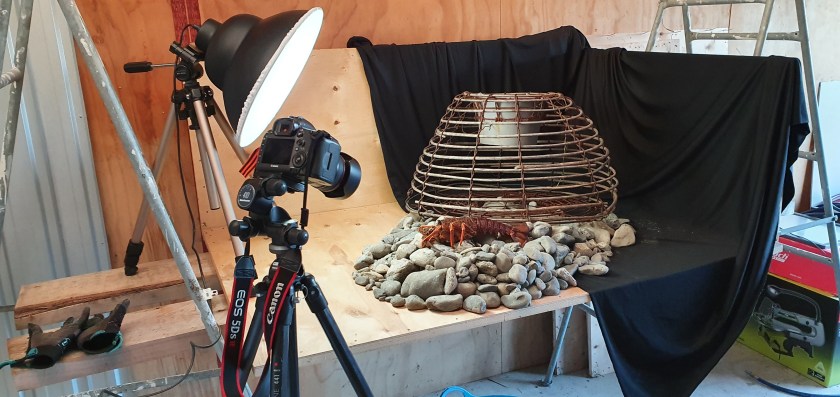
I have also progressed my still life study with the cray fish arriving this week. The following images show the details of the makeshift studio in the garage to keep the smell away from the house.
Making room:


Building the platform:


Setting the Scene:


Final set up:
First Images:


11th May 2020
Opened my email to find a really interesting article from the New York Time on a photographer who seemed to be ahead of her time in documenting social conditions – Tish Murtha
Bibliography
[https://www.nytimes.com/2018/06/27/lens/photographing-community-industrial-england-tish-murtha.html]
Tish Murtha (1956 – 2013)
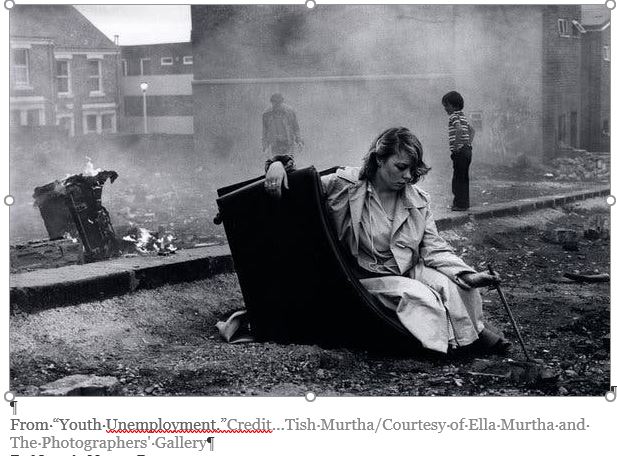
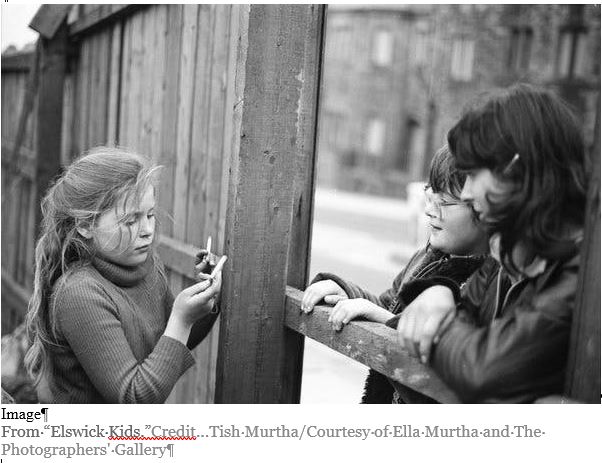
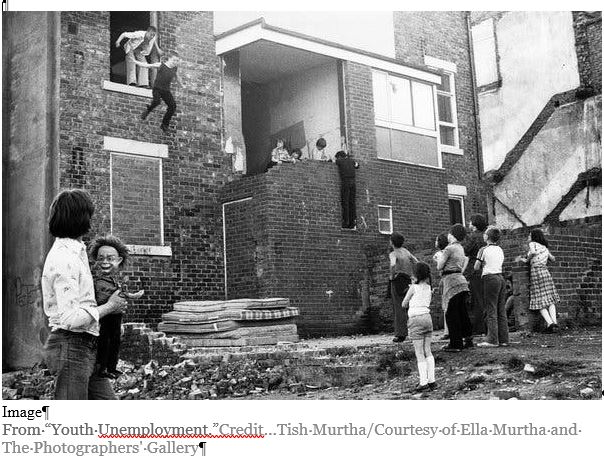
Murtha born Patricia Anne Murtha was known as a social documentary photographer who captured marginalised communities of the north of England. Her skill was not just to document but to live it, she photographed her friend, family and community around her.
Her career was extensive with several controversial exhibitions which highlighted the conditions of society: Juvenile Jazz Bands (1979); Youth Unemployment (1981); Save Scotswood Works (1979); Do you know what this is doing to my little girl? – Home Truths in the Year Of The Child (1979) and Burying The Problem (1980), this final one highlighting social poverty on Tyneside.
The following quote has been taken from an article I came across by Emily O’Sullivan and sums up the feeling of these images:
‘The warmth of these communities, however, is something that simply couldn’t be portrayed through the lens of a middle-class photographer, and it is only depicted by Murtha because it was the society that she knew, understood, and could subsequently observe. In fact, many of the subjects were her close family members, and others were those who she had intimate friendships with, based upon a mutual understanding. She wanted to show what life was like for the people that she knew — and loved — and it was something that could never be captured by a middle-class BBC filmmaker. What draws me to Tish Murtha is not the fact that she had a good eye for photography (which she undeniably did) but that her work relies upon the commonalities between her and those that she shoots. In a way, Murtha herself is also the subject.’ (O’Sullivan 2019)
Bibliography
Websites accessed 11/05/2020
https://en.wikipedia.org/wiki/Tish_Murtha
https://medium.com/@emilyosullivan/tish-murtha-a-working-class-gaze-d376cca1771d
https://www.youtube.com/watch?time_continue=5&v=g9ovElOitCA&feature=emb_logo
https://thephotographersgallery.org.uk/whats-on/exhibition/tish-murtha-works-1976-1991
14th May 2020
Today New Zealand moves to Level 2 in this current pandemic situation. This means that we are allowed to travel between regions, so I can now plan to get out and about and back to my Body of Work location of Ngawi. Hopefully post my letters and undertake another photoshoot. Listening to a number of talks over the last few days I need to consider focusing on detail of the location as well as the broader aspects, especially if I can’t get any more resident images.
I have been taking my daily images of the cray, which is now starting to show signs of decay – probably a good thing that photography isn’t capable of capturing smell!


(11th May 2020)


(12th May 2020)


(13th May 2020)


(14th May 2020)
15th May 2020
So I decided to not travel this weekend to Ngawi as this is the first following the easing of the restrictions and plan to go next so I can spend some uninterrupted time there and even shoot out towards the lighthouse which was one of the first locations within the area for residents.
I did my usual daily image, starting to see some changes – and just the smell. Think the images show the change better in colour than black and white, which may not work for my final submission as at this early stage I was thinking of all black and white images.


(15th May 2020)
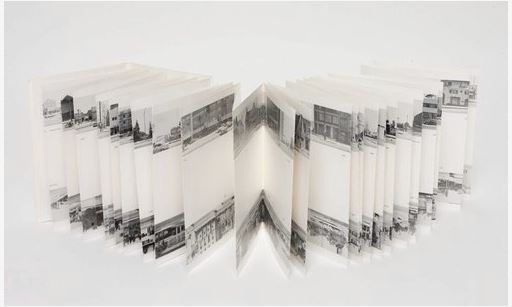
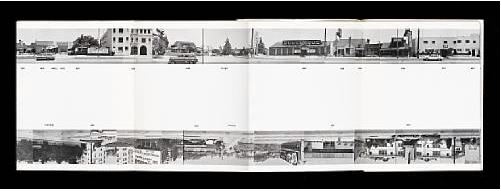
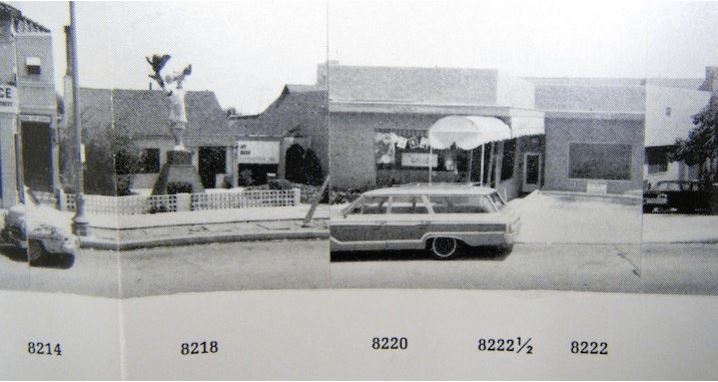
As posted earlier I decided to look at other examples of photographers who had produced panoramas of streets or locations and came across the work by Ed Ruscha who in 1966 self-published a book ‘Every Building On The Sunset Strip’. The book consisted of a pull-out image of every building on the strip with the page being over 25 feet long.
The images not very successfully stitched and taken over several trips as the vehicles change or are sliced between buildings, but a great document of the time and I really like the idea of one continuous length.
Bibliography
Websites accessed 15/05/2020:
https://www.moma.org/collection/works/146931
https://www.artgallery.nsw.gov.au/collection/works/429.2008.a-bbb/
https://www.youtube.com/watch?v=CWIxAJ8fb_w
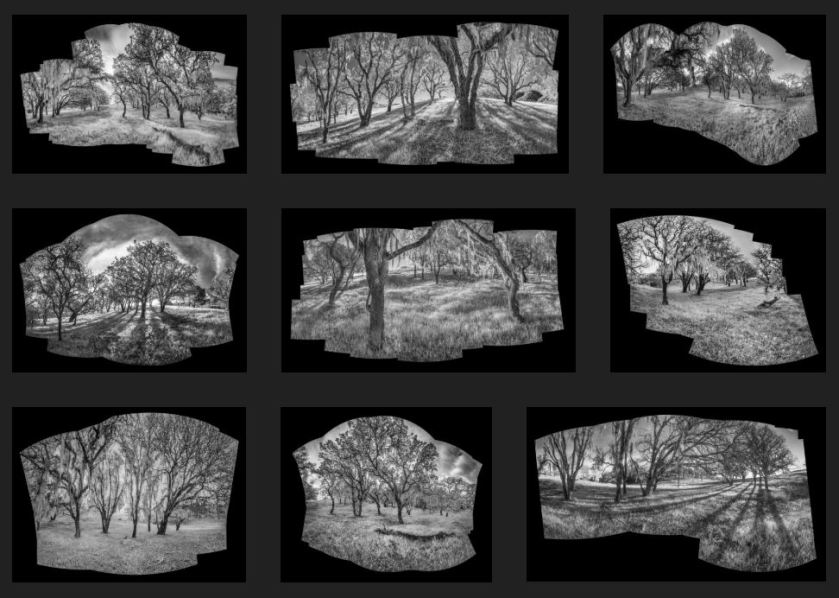
The photographer Jim Kasson takes a series of images and stitches them together. In his study over three months in 2015 he used a hand-held infrared camera to take images of a copse of oak trees. Anything from 30 to 100 exposures are used to produce these amazing images. What I really love about these images are the fact that he doesn’t neaten the edges, he leaves them rough just like a painter. I think I will explore this when I produce mine of Ngawi.
Bibliography
Website accessed 15/05/2020
https://www.kasson.com/gallery/los-robles/
https://photography.org/membphotog/jim-kasson/
17th May 2020


18th May 2020
Joined the Rest of the World forum, always a great interaction with fellow students from around the world. We usually show our work for feedback. I posted my initial image of the cray, both black and white and colour, they all think the colour works and will show the decay best. This will be a problem if I decide to do my portraits in black and white, not really sure a mix of images will work, but that decision is some way off as I need to get more volunteers first.
I was also pointed in the direction of a recent article in the on-line press we have here in New Zealand, on how a local photographer on Stewart Island was photographing the residents during the lock down. The Island is situated off the lower South Island, normally accessible by sea (can be rough) and air. Normally a tourist hot spot and for me this is capturing the current situation where as Ngawi faces this isolation from the elements every year.
Bibliography
https://www.stuff.co.nz/national/121379305/historic-lockdown-documented-on-stewart-island [accessed 18/05/2020]


19th May 2020
Attended the Tutor led level 3 student forum. Discussed my progresses including my idea of the and progress with the cray as a depiction of the loss to the local economy of Ngawi. Other photographers were highlighted to me such as Sally Mann and other approaches that other photographers have used to depict loss, such as Nic Rue who used the Cyanotype Impressionist photography, first brought to the attention of the world by Anna Atkins who I was luck to see an exhibition by in New York last January.
Anna Atkins: Blue Prints Exhibition New York Public Library October 19th 2018 – February 17th 2019
Attended the exhibition on 15th January 2019 (information taken from Documentary Course)
Victorian England during the industrial revolution was a remarkable environment for discovery and learning. A succession of innovations in science and technology yielded changes in society, among them a divergence of gender roles. Men were defined by their accomplishments and ability to provide, while women were largely confined to the domestic sphere. However, one exceptional figure was Anna Atkins (1799-1871) who emerged from these strictures. Encouraged by her father and his circle of friends, Atkins began in 1843 to combine her artistic sensibility with her curiosity of botany to create Photographs of British Algae. It was the first book to be illustrated solely by the new medium of photography and the first sustained effort to apply photography to science.
She used the process called cyanotype which is a photographic printing process that produces a cyan-blue print. Examples of those produced by Atkins can be seen here:
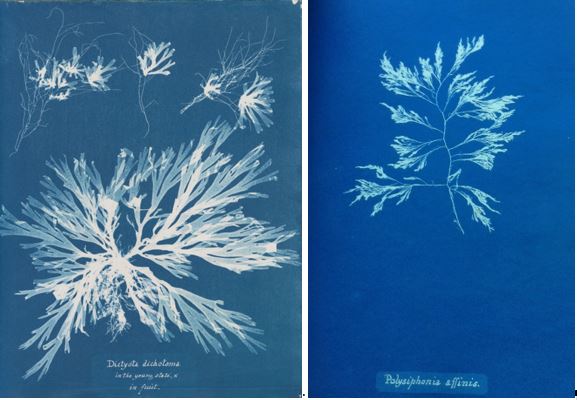
As described in Wikipedia [accessed 19/05/2020 https://en.wikipedia.org/wiki/Cyanotype] the English scientist Sir John Herschel discovered the procedure in 1842. Though the process was developed by Herschel, he considered it as mainly a means of reproducing notes and diagrams, as in blueprints. It was Atkins that really bought the process into its own by using it in a process by placing objects directly onto the paper and exposing them to sunlight. The paper is then washed with water and then washed in a weak bleach solution (but not for long) and then re-washed.
Cyanotype prints do not react well to basic environments as the image fades. Another unusual characteristic of the cyanotype is its regenerative behaviour: prints that have faded due to prolonged exposure to light can often be significantly restored to their original tone by simply temporarily storing them in a dark environment.
I like the fact that these images begin to fade returning to blue, I could try this with the cray, taking a series of digital images over a period of time as the outline slowly disappears.
At the Level 3 forum the tutor recommended I look at the work by one of her students who used this process: Nic Rue
Nic Rue
Rue is an Edinburgh based who in the series ‘Phototaxis’ and ‘Resurrection of the Dead’, used the cyanotype process to convey ‘the environmental challenges faced by moth populations’, which are in decline within Britain due to a range of issues one of which is light pollution.
In both projects the moth is required to make direct contact with the cyanotype print, but in the case of the ‘Resurrection of the Dead’ Rue chose to leave the cyanotypes unfixed, which allows any evidence of the moths to fade over time once exposed to light.
Rue: “I have used the traditional photographic technique, cyanotype, to highlight the absence of moths in our night skies, being keen to examine how elements of a photographic process can become integral to the meaning of the work and act as metaphor. The cyanotype process refers back to the work of Anna Atkins who was taught the process by its inventor Sir John Herschel. She made a scientific study of British seaweed and plants, which she published in a series of beautiful blue books, releasing the first in 1843. In many cultures, including our own, the colour blue is rich in representational meaning: the forbidden, things confined to the dark night, heaven, death and the infinite. Moths can see further into the blue end of the spectrum than humans and are particularly attracted to white/blue light.” [accessed 20/05/2020]


Moth study before and after exposure to light
During the exhibition she replaced the images and left the old ones fall to the floor as a symbol of the end of the moth’s life, never to return:
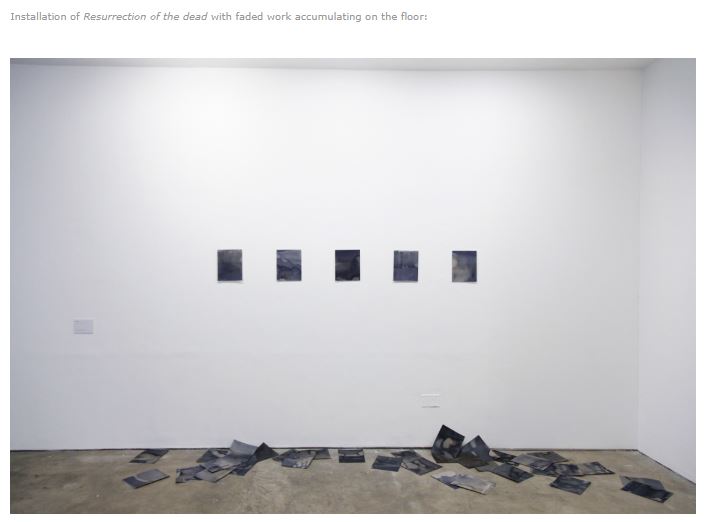
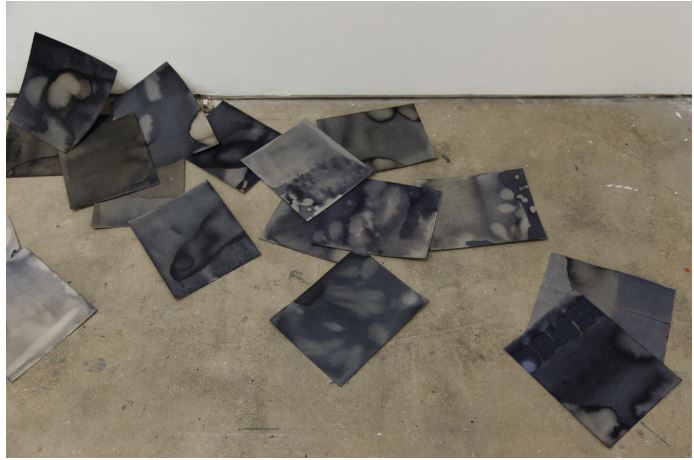
I noticed on her website that she had also produced a book in a similar manner to that of Kasson depicting more images of the moths, this time fixed so they didn’t fade and, on the reverse,, she has listed all the species which have not been seen since 1980. [https://vimeo.com/154768912]
Bibliography
Website accessed 20/05/2020
https://dergreif-online.de/artist-blog/nic-rue-phototaxis-resurrection-of-the-dead/
https://nicrue.co.uk/phototaxis
Sally Mann
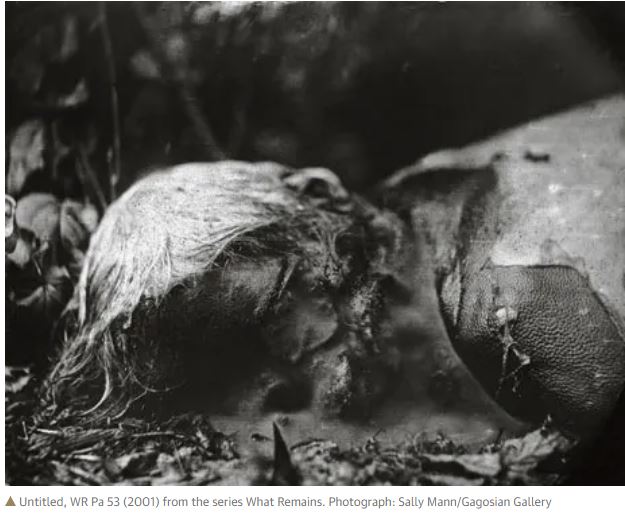
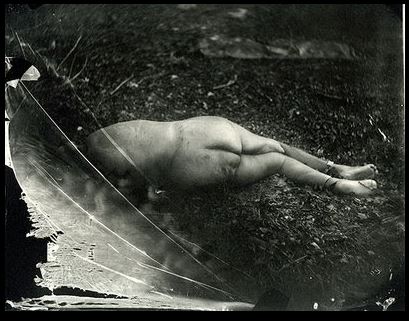
This American photographer is no stranger to controversy, her first book ‘Immediate Family’ nearly got her arrested and now in the project ‘What Remains’ she details over eighty images her reflection on mortality and death of the human body. The images were taken at the University of Tennessee’s anthropological facility where the body is left in an outdoor situation and studied as it decomposes which takes months even years.
Mann says in her interview with the Guardian News paper (2010) “If there’s any time when you’re vulnerable, it’s when you’re dead. In life, those people had pride and privacy. I felt sorry for them. I thought if they knew I was taking photos, without them having a chance to comb their hair or put their teeth in, they’d die of shame. So I expected critics to ask: is this right?
“I was ready with my answer: all these people had signed release forms. I’ve done the same now, donated my body for research. But then I discovered that some of the corpses were street people who hadn’t signed releases. And of course even those who did sign probably thought the photos would be scientific, not artsy-fartsy. So though I was given a free hand – ‘Go on,’ they said, when a fresh batch arrived, ‘unzip the body bags and get them out’ – I decided to keep the subjects anonymous. I didn’t want to aestheticise them, either. It was important to treat them with respect.”
Bibliography
https://www.theguardian.com/artanddesign/2010/may/29/sally-mann-naked-dead
https://www.latimes.com/archives/la-xpm-2010-dec-05-la-ca-1205-sally-mann-20101205-story.html
Anton Kuster
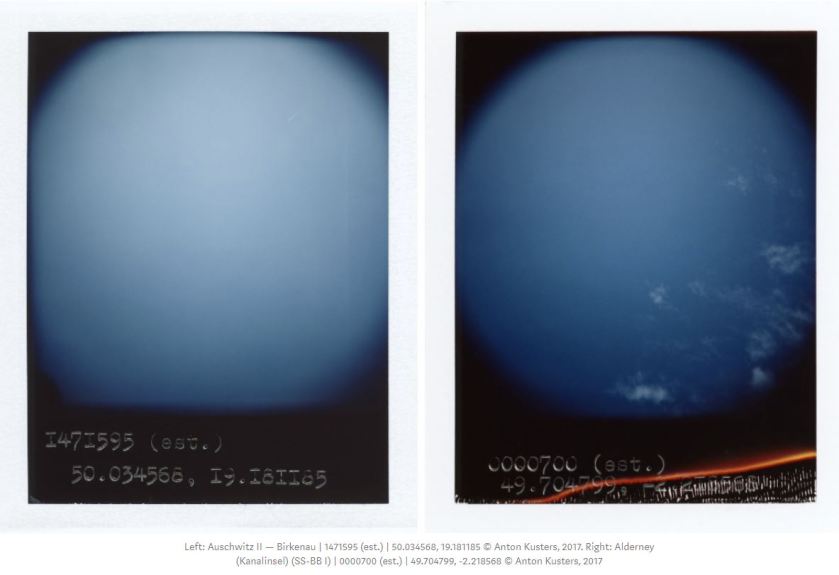
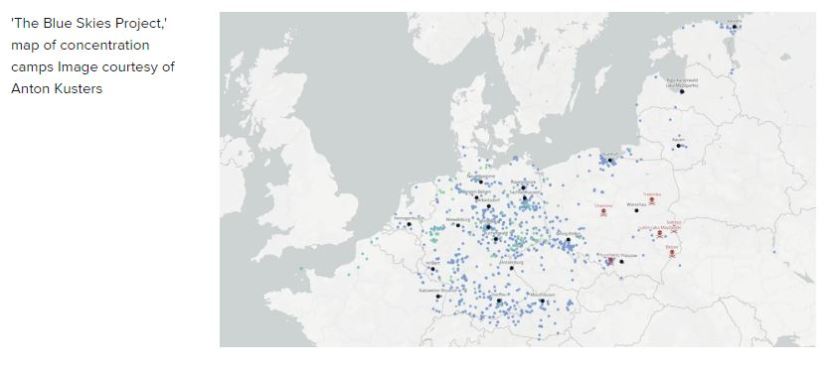
Kuster’s five-year project was in collaboration with Ruben Samama who produced a sound tract to accompany the one thousand and seventy-eight polaroid images. One image for each known location of every former Nazi concentration camp throughout Europe during the Nazi rule from 1933 – 1945.
In 2019 the exhibition has been in the United States Holocaust Memorial Museum in Washington D.C and will remain until 2021. The sound track spans 4432 days and gives a single tone for every known victim, in real time, which retraces the actual timeline from the first opening to the liberation.
“Each time this work is shown, an act of conservation has to be made by the institution’s curator. Are they going to show it in a place so that it fades, so that it carries the scars of where it has been shown? Or do we put it in encased concrete so that it is absolutely protected? It’s a commentary on how we deal with memory. If we lock it away, it might be protected but never seen. And if we show it, it might fade and evolve into something else entirely.” (Kuster, BJP 2020)
Bibliography
Websites accessed 21/05/2020
https://www.bjp-online.com/2020/02/anton-kusters-the-blue-skies-project/
https://thephotographersgallery.org.uk/whats-on/talks-and-events/watch-artist-talk-anton-kusters
https://theculturetrip.com/europe/articles/carrying-the-weight-of-genocide-through-photography/


(19th May 2020)
24th May 2020
Catch up on my daily cray images. I’m thinking I might continue to take them daily but only show weekly progress here and then see if I can produce a time lapse sequence for submission


(20th May 2020)


(21st May 2020)


(22nd May 2020)


(23rd May 2020)


(24th May 2020)
31st May 2020


 Michele Usher