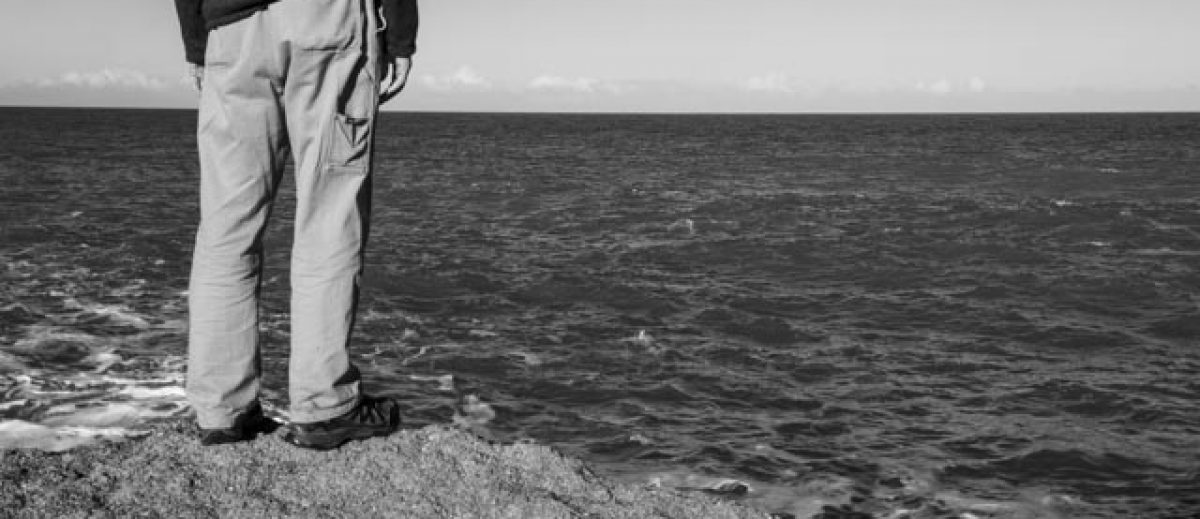
New Zealand’s Quiet Crisis – Rural Mental Health
Mental health is considered a private subject that is better left behind closed doors; out of sight, out of mind. As children and adults, we are taught to deal with it in private, to toughen up and simply deal with the blows. This toxic approach has resulted in nearly 47% of New Zealanders experiencing mental illness and/or addiction at some stage in their lives. New Zealand has the highest rates of anxiety, mood and substance disorders, so much so that mental disorders are the third-leading cause of health loss. This crisis saw the NZ Government allocate $1.9 billion additional funds to mental health and the health services that are trying to address it. The funding is expected to help 325,000 people with mild to moderate mental health needs by 2024. That will see trained mental health providers placed into doctors’ clinics, iwi health providers and other health services. A further $200m will be pumped into existing mental health facilities, and $40m over four years will go into suicide prevention services.
In my body of work I aim to try to represent the situation found in many rural aspects of New Zealand. An area that is often forgotten as the majority of funding is poured into high profile projects within the cities. These are often the forgotten communities that are the backbone to a number of key industries within the country (agriculture, fisheries, farming) but are all too often at the end of a very long funding requirement. They tend to deal with problems themselves as obtaining the correct medical facilities are too difficult due to the remote locations.
It is going to be difficult to photograph emotions and feelings of the community, one which may object and find difficult to open up to a stranger. In an attempt to portray the local situation, it may be required to use signs and symbols with the resulting images not directly obvious in my choice of subject of mental health. I think the images need to be candid, sharp and without manipulation to show the raw facts of life within the community which follows the modernist genre of photographers such as Alfred Stieglitz, Ansel Adams, Dorothea Lange, Henri Cartier-Bresson, Man Ray, and Robert Frank helped ground the art form and the more ‘modern’ photographers such as Alec Soth, Chris Killip, Paul Strand, and Susan Lipper. According to Terry Barrett (2006, p.183)) ‘Modernists favour symbolist rather than narrative photographs, and realism over instrumentalism. Modernists believe the straight photograph to be the embodiment of what photography does best’.
Modernism in general terms is used to encompass trends in photography from roughly 1910-1950 when photographers began to produce works with a sharp focus and an emphasis on formal qualities, exploiting, rather than obscuring, the camera as an essentially mechanical and technological tool. This approach abandoned the ‘Pictorialist’ mode that had dominated the medium for over 50 years throughout the United States, Latin America, Africa, and Europe. Critic Sadakichi Hartmann’s 1904 “Plea for a Straight Photography” heralded this new approach, rejecting the artistic manipulations, soft focus, and painterly quality of Pictorialism and praising the straightforward, unadulterated images of modern life in the work of artists such as Alfred Stieglitz. Innovators like Paul Strand and Edward Weston would further expand the artistic capabilities and techniques of photography, helping to establish it as an independent art form.
Figure 1 below is one of the most important photographs in establishing modern photography. Strand said that the woman’s “absolutely unforgettable and noble face,” prompted the photograph which is in direct contrast to the formal, posed studio portraits of the period. One of a series of street portraits using a handheld camera with a false brass lens attached to its side, so the subject would be unaware. Strand’s street photographs were influenced by his teacher and mentor, Lewis Hyde, who pioneered social documentary photography for purposes of social reform.
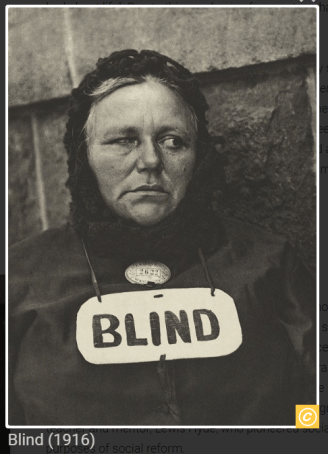
Fig. 1: Blind by Paul Strand (1916)
The piece combines this focus on social documentation with a modernist aesthetic which highlights pattern and form, with the diagonal lines of the rectangular blocks mirroring the woman’s gaze and framing the image. The viewer is immediately aware of the contradiction between her dignified face and the oval peddler’s badge (required by law) and the simple and bold sign announcing her disability. As the curator Peter Barberie notes of Strand, “For him, the camera was a machine – a modern machine… He was preoccupied with the question of how modern art – whether it’s photography or not – could contain all of the humanity that you see in the Western artistic traditions.” Blind was published in a 1917 issue of Camera Work and immediately took on an iconic status within the new American photography movement
If I return to the earlier comment made by Barrett concerning symbolism in Modernist photography then the work by Gillian Rose (2016) is important and I need to consider the theory of semiotics when I produce my body of work. Rose states that the science of semiology offers an analytical precision and the most important is the ‘sign’ (semiology means ‘the study of signs’). Rose cites the work of Mieke Bal and Norman Bryson (1991: 174) who state ‘Human culture is made up of signs, each of which stands for something other than itself, and the people inhabiting culture busy themselves making sense of those signs’.
Rose (p.113) states how ‘sign is the fundamental unit of mainstream semiology’. She goes on to discuss the important work that Ferdinand de Saussure played in developing the ground work of how the language worked and that the ‘sign’ was the basic unit of language. Saussure argued that the sign consisted of two parts:
- Signified – is a concept or an object; and
- Signifier – is a sound or an image that is attached to a signified.
Saussure stated that there is not necessary a relationship between a particular signifier and its signified. The distinction between the two is crucial to semiology – it makes the relation between meanings and signifiers not inherent but rather conventional, and it can therefore be problematised.
Bates (2016, p.21) describes photograph as using a form of ‘code’, ‘we make sense of a photograph, what we “read” from it, will already depend at a basic level on the language system used’. This doesn’t just mean English, French or Spanish but also cultural, lighting, focus and angle the photographer may have selected. As Bates highlights, ‘to use a language, the sender and receiver need to know how to operate and understand the same “code”. It is therefor going to be important for me to achieve this ‘code’ in the images I produce for the final body of work.
The work by Susan Lipper an American photographer in ‘Grapevine’ (1994) who has travelled to the same location for over twenty years to photograph a small rural community of 50 residents strikes a similar ‘code’ with the aim of my body of work, however Gerry Badger has written that “Community, family, and gender relationships seem to be at the core of her investigation.” Lipper’s collaborative approach distinguishes Grapevine from social documentary photography; she describes it as “subjective documentary”. In a similar position to Ngawi in the decline of the fishing industry Grapevine Hollow consists of few trailers and mobile homes in the middle of the United States badly hit by the decline of the coal industry. Her personal commitment to the community not just as subjects, but as people and as friends, yet Lipper uses the words of Richard Avedon: “My photographs are works of fiction. Any truth you see is my truth.” I don’t believe that her images are in any way artificial, dishonest, or unauthentic. “This series of pictures is my journal,” she says of the Grapevine project. In a similar way to the work of Soth human relationships lie at the core of Susan Lipper’s work. She has said that she was drawn to Grapevine because of its people and family, but the images below (fig: 2-4) do not portray any connection for me between photographer and subject. The angle and the body language portray distance and a cold detachment.
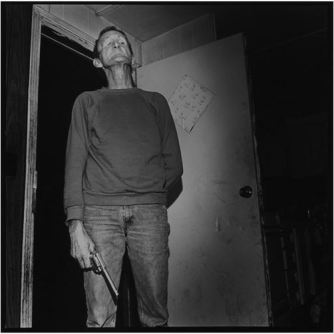
Fig. 2: Susan Lipper, Untitled (Grapevine), 1991
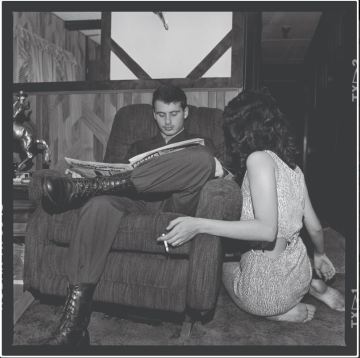
Fig 3: Susan Lipper, Untitled (Grapevine), 1991
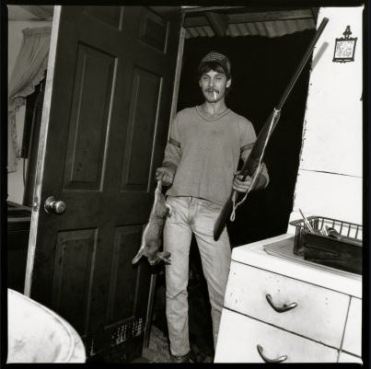
Fig 4: Susan Lipper, Untitled (Grapevine), 1991
However, when I look at the work by Soth in ‘Sleeping by the Mississippi (2004) the ‘code’ is very different (Fig. 5). “In the book’s forty-six ruthlessly edited pictures, Soth alludes to illness, procreation, race, crime, learning, art, music, death, religion, redemption, politics, and cheap sex.” Writes Anne Wilkes Tucker. Yet to me there seems to be a lot more to his images. These large format photographs, are desaturated with amazing detail that reveal the lives of the inhabitants (both current and departed). Those lives and hopes (no matter how seemingly insignificant or sad) are what I think Soth has captured so well and I hope to reflect the same.
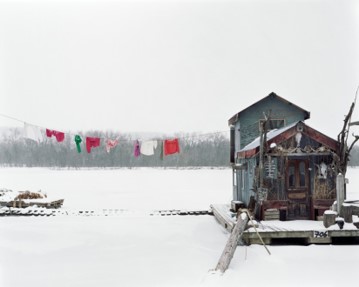
Fig 5. Alec Soth Sleeping by the Mississippi (2004).
Soth stated, “I believe that photography is essentially non-narrative. That, while it aches to tell stories, it doesn’t really tell stories that have a beginning, middle and end. This has constantly frustrated me about the medium, and I’ve been constantly battling it. What I’ve come up with, is that when I’m looking at a photographer’s work, I’m looking as much at that person’s experience as a photographer in the world, almost as if they are a first-person narrator, as I’m looking at the subjects of the photographs.”
To conclude, the viewer will look and see what they want in my images but I aim to show through a series the life of these individuals, their struggles and how they have remained a community regardless of location, external factors and internal pressures. How they resolve issues amongst themselves without the help of outsiders. At this stage this may be with the use signs and symbols or if possible, the inclusion of Ngawi residents
References
Barrett, T. (2006) ‘Criticizing Photographs: An introduction to Understanding Images’ (fourth Edition) McGraw-Hill, New York.
Bates, D. (2016). ‘Photography: the key concepts (second edition), Bloomsbury, London
Rose, Gillian. (2016). Chapter 6: Visual methodologies: an introduction to researching with visual materials (p106-146). SAGE Publications, London
 Michele Usher