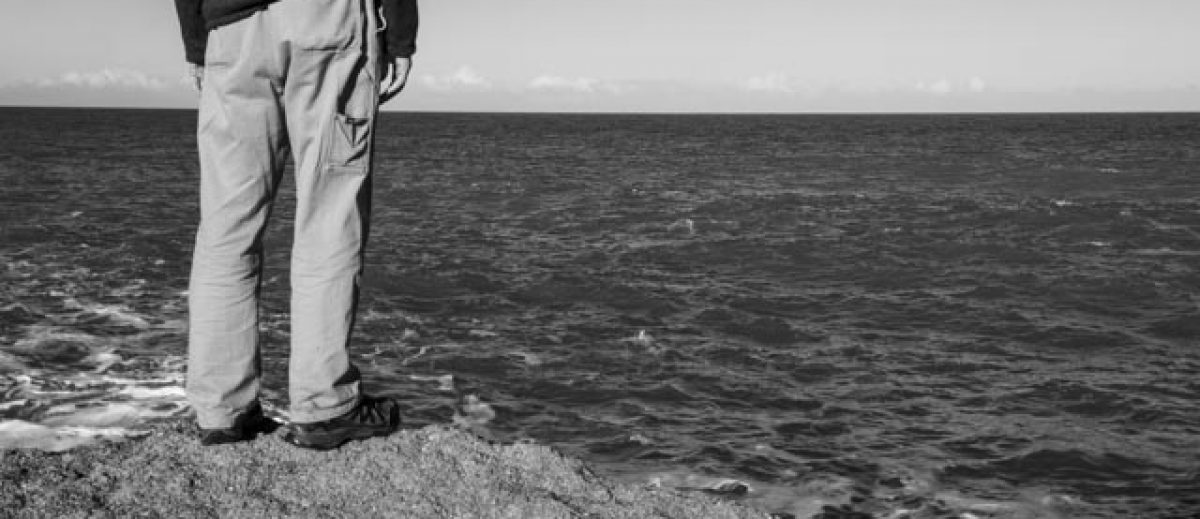
This series is based around the coastal community of Ngawi (pronounced ‘naa-wee’) an exposed location which suffers from exposure to cold Southerly winds in the winter and hot Northerlies in the summer. The series has been presented in electronic form due to the outbreak of the world pandemic which stopped the submission of prints and a physical draft book.
The series entitled ‘Inside the Shell’ is being presented for assessment in the form of its own website here. Here you will find an overview of the project, a video of the series and the draft book. There are also three additional sections that provide images that didn’t make the final selection but were considered (by external peer review) strong enough to be included.
The series has been produced over a twenty-two-month period and have been extensively documented on the following blog site: here. Progress at each stage has been detailed here under ‘Work in Progress’. My ‘Thoughts and Reflections’ on progress can be found here, but as part of Assignment Five I did provide a full evaluation of the course here and then again as a separate section here.
I understand that these sections of my course work are far too lengthy and detailed for the limited time available for assessment and so the next few paragraphs aim to provide you with an overview and links to the areas of the project and the thoughts, context and creativity behind the processes undertaken to develop the final product.
The aim of this project was to explore and document the facts behind the media reports of the high levels of suicide within the rural communities of New Zealand. How much of it was fact and how much was just media sensationism. Assignment 1 was a scene setting exercise but this did lead me to my first contact. The location is isolated and the community has to make and mend and I think this shows in both the general images of Ngwai (here) and the images of Rob (here). The image of him in his shed resulted in a Silver Distinction at the NZIPP awards 2020. It was said that I had captured the heart of New Zealand rural culture. This approach of being the observer rather than asking the residents to sit and look directly into the camera became the direction for the rest of the series.
The effect of the world pandemic and lockdown forced me to rethink and direct my project in a number of different directions; the use of archive material, location shots to form a panorama (here) and possible concertina book and the cray fish project (here) – all experimental and had their merits but not really the angle I wanted and didn’t address the mental health issues or the community. Having come out of lockdown and returning to the community I gain the opportunity to experience life on a cray boat (here) – another angle to explore as the community relies on cray and this was affected by the pandemic. If I hadn’t managed to gain access to the women of Ngawi I could have utilised this in the same way as Allan Sekula in the ‘Fish Story’.
This project sits within the documentary genre of photography, exploring the relationship between the land or location/space and the people who inhabit it. I think the feeling has been captured in the black and white images which show the hard conditions and the environment which gives a feeling of isolation, hardship, mental health issues. The women that through their own strength hold the community together by making do and sticking together to support each other are shown in the series of colour images. I experimented in both forms and during the editing process realised that I wanted to give the feeling of these women being enveloped within the hard male shell but being very much the strength of this community. My approach to editing and re-editing can be seen in Assignment Four, Five and the rework of Assignment Five. Links below.
My Research Documents, Work in Progress and Thoughts and Reflections show how the project has developed from initial idea through to the final production. The work and to some aspect my practice has been influenced by a number of different photographers, both international in the form of Adrian Hollister, Susan Lipper and Chris Killip, but also local artist from New Zealand in the form of Julia Johnston. Towards the end of project, I discovered the work by Tessa Bunney and realised how similar our observer style was. The editing and re-editing process made me focus on book design, lay-out and the final narrative I wanted to achieve. The rework sections following Assignment Four and Five detail the changes I made following the review of books by Sekula and John Berger.
Not being able to submit physical prints for assessment was a major disappointment as I had already been considering an exhibition and a gift of a book for the women who kindly took part, so having to rethink my final submission to an electronic format enabled me to experiment with book design and the use of InDesign, also to extend my skills in PowerPoint to produce a video and also to work with a printer to produce the book and experiment with editing and re-editing the layout. Working with another student in the illustration stream was fun and challenging as we engaged to get the right fit for the page. The link to the final presentation of the book is here.
The aim for SYP is to produce an exhibition in Ngawi, allowing the women to select the prints to be displayed. I would also like to expand on my initial attempts at Platinum and Pallidum (here) printing and produce a smaller exhibition of just the black and white prints. The book will be further developed and I hope to work with a local author and print a limited number as gifts.
Summary of Links:
Website for Assessment: here
Book Design: here
Video Presentation of Book: here
Course Evaluation and Reflection: here
Course Learning Outcomes: here
Assignments
Assignment One: here
Assignment Two: here
Assignment Three: here
Assignment Four: here
Assignment Five: here
Assignment Five Rework: here
Reflections and Rework
Assignment One: here
Assignment Two: here
Assignment Three: here
Assignment Four: here
Assignment Five: here
Tutor Reports
Assignment One: here
Assignment Two: here
Assignment Three: here
Assignment Four: here
Assignment Five: here
Learning Outcomes per Assignment
Assignment One: here
Assignment Two: here
Assignment Three: here
Assignment Four: here
Assignment Five: here
Assignment Five Rework: here
Thoughts and Reflections: here
Work in Progress: here
Photographers: here
Exhibitions/presentations/Talks: here
 Michele Usher