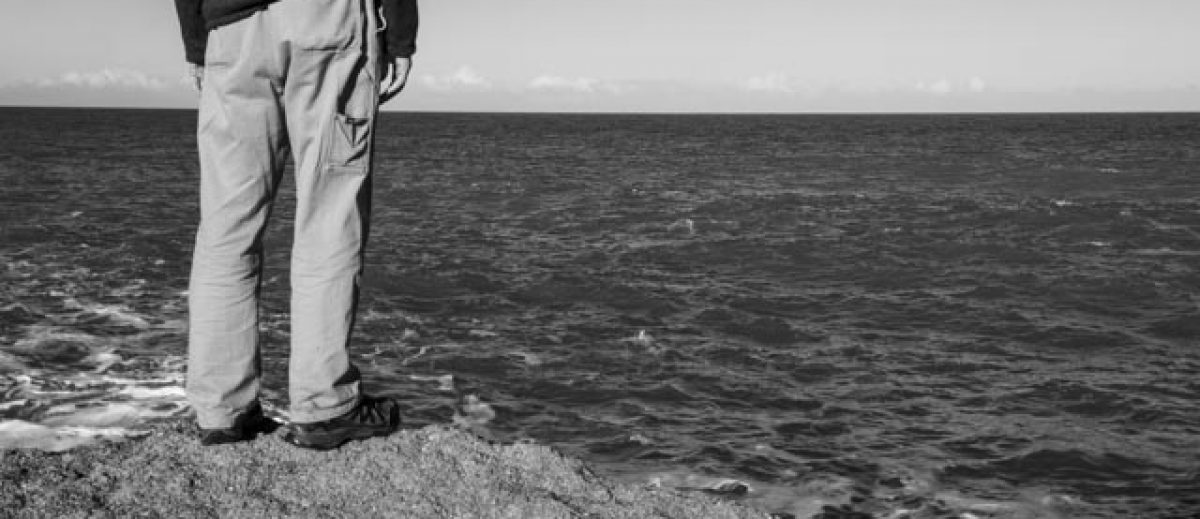
Eugene Richards an American photographer born in Boston and graduated from the Northeastern University, Massachusetts Institute of Technology. According to the lecture he gave (link below) he was the first in his family to complete college. His aim was to become a writer however a short internship at the local newspaper the Boston Globe seemed to change his mind.
“So I heard about these photo classes and decided it’s what I wanted to do,” (interview with Stephen Wolgast, 2017). “He was quite a figure in the Boston community at the time,” Richards says, not only for his photography but also for his meditative lifestyle, one that White impressed upon his students. “He kept telling me to calm down,” he says. “He wanted everyone to slow down.” This has been the advice given to myself by both of my tutors, stop trying to rush, often difficult when you have deadlines but I can see what they mean. At the time I wanted to try and submit for next summer for assessment but with the advice to show more reflection and the current lockdown situation I’m rethinking this plan. I’m starting to review and expand my research a lot more, trying to find my voice.
His photography career really started at the height of the Vietnam War when he decided to make a stand against the injustice he saw. He cut up his drafting card and returned it to the government, but instead of him being jailed he was invited to join the Vista (Volunteers In Service to America). This program saw him being sent to economically starved parts of the country in order to help people improve their lives.
He was based in eastern Arkansas to work as a health care advocate. Although he was prepared for the poverty he wasn’t for the racism and violence. This was mainly directed towards the blacks but he was also on the receiving side resulting in him having to attend a psychiatric hospital following an incident of amnesia and seizures thought to be from an attack. He was dismissed from the Vista but remained and formed a small newspaper called Many Voices.
He returned to Boston in 1973 and found the same racism
“I left the South very disappointed. I didn’t know where I was going as a photographer. I had no money. I was wandering around the streets, taking pictures. You always had some idea back then that if you took photographs you could make a living at it.” (Wolgast, 2017).
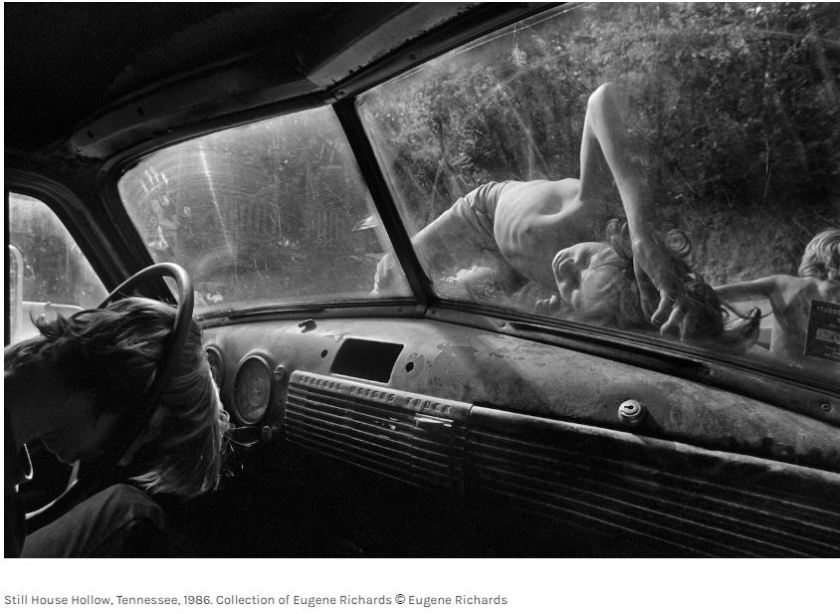
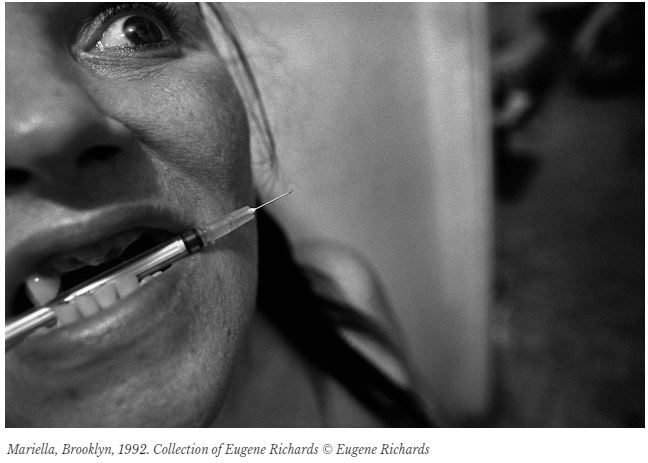
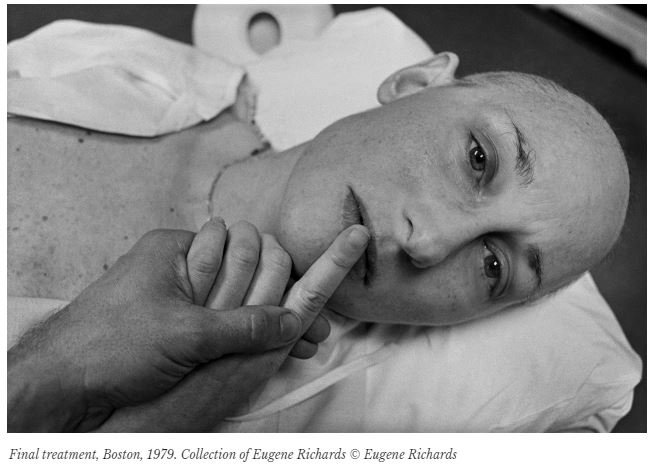
His first book was based on his experiences of the south and then later a very personal journey with his wife as she went through cancer. Since these initial books Richards has photographed and reported on and captured the raw emotions in the lives of hospital workers, gangs, drug dealers and once again war. I can understand why magazines and newspapers rejected his images, they are emotional and confrontational, they show the world as it is and most people are not prepared to see it that way. His passion of film making influences and guides his still images. He stated in the interview I watched how everyone sees differently and how his images are not always accepted, but he isn’t disappointed in that but he often disappointed in his images – personally I can’t see why. He discussed how with each of his projects he takes his time, gets to know his subjects, doesn’t pick his camera up until he knows they are relaxed and this shows in his images, something I need to practice at.
Bibliography
YouTube
Lecture: Eugene Richards (2010 Sem Presser) https://www.youtube.com/watch?v=08YpoaYp3vw
Global Journalist: Eugene Richards and the art of photography https://www.youtube.com/watch?v=vAwV09XgFzo
Website accessed 22/04/20
NPPA The voice of the journalist (2017)
https://nppa.org/page/innovator-eugene-richards
https://www.nationalgeographic.com/contributors/r/photographer-eugene-richards/
https://www.icp.org/browse/archive/constituents/eugene-richards?all/all/all/all/0
 Michele Usher