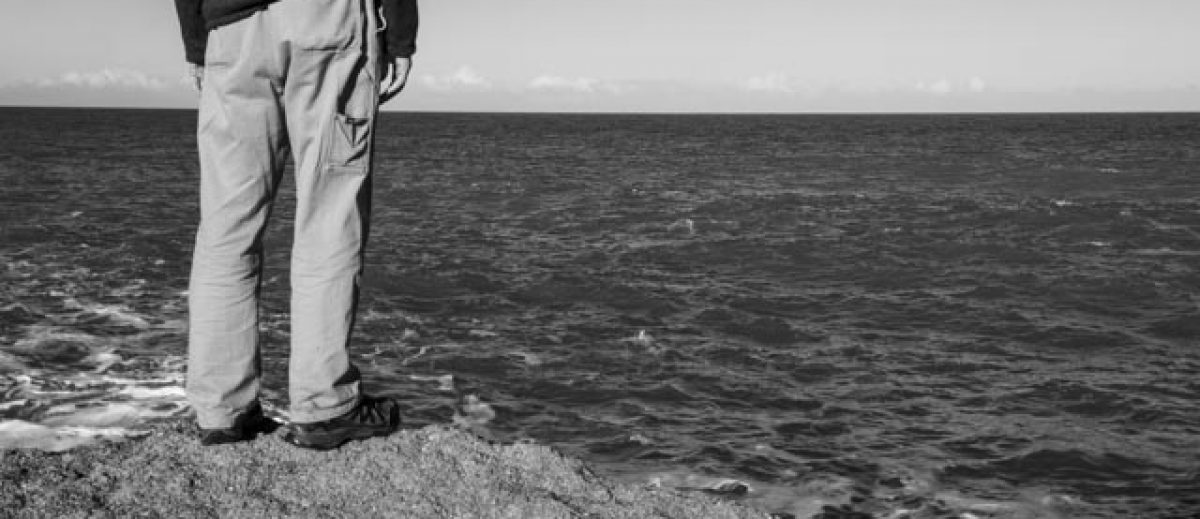
For Joseph P. Traina, who battled ADD and dyslexia for much of their life, photography is a way to describe unease in the world and give visibility to depression and trauma more naturally than words. This flows through multiple projects, whether it’s unpacking and recovering from the end of a marriage, learning to understand and love oneself through doubling self-portraits, or using Instagram’s face morph feature to reflect dysmorphia. For the photographer, these many ongoing projects are “a way for me to have control in a life where I sometimes feel like I have no control.”
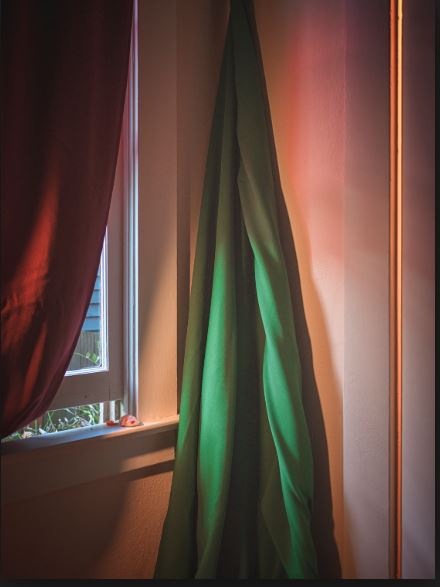
The cover image of Traina’s recent book, Lost in Seattle, published by Kris Graves Projects earlier this year, could be an umbrella for it all. Traina sits on a plastic-covered mattress looking away from the camera, face spotlighted in natural, Hopper-esque light, waiting for something to change, with no end in sight. Other images capture Seattle’s changing landscape as a symbol of Traina’s unease in the world. Photos of trees swathed in protective bug nets share space with interior shots of window drapes sagging like weeping willows.


Many of the images in Lost in Seattle are part of the photographer’s ongoing series Be Gentle with Yourself, in which Traina juxtaposes doubled self-portraits with altered images from their childhood to better understand the root of it all and learn to implement methods of self-care. “During this time in my therapy,” says Traina, “I learned to listen to what my inner child needed, to cultivate a safe space to grow, a place to be visible.” Many of these portraits—reenactments created during Traina’s lowest points—are a means to step back, self-reflect, and process it all.
“I’m my own biggest enemy,” Traina says. “I joke sometimes that no one hates me more than I hate myself. It’s strangely comforting, being the best at hating myself. I’m working on it. I’m finding ways to love, and to feel loved.”


 Michele Usher