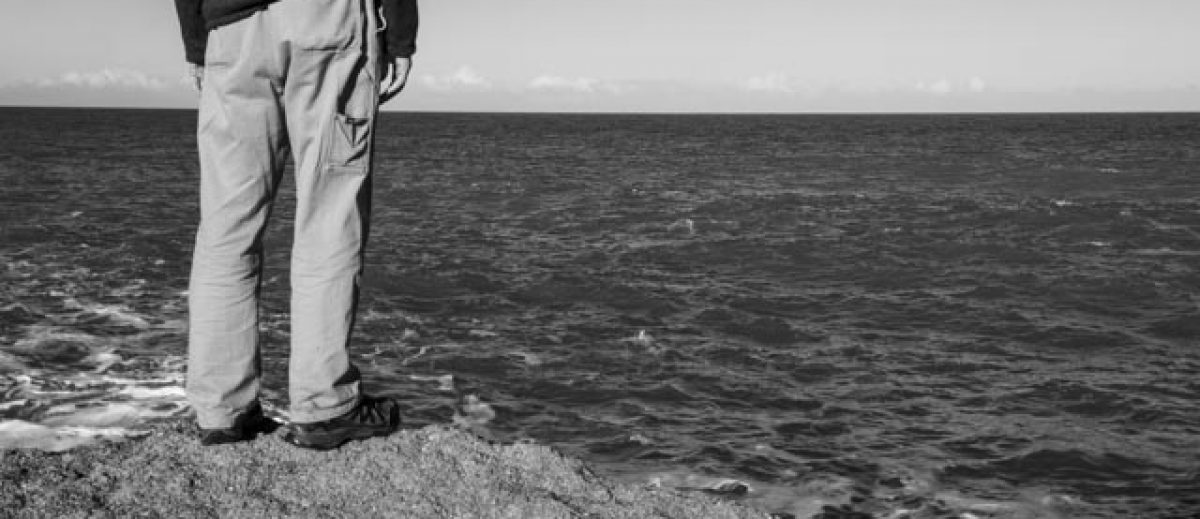
An American photographer who’s work spanned six decades, covers several genres and subjects which were undertaken in the Americas, Europe and Africa. Strand sought through his work to express the feeling of the land and its inhabitants directly, honestly, and with respect. His prints are masterly in detail and tonality. Strand advocated “straight photography,” and photographed street portraits to city scenes, machine forms, and plants with a distinctive clarity, precision, and geometric form.
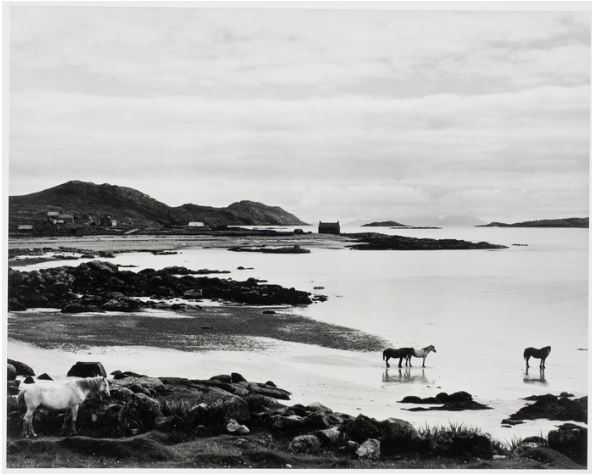
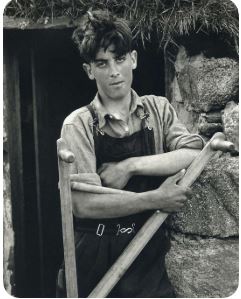
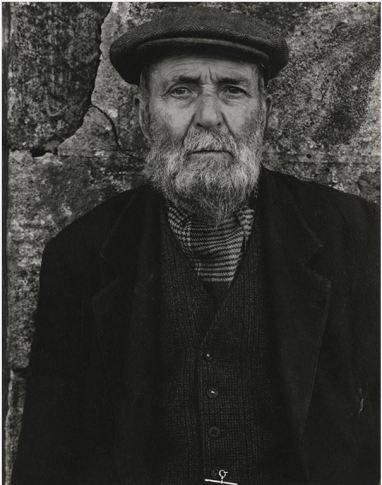
The work ‘Tir a’Mhurain’ has been described as a romantic and political reference to the landscape. History is an important part of the Strand’s narrative—his work evokes the natural and cultural forces that shaped the island communities of the Outer Hebrides. The project accounts for the Gaelic culture and a defence of a way of life that Strand valued and respected. Along with studies of fishermen, families, schoolchildren and farmers, you can see images of houses and possessions which reveals a beauty in the everyday. The elements that characterise the islands, both past and present, are subtly combined in many of the portraits.
Strand photographed communities in France and Italy before hearing a BBC radio broadcast about the Outer Hebrides that discussed the threats to the islanders’ traditions, featuring Gaelic songs recorded by the American folklorist Alan Lomax. It is said that Strand spent several months on South Uist and its neighbouring island Benbecula, recording the people and landscape.
Strand was said to carefully compose his subjects, instructing them on pose and costume, possibly to recreate moments he had glimpsed during long periods of study. Strand was keen to understand his subjects, their environments and the forces that shaped their lives in a similar way to Killip. I think a major part of my project will be trying to form the bonds and relationships with the people of Ngawi. They need to be comfortable with me and hopefully that will come across in my images as I think from the work by both Killip and Stand that human factor is important. Images of baron landscapes may give the mood of depression, isolation etc and be a lot easier to achieve but I think the human factor will show the struggles they have. That said a number of the seascapes remind me of the coastline of NZ
Bibliography
Research
Websites accessed 23/12/19
https://www.theartstory.org/artist/strand-paul/artworks/
https://www.newyorker.com/culture/photo-booth/paul-strands-sense-of-things
http://www.artnet.com/artists/paul-strand/
https://www.bbc.com/news/in-pictures-35823949
https://www.theguardian.com/uk/scotland-blog/2012/sep/20/scotland-photography-paul-strand
 Michele Usher