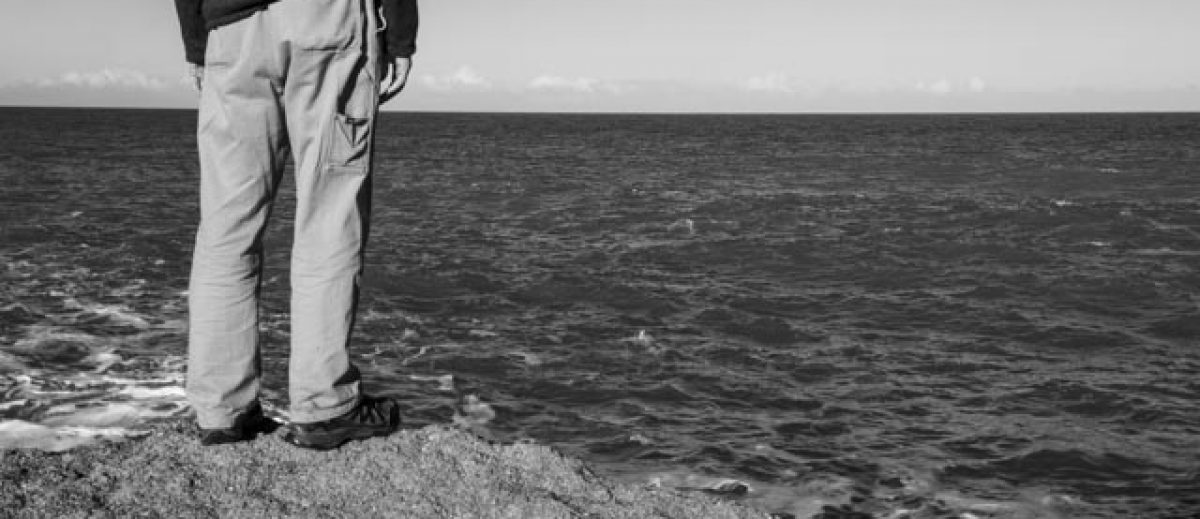
Book Collaboration with fellow student
During BoW I utilised my student networks and worked with a fellow student to add a collaborative piece to the mock book I produced for my final submission. This was an illustration of a cray fish which is the main industry/source of income for the village of Ngawi. The BoW piece can be found here. This illustration and further work has progressed and can be seen here.
As the book has taken shape, I have worked with Jim Gaydon a local writer to produce a foreword, and this can be seen here. I found the process interesting and challenging, trying to explain my ideas for both the project and the book and so decided to push myself further and work with a fellow student – Jack Delmonte. I have known Jack for some time through the Documentary group and now as he moves through BoW and CS. I really like his writing style and approach so in November 2021 I contact him and arranged a zoom session to discuss what I wanted.
Initially we thought that he would write the foreword and he provided a draft which I documented in by Thoughts and Reflections blog but copied here as well:
Original words by Jack Delmonte (Student id:513760):
The perception of New Zealand, from the far off observer, could be of a deeply masculine country. This machismo exemplified by the fierce Maori war cry of the Haka, traditionally performed before the start of a Rugby Football match by the national team on its way to taking another tournament scalp. Recently, an enlightened woman Prime Minister, Jacinta Ahern, has started to dent that perception.
In Michele Usher’s new work centred on the small fishing community of Ngawi, a harsh and remote place isolated at the southernmost point of New Zealand’s North Island. We see this masculinity totally stripped away to revealed the hidden strength of its community – a group of Woman. This band of sisters battle on so many different fronts, from day-to-day existence to managing mental heath issues associated with remote rural working class communities.
With beautifully images, crafted from the deep trust that Michele has developed over a long period of time with the community, we see in her photographs an empathetic portrayal of Ngawi woman and their surroundings. This ranges from portraits to artefacts taken in black and white and colour, presented in a variety of framing. An artistic approach to this unique land and people that adds to our appreciation of the individuality of each of the woman and the roles they play in maintaining Village life.
This documentary work is of vital importance. Not only in dispelling stereotypical perceptions we may have of the role of woman in New Zealand’s rural society, but also to expose the issues surrounding mental health that blight rural communities in some of the harshest environments on earth. You may never have heard of the woman of Ngawi, bit after viewing Michele’s images of them and their environment, you will not forget them.
As I had received the work from Jim I realised that the work from Jack was not in depth enough and of course difficult for him to understand as he doesn’t live in the local area which Jim does and he has also documented the whole of the Wairarapa, so I discussed the possibility of changing the direction of Jack’s work to a poem. The change in direction took place via a discussion session in early February. I provide the piece written by Jim, additional background information and links to my blog and website for the project. By the end of the month, I had received the first version (here). As I’m not an expert I asked for some independent feedback from a local author and this can be found here.
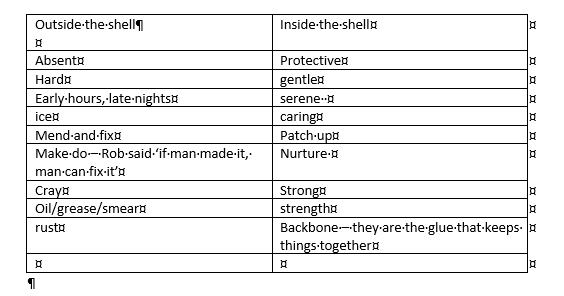
Jack and I discussed the comments/feedback and how to progress. Jack could see where the comments were coming from and we agreed that I would try and produce a series of words that could be incorporated into the poem that reflected how I felt about the community this would make the piece a lot more collaborative. The following table shows my initial thoughts:
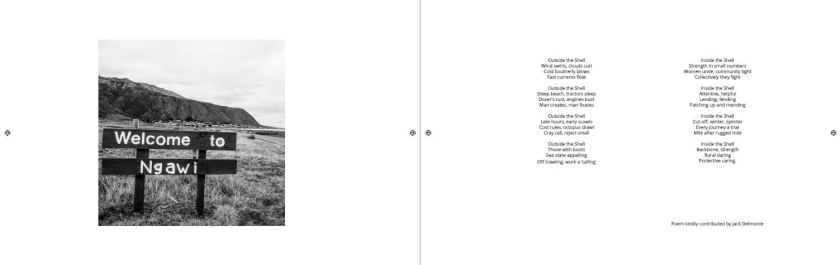
Version 9 arrived as a pdf reflection a possible page layout as shown here. The next version arrived mid April and can be found here [version 11]. I thought this was getting closer to what I wanted and provided some additional suggestions. The next version is here [version 12]. I discussed this with my tutor in my Assignment three feedback session. At this we discussed the location of the final piece and where it might work within the book. Originally, I had considered that it would work well as a closing point to the work however my tutor suggested that if it was used within the book, it should not distract from the images, my audience should remember my work and not the words. I decided to continue to experiment and try different locations. It might fit as a prologue or even an introduction to the exhibition.
As I needed to progress the book design and obtain some quotes for the final production I decided to introduce an additional image between the foreword and the first bifold and then add the poem [final version 13 here] as a starting point to the main body of the project as shown here:
 Michele Usher